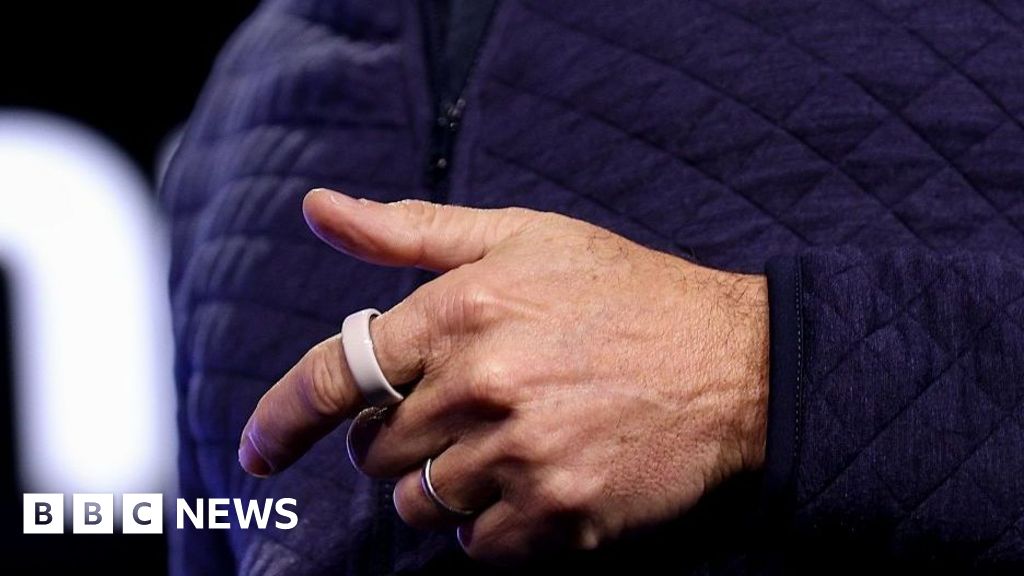
Oura has decided to postpone its plan for an initial public offering (IPO) that would have valued the company at $15 billion, just days after its announcement. The maker of smart rings, which track various health metrics, cited "uncertainty in the Initial Public Offering market" as the reason for the delay and has not indicated when it might move forward.
Read More
The company had formally filed documents to raise up to $2.2 billion by offering shares to investors over a week ago. Oura's CEO, Tom Hale, expressed that while an IPO is a significant step in their journey, they have the "luxury of choosing [their] moment."
This move follows a trend, as other companies like Holtec International have also postponed their public offerings, attributing their decisions to factors negatively impacting investor confidence, including rising energy costs, military conflicts, global trade tensions, and inflation concerns that have prompted central banks, including the U.S. Federal Reserve, to raise benchmark interest rates. Notably, the yield on U.S. debt with a 10-year maturity reached its highest level since 2007 this week.
Samuel Kerr, global head of equity capital markets at Mergermarket, noted that the current IPO landscape is markedly different from what was expected just weeks prior.
Oura's planned share price range was between $40 and $44 on the Nasdaq, which would have given it its projected market valuation. In its last fiscal year, ending September 30, 2025, Oura reported a pre-tax profit of $23.5 million on sales of $907.8 million, up from a pre-tax profit of $6.2 million the previous year. Its recent financial results for the nine months ending June 30 of this year show a pre-tax income of $70 million on sales of $1.2 billion.
Founded in Finland in 2013 and now headquartered in San Francisco, Oura produces smart rings priced at over $300, which monitor metrics like heartbeat and sleep patterns through a connected app. The company is currently facing a class action lawsuit filed by the Clarkson Law Firm in August, alleging false advertising regarding the accuracy of its sleep tracking capabilities. Even though the lawsuit states that "Oura rings cannot measure one's sleep or cycles," Oura maintains that its claims about the science and accuracy of its products are supported by research. A spokesperson clarified that similar to other consumer sleep wearables, the Oura Ring estimates sleep stages using various physiological signals.