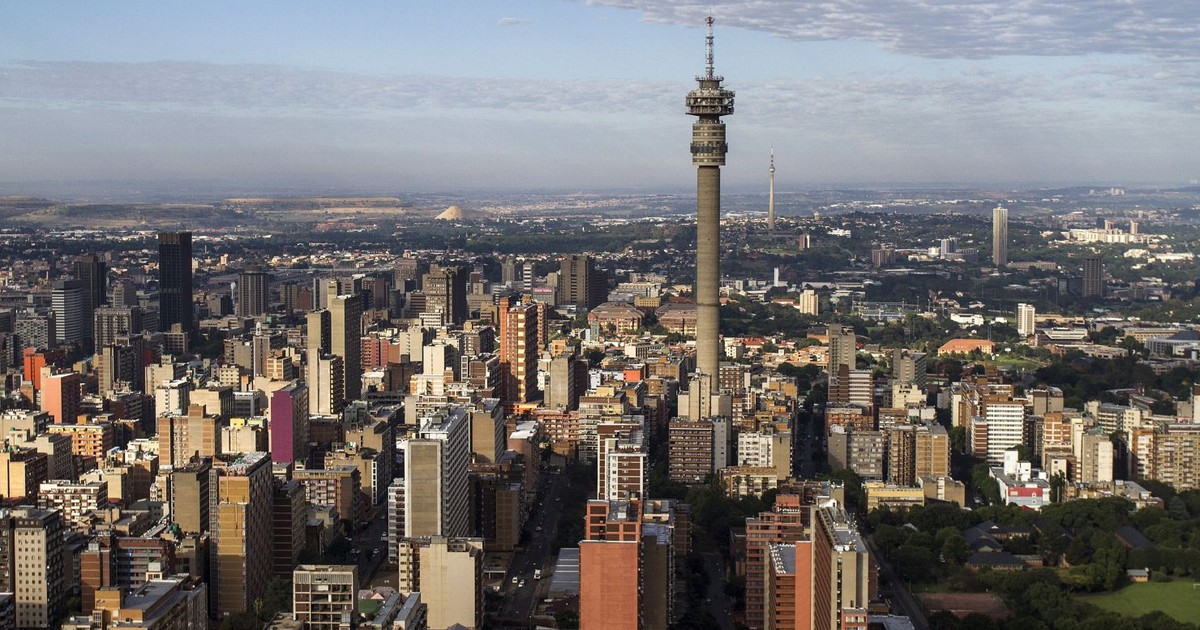
According to the IMF’s October 2026 World Economic Outlook, South Africa maintains its position as Africa’s largest economy by nominal GDP, with a total of $489.1 billion. It is followed by Egypt at $442.89 billion, Nigeria at $386.67 billion, and Algeria at $331.89 billion, with Morocco rounding out the top five at $195.63 billion.
Read More
South Africa’s economy is significantly larger than those of its closest rivals, with a gap of $46.19 billion ahead of Egypt and $102.41 billion ahead of Nigeria. The economy is bolstered by its robust financial services, mining, manufacturing, and retail sectors.
Despite this economic strength, South Africa struggles with sluggish growth and high unemployment. The IMF projects a mere 1.4% growth rate for 2026, which is lower than the anticipated rates in Ethiopia, Uganda, and Tanzania.
Statistics South Africa has reported a 0.2% contraction in the economy during the second quarter of 2026, reversing previous growth of 0.4% in the first quarter. This decline is attributed to setbacks in mining, manufacturing, and trade, compounded by inefficiencies in freight rail, port congestion, and other infrastructure issues.
Unemployment poses another significant challenge, increasing to 33.6% in the second quarter of 2026, up from 32.7% the previous quarter. This equates to an additional 345,000 people unemployed, bringing the total to 8.5 million, while total employment declined by 16,000 to 16.7 million. Youth unemployment is particularly acute, highlighting issues with job availability, skills mismatches, and overall weak growth.
Investment levels remain a concern as well, with difficulties in attracting the necessary capital for economic expansion. A Financial Times report in October 2026 noted that only half of the R1.5 trillion in investment pledges made since 2018 had been fulfilled, and fixed investment had decreased in four of the last six quarters.
Public debt further complicates the situation, with the IMF projecting government debt to reach 78.5% of GDP in 2026, restricting fiscal space. In response, President Cyril Ramaphosa’s administration has focused on reforming electricity and logistics to enhance business conditions and stimulate private sector investment.
While South Africa’s financial and industrial strength underpins its economic leadership, the nation faces ongoing pressure to boost growth and employment compared to faster-growing African economies.