By Michael S. Derby
Read More
September 24 (Reuters) – Two Federal Reserve policymakers expressed on Thursday that rising interest rates may be necessary to tackle persistent inflation.
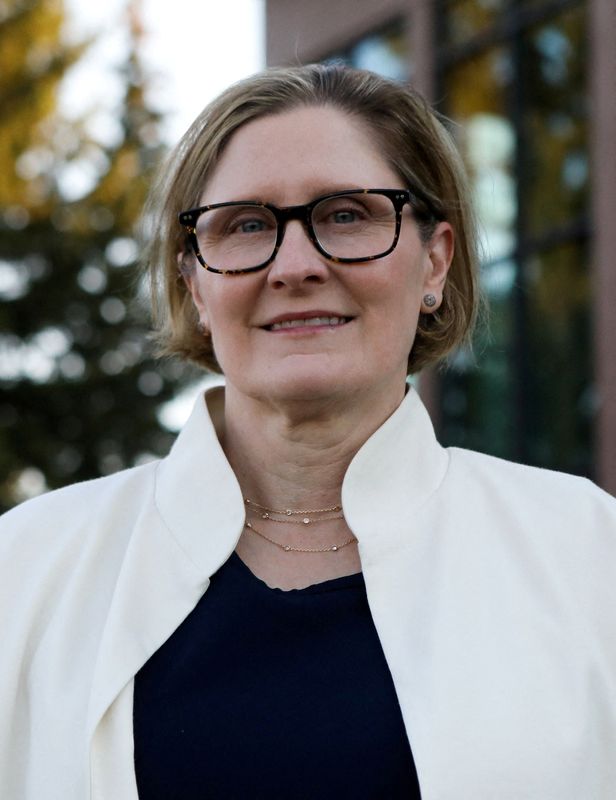
Philadelphia Fed President Anna Paulson emphasized at a conference that restoring inflation to 2% remains a top priority. She stated, "I will support the policy path that gets us there while carefully weighing risks to the labor market along the way." Paulson, a voting member of the Federal Open Market Committee, characterized the current inflation situation as "stubbornly elevated," suggesting that "some modest further tightening may be warranted" if conditions align with her expectations.
New York Fed President John Williams, speaking in London, also indicated that tighter monetary policy might be on the horizon. He referenced projections from Fed policymakers that hinted at a possible rate increase, noting, "it’s likely that another rate hike may be appropriate by the end of the year. That seems to me a reasonable way of thinking about it."
These comments come shortly after the Federal Reserve raised its benchmark interest rate by a quarter of a percentage point to a range of 3.75% to 4.00%. This increase aims to combat high inflation that threatens the Fed’s credibility in achieving its 2% target.
Fed Chairman Kevin Warsh underscored during a post-meeting press conference, "our predominant focus is on the price-stability side of our mandate. The plain fact is that inflation is too high and has been for too long."
While officials predict only one more rate hike could occur by 2026, futures markets are anticipating more significant increases.
Officials at the conference expressed confidence in their ability to address inflation without severely impacting jobs. Cleveland Fed President Beth Hammack remarked that the U.S. economy is currently robust, indicating that there is capacity to concentrate on inflation issues.
She noted that the inflation outlook remains uncertain, with upward risks, and warned that prolonged high inflation could complicate efforts to reduce it. Hammack highlighted that inflation, measured by the Personal Consumption Expenditures Price Index, was at 3.7% year-over-year as of July, largely fueled by factors including former President Trump's trade tariffs and rising fuel costs exacerbated by the ongoing US-Israeli conflict.
Hammack stressed that when the economic environment faces repeated shocks, there is an increased risk of an entrenched inflationary mindset, making it more challenging to achieve the target inflation rate.