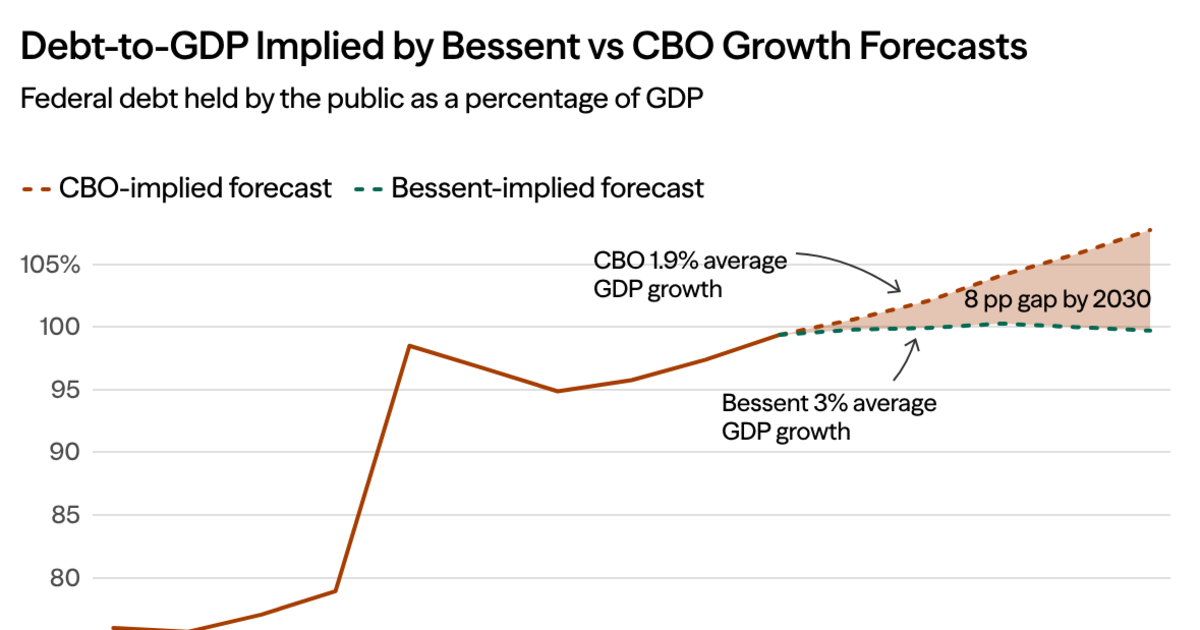
The U.S. national debt has reached $40 trillion, with projections indicating it may increase by another $7 billion by the end of the day, due to an annual budget deficit of 6 percent of gross domestic product (GDP). Treasury Secretary Scott Bessent has suggested that achieving 3 percent economic growth could help manage the debt, but the feasibility of this growth rate is under scrutiny.
Read More
Historically, the U.S. has only met the 3 percent growth target five times since 2000, and the average growth rate during Trump’s second term has been 1.8 percent. The Congressional Budget Office (CBO) forecasts a similar growth rate going forward, raising concerns that if these projections hold true, the debt-to-GDP ratio may increase significantly. An additional worry is President Trump's proposal to distribute $5,000 checks to all adult Americans, which would potentially add $1.3 trillion to the deficit.
Interest service costs related to the national debt are currently exceeding defense spending by 16 percent and are expected to rise further as interest rates increase, particularly among rate-sensitive Treasury bond market participants. This growing interest burden could limit federal spending on essential government services, threatening the welfare and security of citizens.
Bessent’s assertions may encourage complacency, but experts emphasize the urgency of enacting spending and revenue reforms. Proposed measures include slowing the growth of Social Security benefits for higher earners and reforming Medicare rules that lead to excessive payments. On the revenue front, implementing a federal value-added tax alongside a cash rebate for lower-income households could contribute to reducing deficits by approximately $250 billion annually.