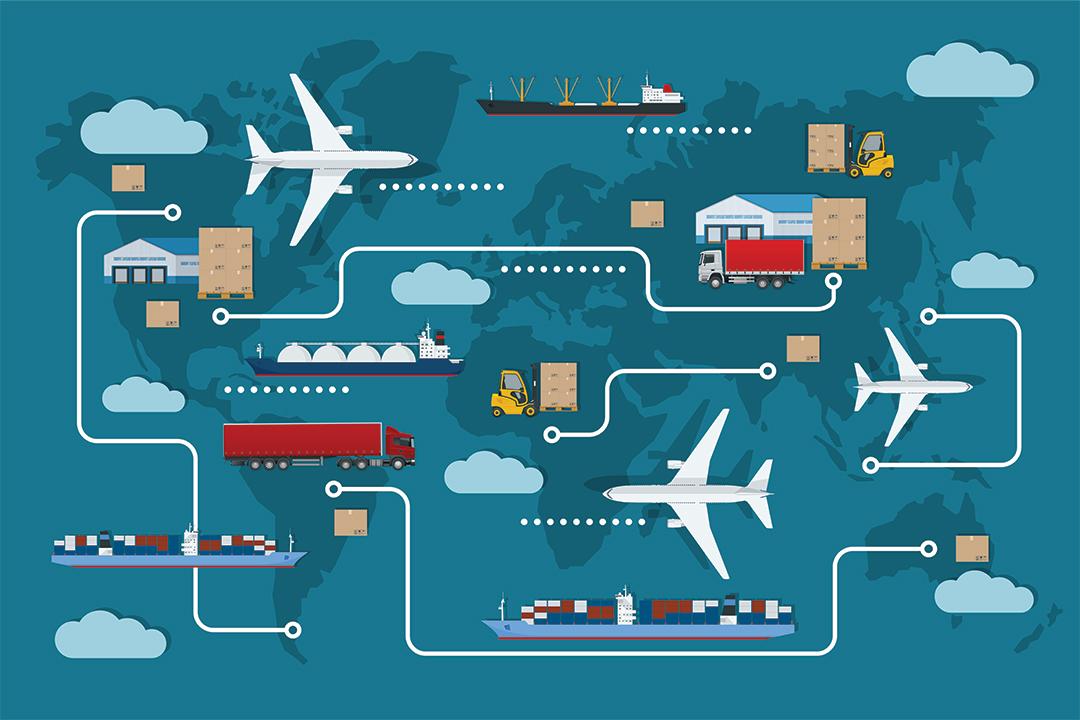
International trade plays a vital role in the Canadian economy, but shifting trade relationships are prompting businesses to adapt to new realities.
Read More
Canada's economy significantly benefits from international trade, enabling companies to export goods globally. Given Canada's relatively small population, access to international markets increases customer bases, which in turn can boost job creation domestically. Furthermore, importing goods and services from abroad broadens the range of products available to both businesses and consumers, contributing to a more diverse market.
Trade allows countries to specialize in efficient production, which helps reduce prices. It also provides Canadians access to products not produced locally, such as coffee beans and bananas, while fostering competition that encourages lower prices within the market.
Over the decades, Canada has developed extensive trading relationships as countries have reduced trade barriers, supporting economic growth. However, recent changes, including new tariffs and barriers, are challenging the existing trading landscape, requiring significant adjustments from Canadian businesses and workers that may affect long-term economic functionality.
The Blue Water Bridge, connecting Port Huron, Michigan to Sarnia, Ontario, exemplifies crucial trade infrastructure, facilitating the passage of over 2.1 million commercial trucks annually. The United States remains Canada’s largest trading partner, with Canadian companies exporting more goods and services to the U.S. than to any other country. The close proximity, shared language, and similar business environments strengthen this trade relationship.
In early 2025, the U.S. began implementing tariffs on numerous Canadian-made products, altering the trading dynamics and increasing costs for American buyers of Canadian goods. Tariffs, defined as taxes on imports, often lead businesses to reconsider their production locations or sourcing strategies, potentially reducing demand for Canadian products and impacting job growth and economic activity. Reduced demand can lead to diminished investment and stagnation in the economy.
To adapt, some Canadian companies are changing suppliers and investing in technology aimed at cost reduction and resilience. However, not all sectors are equally equipped to cope. Industries such as agriculture, minerals, and energy remain in demand on a global scale, often finding alternative buyers. Conversely, manufacturing sectors face intense competition and may struggle to find new markets, as establishing international business relationships can be time-consuming and challenging.
The automotive, steel, aluminum, and lumber industries have experienced significant impacts from U.S. trade actions. While uncertainty surrounding the U.S.-Canada trade relationship affects the overall economic climate, many sectors considered trade-related have not experienced the extent of damage initially anticipated due to protections under the Canada-United States-Mexico Agreement (CUSMA). This agreement has helped preserve tariff-free trade for many Canadian goods and services, benefiting both countries by keeping prices low. However, ongoing uncertainties regarding CUSMA's future may compel companies to continue reassessing their production and sourcing decisions.
The Port of Vancouver, Canada’s busiest harbor, handles over 140 million tonnes of cargo annually and remains a critical element in the trade landscape.
The framework of international trade has evolved significantly since the Second World War, beginning with the General Agreement on Tariffs and Trade (GATT) in the late 1940s, which aimed to reduce trade barriers. Canada has engaged in several major trade agreements over the years, including the 1988 Canada-U.S. Free Trade Agreement, the 1994 North American Free Trade Agreement, and the establishment of the World Trade Organization (WTO) in 1995, which replaced GATT.
China’s accession to the WTO in 2001 represents a significant shift in global manufacturing dynamics. As Chinese manufacturers evolved to produce more advanced goods, competition with Canadian and other Western manufacturers intensified, contributing to a decline in manufacturing shares in advanced economies. The U.S. has responded by imposing tariffs to encourage domestic manufacturing growth, particularly since 2018, leading to reduced imports from China and prompting a reconfiguration of trade patterns globally.
Despite facing U.S. tariffs, Canada has generally benefitted from less severe tariff impositions compared to other countries, potentially giving Canadian companies an edge in the U.S. market. However, ongoing tariffs continue to challenge many Canadian businesses and influence overall economic performance.
This article is part of a series exploring how technological, demographic, and international trade changes are reshaping the Canadian economy. While the Bank of Canada cannot negate the effects of these trends, it aims to support economic adjustment by maintaining low, stable, and predictable inflation.