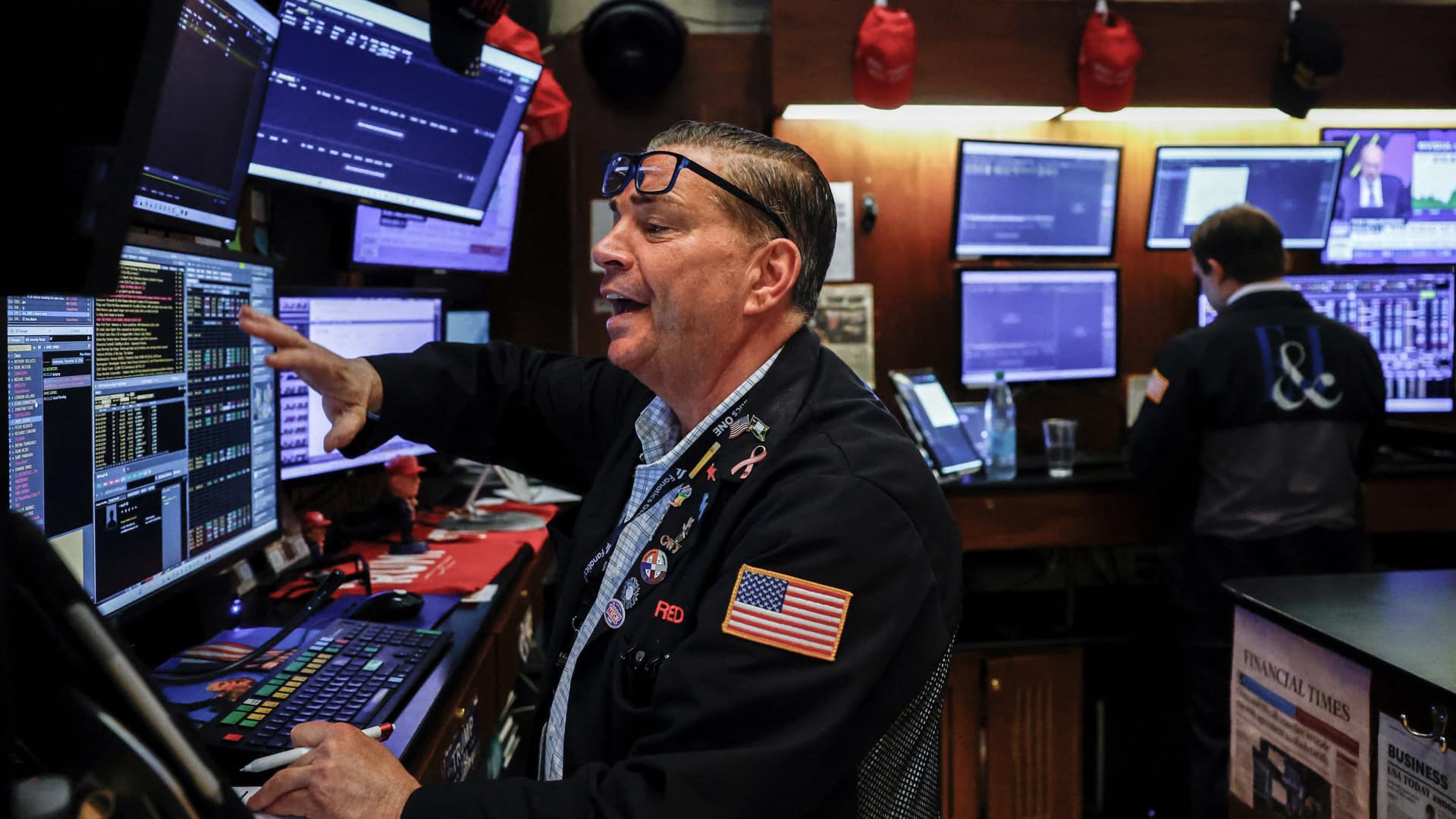
Stock futures dipped slightly on Sunday night after a positive week for Wall Street, despite rising Treasury yields reaching their highest levels in years. Dow Jones Industrial Average futures decreased by 97 points, or 0.2%. Futures for the S&P 500 and Nasdaq-100 also fell by 0.2%. Rising oil prices contributed to the downturn, with Brent crude up over 1% at $105.86 a barrel, and West Texas Intermediate futures gaining approximately 1% to $93.20 following President Donald Trump's rejection of a ceasefire proposal from Iran.
Read More
Last week, the Dow experienced a modest gain of 0.3%, breaking a three-week losing streak. Meanwhile, the S&P 500 and Nasdaq Composite achieved their most significant weekly increases since early August, climbing by 1.2% and 2.1%, respectively.
In Asia, Japan's Nikkei 225 rose by 0.29%, while the broader Topix index saw a 0.17% increase. South Korea's Kospi fell by 0.41% after a two-day holiday, with the small-cap Kosdaq declining by 0.16%. In contrast, mainland China's CSI 300 dropped by 1.4% early Monday, attributed to the slowest monthly industrial profit growth reported in the country. Hong Kong's Hang Seng index gained 0.76%.
Tech stocks in the U.S. led the rally last week, with Meta Platforms climbing nearly 13% following excitement over its Muse artificial intelligence feature. Microsoft rose over 4%, while Apple and Nvidia both recorded more than 1% increases. These gains came despite Treasury yields hitting highs not seen in years; notably, the benchmark 10-year note yield reached levels last seen in 2007, while the 30-year bond yield hit a 2004 peak, and the 2-year note yield rose by approximately 17 basis points.
Economist Ed Yardeni noted that the rapid rise in 2-year government note yields signals that major central banks are likely to raise policy rates further in response to inflation exacerbated by sustained high oil prices due to ongoing tensions in the Middle East. He mentioned that these increasing rates could worsen the outlook for large government deficits globally.
This week, market attention will turn to several key economic reports, including the August personal consumption expenditure price index, the preferred inflation gauge of the Federal Reserve, to be released on Wednesday. New U.S. manufacturing data is expected on Thursday, and the September jobs report will be available on Friday.
In other market news, shares of Northern Star Resources surged over 9% after rejecting a $27 billion takeover proposal from Gold Fields, stating the offer undervalued the company. The proposal valued Northern Star at A$38.7 billion based on an initial premium but later declined in value.
China's industrial profits expanded by only 4.2% in August year-on-year, marking weaker growth amid challenges with consumer demand and rising energy costs, as reported on Monday.