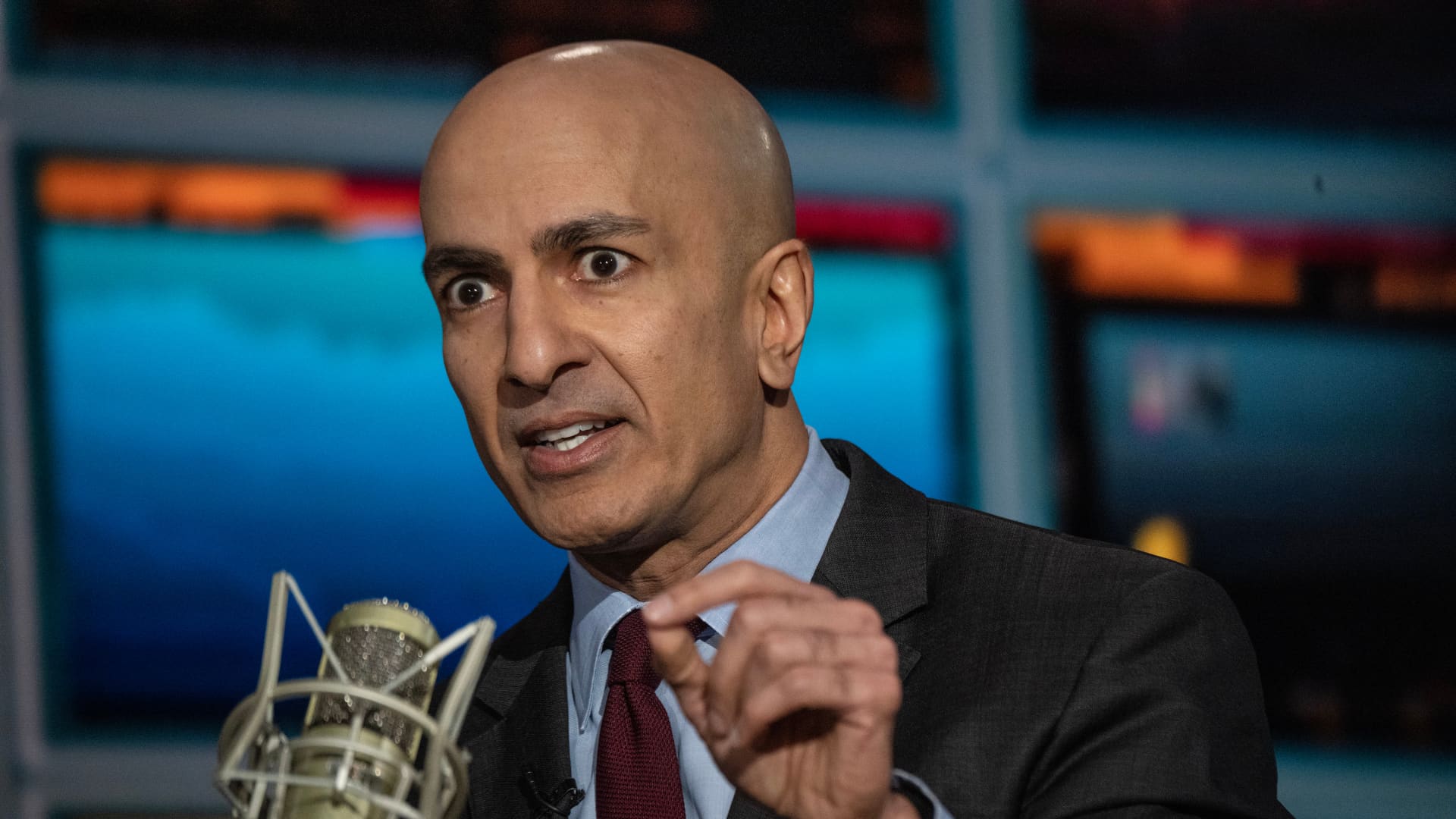
Minneapolis Federal Reserve President Neel Kashkari stated on Wednesday that inflation remains a significant concern despite recently released data showing a cooler-than-expected consumer price growth. In an interview with CNBC during a Council on Foreign Relations event in New York, he remarked, "Inflation is still too high."
Read More
This statement followed the release of the August personal consumption expenditures price index, the Fed's preferred inflation gauge, which indicated a core inflation rate of 3% on an annual basis, lower than economists had anticipated. Kashkari noted, "There are many different measures of inflation, but it's running at around a 3% rate. It's been elevated now for more than five years. I didn't think the inflation data today really changed that story for me very much."
He highlighted that other recently released economic indicators regarding consumer spending and gross domestic product reflect the economy's resilience. Kashkari recalled a discussion from a previous roundtable where a labor union leader described inflation as "worse" than a recession for their members, which has influenced his perspective on balancing price stability and employment.
This month, the Fed raised interest rates for the first time in three years to combat higher-than-desired inflation, with indications that further increases could follow. Kashkari also commented on the current labor market conditions, describing them as "pretty good" but not "great." Earlier on the same day, management services firm ADP reported that private payrolls had expanded more than economists had projected for September.
Regarding artificial intelligence, Kashkari stated that the economy's recent strength has prompted him to adjust his estimate for the neutral funds rate to 3.25%. He suggested that this rate may be temporarily elevated due to increased demand for investment capital associated with the AI boom.
Kashkari expressed concerns that if AI-related investments do not yield the anticipated productivity gains, it could lead to significant economic repercussions. "The fruits have not yet borne out," he stated, warning that potential malinvestment could affect the broader economy. He urged the AI industry to figure out ways to utilize resources and funding more efficiently, especially in an environment with tighter monetary policy.
While acknowledging that Fed interest rate hikes might not substantially impact major tech companies, he maintained that adjustments to borrowing costs could still benefit other sectors of the economy.