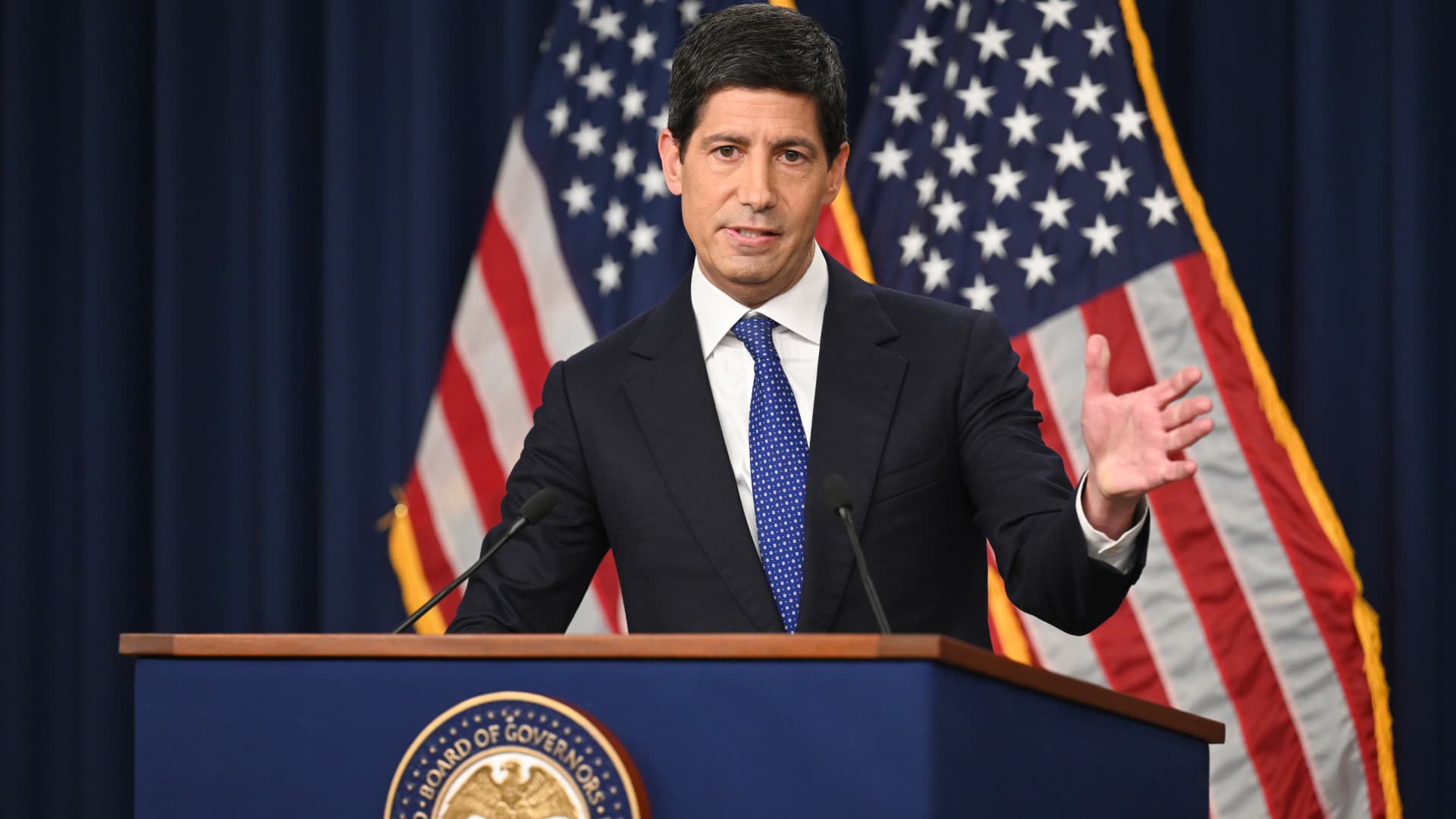
Kevin Warsh, now 127 days into his role as Chairman of the Federal Reserve, is making moves toward a significant change in the Fed's approach to monetary policy. Although he is focused on visible and quick adjustments, larger reforms are impeded by economic conditions and the views of his fellow Federal Open Market Committee (FOMC) members.
Read More
Warsh has altered the Fed's communication style, implementing changes like shortening post-meeting news conferences and reorganizing seating arrangements for reporters. These adjustments, while seemingly cosmetic, reflect a fundamental shift in how Warsh conceptualizes and communicates monetary policy, departing from the approaches of his predecessors.
One of Warsh's major priorities, reducing the Fed's balance sheet, has yet to be addressed due to ongoing inflation concerns. He has also initiated five task forces to review Fed practices, with recommendations expected early next year.
The recent unanimous decision to raise the interest rate by a quarter-point marks a significant point in Warsh's early tenure, addressing criticisms about his perceived independence from President Donald Trump. Given his economic outlook, Warsh appears open to further rate increases if inflation persists, with last week's hike being the first since 2023.
Market signals indicate Wall Street expects more rate hikes, as the 2-year Treasury yield has hit nearly a full percentage point above the effective federal funds rate, the largest spread since 2023. As of July, inflation stood at 3.7%, exceeding the Fed's target of 2% for over five and a half years.
In contrast to his predecessors, who categorized the funds rate as accommodative, neutral, or restrictive, Warsh has dismissed this framework, which has caused concern among some economists. Claudia Sahm noted that Warsh's framing of rate decisions challenges traditional assessments of monetary accommodation.
Despite criticisms of a lack of clarity in his rate-setting philosophy, Warsh’s comments have begun to outline a new regime for setting policy, emphasizing a wider range of financial and market indicators. In recent remarks, he has identified "financial conditions" as crucial to his decision-making process, assessing various market dynamics, including asset prices, trading volumes of Treasury securities, and credit availability.
Warsh's focus on financial conditions echoes strategies used by former Fed Chair Alan Greenspan, who was known for detailed analyses of economic indicators. His recent statements suggest he believes that current financial conditions permit further rate hikes, tied closely to inflation trends and overall credit market activity. For instance, rising overall commodity prices, including an 83% increase in diesel prices, have been flagged as areas for monitoring.
While Warsh's approach diverges from the traditional frameworks favored by other FOMC members, many continue to rely on conventional rate assessments. This divergence is underscored by Warsh’s decision not to forecast the funds rate in the Summary of Economic Projections, a common practice among his predecessors, indicating a potential delay in broader adoption of his strategies within the committee.
Challenges remain, particularly regarding his long-standing goal of reducing the Fed's $6.7 trillion balance sheet. Warsh has yet to specify a plan for this reduction, which could entail either selling existing securities or allowing them to mature unfulfilled. With inflation pressures and rising oil prices complicating the Fed's immediate priorities, the feasibility of such reforms remains uncertain.
The current economic landscape, highlighted by a 10-year Treasury yield surpassing 5%, complicates any strategy aimed at reducing the balance sheet, as the timing seems unfavorable for increasing market supply of loans and securities.