Asian stock markets mostly declined on Friday as a sell-off in U.S. semiconductor shares spread to the region. South Korea's KOSDAQ dropped 3.5%, while the benchmark Kospi lost 2.2%. Japan's Nikkei 225 experienced a 1.4% decrease, and China's Shanghai Composite fell by 1.3%. Conversely, Hong Kong's Hang Seng index rose slightly by 0.25%. These losses followed a significant drop on Wall Street, where the Philadelphia semiconductor index fell by 6.7%, marking its largest decline since June, and the Nasdaq closed down more than 2.5%.
Read More
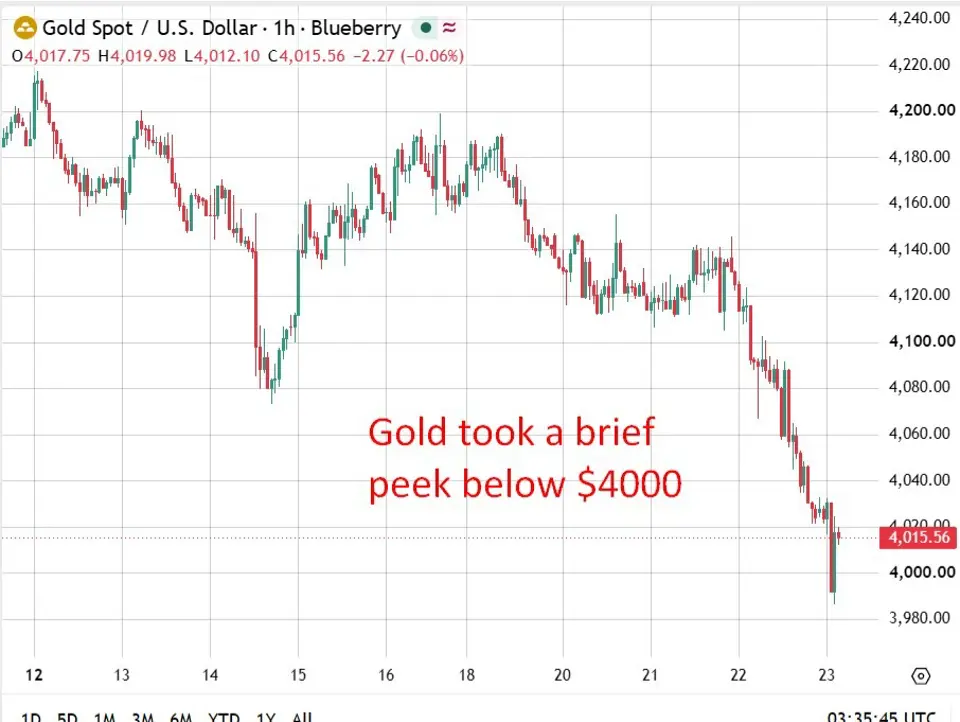
In commodities, gold traded below $4,000 an ounce for the first time since July. Oil prices remained stable, with Brent crude closing around $113 a barrel on Thursday, the highest level since early May. Supply concerns persisted, especially as President Donald Trump invoked the Defense Production Act to boost domestic oil production and address high fuel prices ahead of the midterm elections. Reports indicated that Russia's Rosneft was delaying repairs at refineries damaged by Ukrainian drone strikes, potentially limiting fuel exports.
Japan's core consumer inflation rose by 2.1% in September from the previous year, the first reading above the Bank of Japan's (BoJ) 2% target in nine months. A closely watched measure excluding fresh food and fuel increased by 2.4%, surpassing forecasts. Despite this data, the BoJ is expected to maintain interest rates at 1.25% during its meeting on October 30, although a rate hike to 1.50% is anticipated in December.
Australia's flash composite PMI fell to 47.7 in October, signaling the first contraction in private sector output in five months. Weaker confidence, higher borrowing costs, and inflation pressures contributed to the decline in services activity.
In corporate news, OpenAI is nearing a funding round of up to $30 billion, led by UAE investors, which values the company at approximately $1.25 trillion. Meanwhile, SK hynix has abandoned plans for a U.S. IPO for its Solidigm unit due to market conditions. Western Digital reported a 55% increase in fiscal first-quarter revenue, driven by AI-related demand, although shares fell in after-hours trading amid declines in AI stocks.