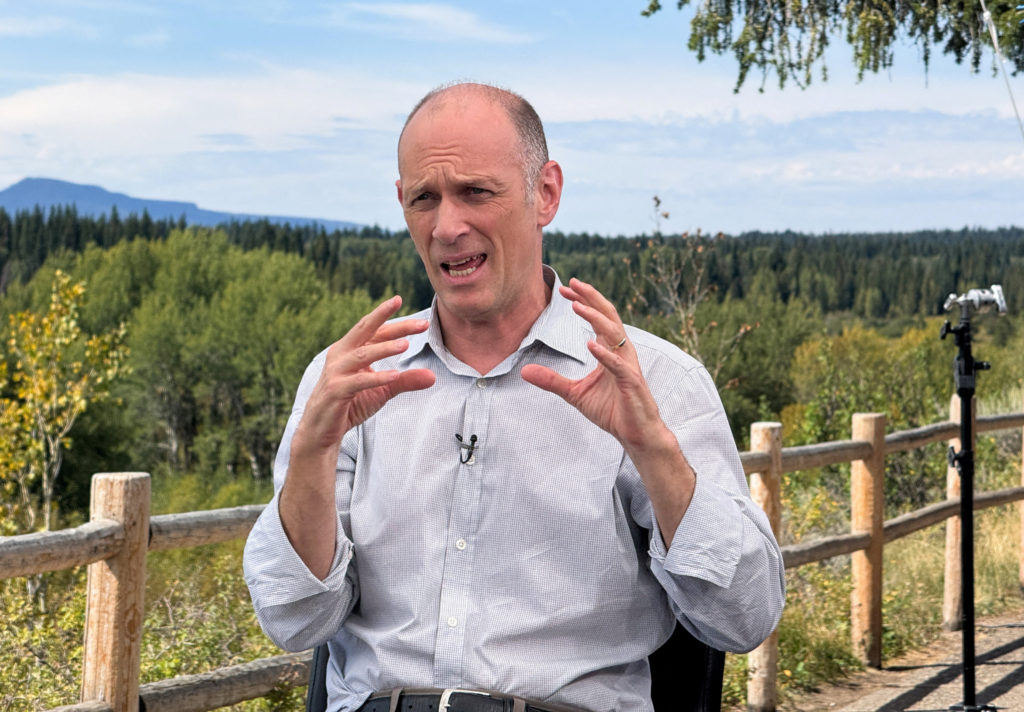
WASHINGTON (AP) — Austan Goolsbee, president of the Federal Reserve Bank of Chicago, stated on Monday that combating persistent inflation may require the central bank to inflict economic pain, including increased unemployment. Speaking in London, Goolsbee highlighted ongoing supply shocks driving inflation, such as rising oil prices due to the Iran conflict and existing tariffs.
Read More
Typically, the Federal Reserve would allow such shocks to dissipate and inflation to decrease naturally without adjusting interest rates. However, Goolsbee emphasized that in the current context of continuous supply disruptions, the Fed may be compelled to raise rates to decrease both consumer and business demand to align with reduced supply, thereby aiming to return inflation to the Fed's 2% target.
He noted, "The only way to bring inflation down is to raise rates and narrow the gap between supply and demand. Forcing inflation back to target in the short run means pushing employment below target. ... In the short run, supply shocks force a difficult trade-off between the Fed's goals of low inflation and maximum employment."
Goolsbee later told reporters, "It's going to be painful. It would necessarily be painful."
These remarks contrast with those of Fed Chairman Kevin Warsh, who, following the recent rate hike to about 3.9%—the first increase in three years—asserted that it is not essential to harm labor markets to achieve the Fed's objectives.
The Federal Reserve typically addresses inflation by increasing interest rates, which can restrain borrowing and spending. Historically, such actions have led to slowed economic growth and potential recessions. However, during 2022-2023, the Fed raised interest rates significantly, resulting in a decline in inflation without a notable rise in unemployment or economic downturn.