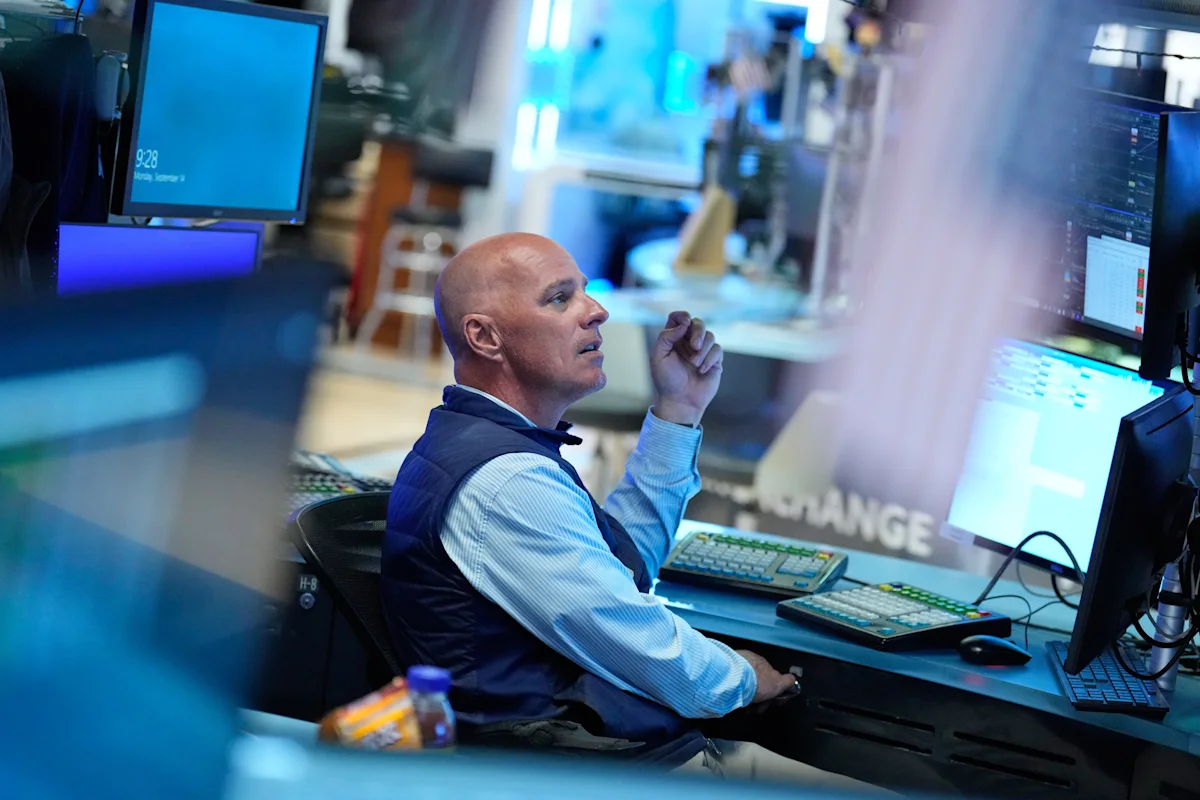
NEW YORK (AP) — U.S. stocks experienced a decline on Thursday, pressured by the bond market following a recent rally. The S&P 500 fell by 0.2%, marking its third consecutive decline after nearing its all-time high last month. The Dow Jones Industrial Average dropped 182 points, or 0.4%, by 10:30 a.m. Eastern time, while the Nasdaq composite decreased by 0.5%.
Read More
Higher yields in the bond market are making borrowing more expensive, impacting consumers facing inflation, businesses seeking to invest in data centers for artificial intelligence, and the U.S. government addressing its budget deficit. The yield on the 10-year Treasury note briefly approached 5.15% Thursday morning before settling back to 5.11%, a level not seen since 2007, and up sharply from 3.97% prior to rising oil prices due to geopolitical tensions.
On Thursday, Brent crude oil saw a 2.2% increase, reaching $100.29 per barrel. This has contributed to a rise in the average price of regular gasoline to $4.48 per gallon, compared to less than $4.10 a month ago and $3.16 a year earlier, according to AAA.
The increase in Treasury yields isn't solely due to inflation concerns; ongoing economic growth in the U.S. supports higher yields as well. A preliminary report on Wednesday indicated U.S. business activity is expanding at its fastest pace in years, with rising costs for corporations. A report on Thursday revealed a decrease in unemployment benefit applications, reinforcing positive economic expectations.
Such indicators may influence the Federal Reserve's decisions on interest rate hikes. The Fed raised its main interest rate for the first time in three years last week, aiming to moderate economic growth and contain inflation. Current estimates suggest nearly a 50% chance of two additional rate hikes by year-end, according to CME Group data. Despite concerns about inflation, war, and tariffs, the robust economy has enabled U.S. companies to continue achieving strong profit growth, thereby supporting stock prices.