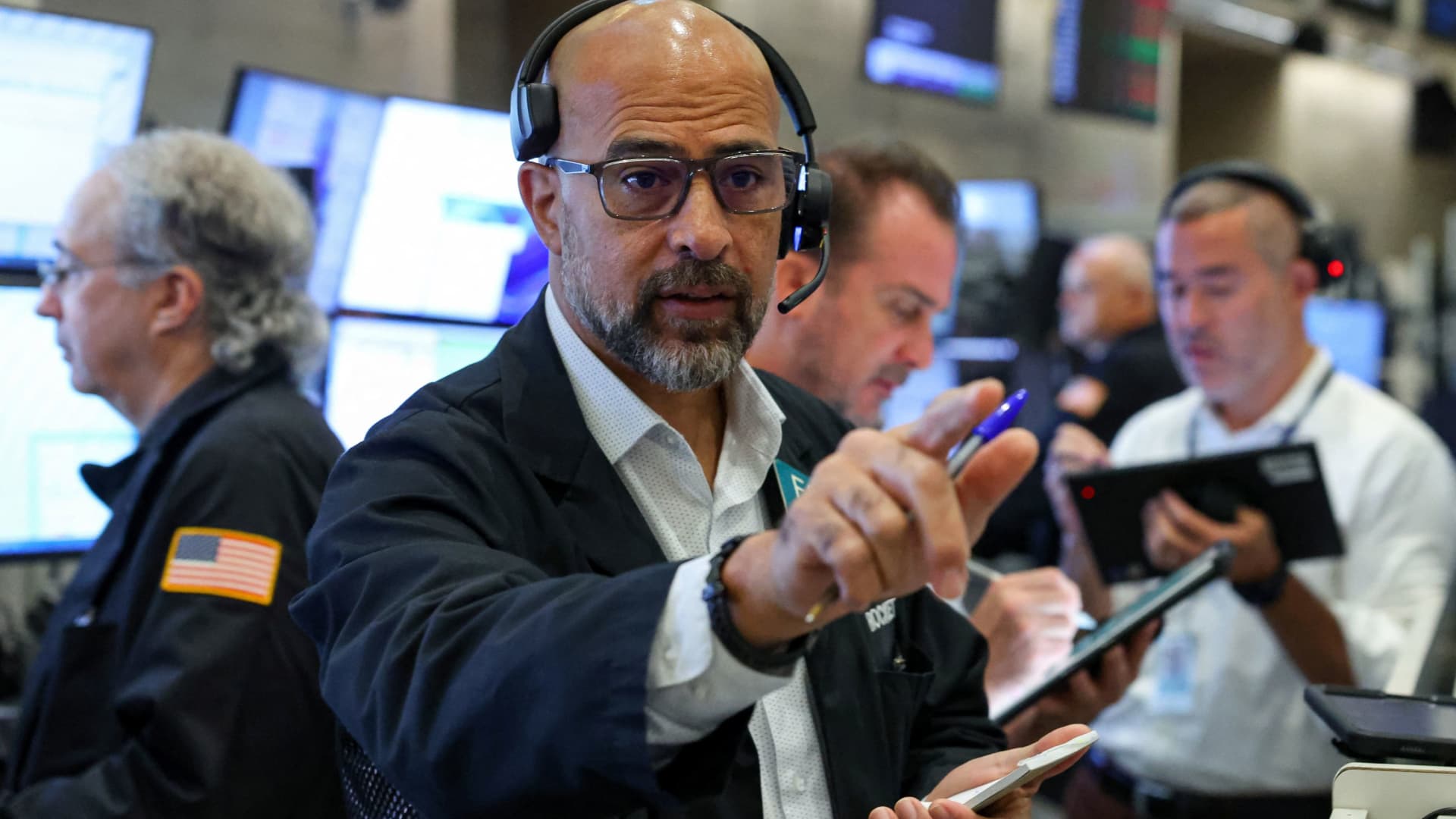
Futures-options traders were active on the floor at the New York Stock Exchange's NYSE American on September 8, 2026. Recent weeks have seen surging oil prices and rising bond yields, creating a choppy market environment, but many investors are remaining committed to equities.
Read More
Global government bonds experienced a sell-off as the U.S. 10-year Treasury yield surpassed the significant 5% threshold on Tuesday. Meanwhile, oil prices have stabilized above $100 a barrel, influenced by ongoing supply disruptions from the conflict in Iran. Despite these challenges, the stock market has shown resilience, with the S&P 500 climbing over 10.8% this year. The Nasdaq Composite has seen an 11.8% increase year-to-date, while the Dow Jones Industrial Average is up 8.4%. Notably, stock markets in South Korea, Japan, and Europe have also reported gains.
This week, volatility increased as prominent figures in artificial intelligence (AI) raised concerns about the pace of technological advancement and the need for safeguards. However, a recent Global Fund Manager Survey from Bank of America indicates that investor enthusiasm for equities remains strong. The survey revealed that while the previous summer's "excess bullishness" has waned, investors maintain a generally positive outlook on growth and earnings, with continued expectations for substantial AI investments.
A net 49% of money managers reported being overweight in global equities for September, according to the survey, which included responses from 170 investors managing $470 billion in assets. This represents a slight decrease from the month before, yet equities remain the favored asset class among participants. Expectations for double-digit earnings-per-share growth over the next year reached their highest since August 2021, with 38% of respondents anticipating a global economic boom in the coming year. Conversely, bond allocations have declined to their lowest level since May 2022.
BlackRock Investment Institute (BII) strategists expressed in a note that rising bond yields have not altered their supportive stance towards equities, although they have raised the threshold for achieving returns. They noted that higher interest rates alongside strong equity performance can coexist if rising yields signify economic investment and growth. This trend can enhance earnings strength, which may counterbalance increasing capital costs, leading them to reaffirm their supportive positions in U.S. equity and AI. They added that investments related to AI could bolster growth and profits, despite the sector's demands on capital and resources.
Toni Meadows from BRI Wealth Management pointed out that the current "gold rush" mentality surrounding AI may prompt reflection among investors regarding future prospects. He asserted that while investment in AI infrastructure is booming, potential bottlenecks could introduce fragility into the market, but he doubts this will derail the overall trend. Tej Sthankiya from Federated Hermes mentioned that the recent sell-off in AI stocks could create buying opportunities for long-term investors, though market volatility will likely be influenced by broader macroeconomic trends, including interest rates and geopolitical issues.
Mark Haefele, Chief Investment Officer at UBS Global Wealth Management, said the crucial consideration for investors isn't whether AI development will decelerate, but rather if demand and monetization will continue to grow. He affirmed a preference for a diversified investment strategy across the AI value chain, which includes sectors such as semiconductors and cloud services, as well as established platforms poised to capitalize on widespread AI adoption.