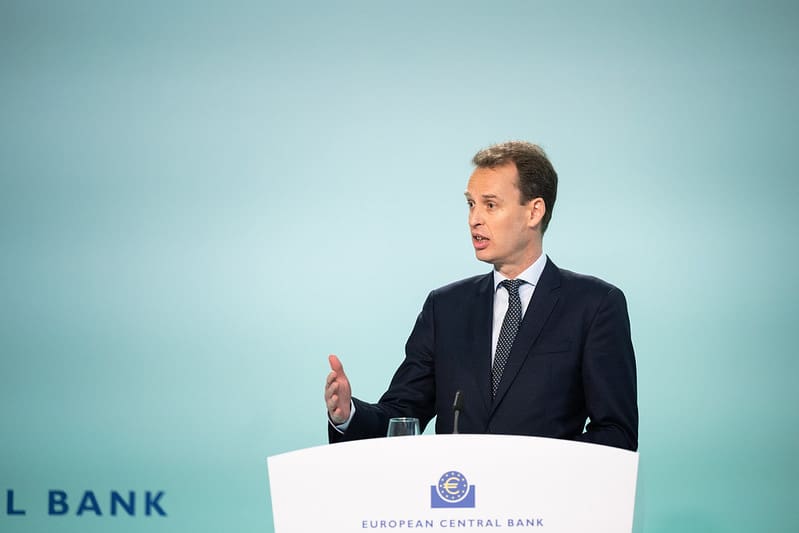
Frank Elderson, a member of the European Central Bank (ECB) executive board, stated that climate and nature risks have a significant impact on productivity, growth, and inflation. He emphasized that addressing these risks is a fundamental part of the central bank’s responsibilities to maintain financial stability.
Read More
During the Bank for International Settlements Green Swan event in Manila, Philippines, Elderson highlighted the necessity for capital markets and stable policies as the carbon budget to limit global warming to 1.5°C nears exhaustion. He remarked, “As climate and nature risks increasingly affect productivity, growth, inflation, and the resilience of the financial system, taking them into account falls squarely within our mandate.”
Elderson noted that while individual climate events may not trigger macroeconomic crises, the cumulative effects of global warming and environmental degradation could threaten core economic and financial stability.
Fellow ECB council member Olaf Sleijpen warned that the opportunity to mitigate global warming is diminishing rapidly. He pointed out that the scientific data indicates that the remaining carbon budget is nearly depleted, stating, “We are no longer choosing between success and failure, but between an outcome that is bad but still manageable, and an outcome that we can no longer manage.”
Elderson expressed that the green transition intertwines with critical issues such as resilience, energy security, and competitiveness, asserting that if managed effectively, this transition could enhance all these areas. He explained that reducing reliance on fossil fuels would strengthen national autonomy and better equip countries to handle economic shocks associated with energy price fluctuations.
The ECB official described a transition to renewable energy as a macroeconomic advantage, asserting that it should not be only about mitigating costs but also seizing economic opportunities. However, he identified challenges regarding financing the green transition, including access to finance and existing uncertainties in the political and regulatory landscape.
He stressed the pivotal role of banks in Europe in facilitating this transition and emphasized the need for enhanced international capital flows and cross-border cooperation to establish equitable standards and trustworthy commitments. Elderson warned against regressing on legislative commitments that industries rely on for long-term investments, subtly criticizing the European Union's recent adjustments to sustainable reporting directives, which the ECB opposed. He concluded by stating, “Climate change and nature degradation may be a certainty in an uncertain world, but how we respond to them remains very much a matter of choice.”
This page was last updated October 21, 2026.