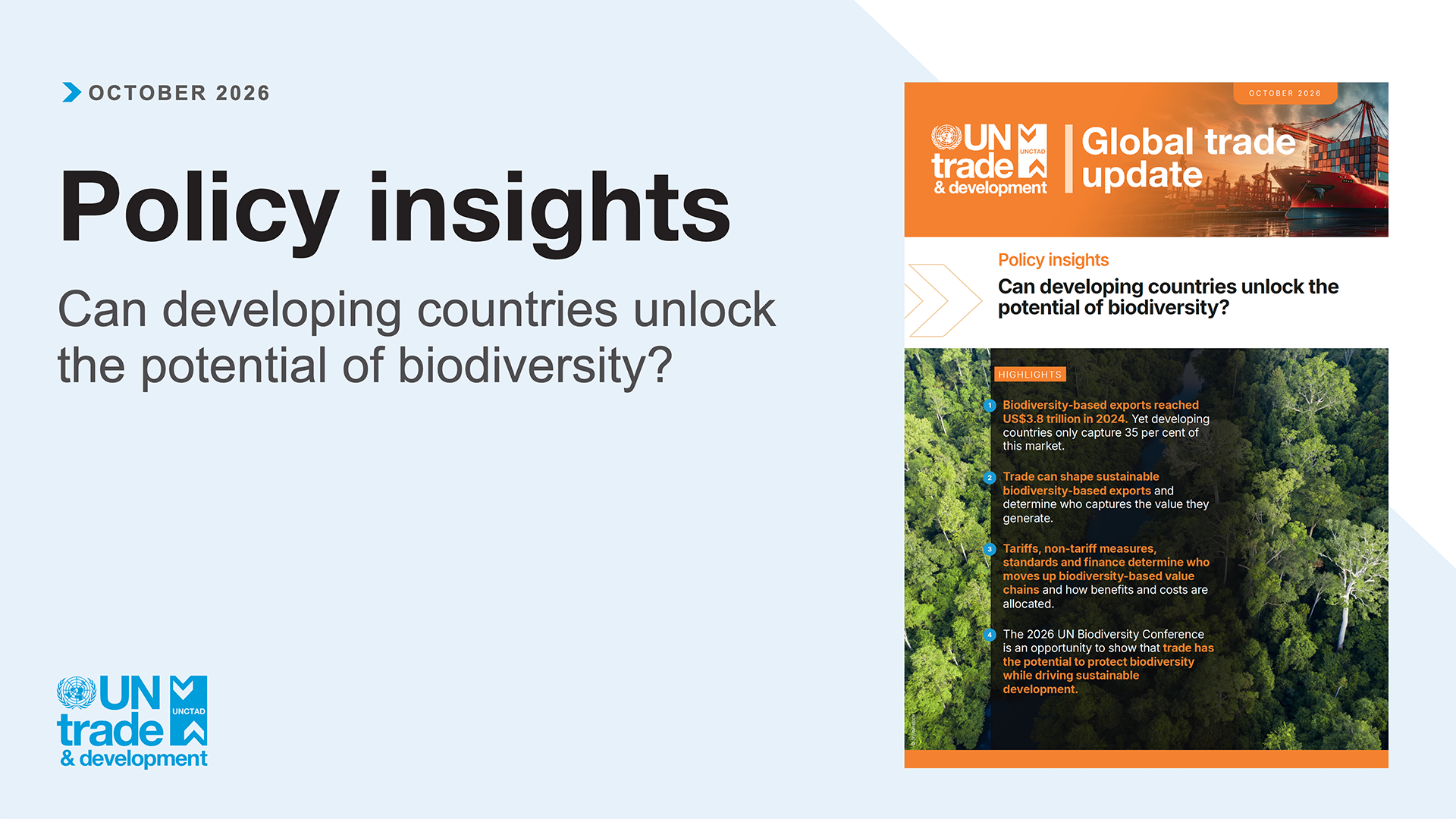
Global exports of biodiversity-based products reached nearly $3.8 trillion in 2024, yet developing countries managed to capture only about 35% of this market. Regions rich in biodiversity, such as Africa and Latin America and the Caribbean, account for a small proportion of these exports, with Africa contributing just 3% and Latin America and the Caribbean 11%. Despite housing roughly two-thirds of the world's biodiversity, these regions face significant challenges in maximizing their economic potential from this resource.
Read More
A recent report suggests that trade policies, standards, and access to finance play crucial roles in determining which countries benefit from biodiversity-based trade. Even though biodiversity-based products represent a significant portion of merchandise trade—almost one-fifth in Africa and more than one-quarter in Latin America—many countries remain locked into low-value raw material exports. The report emphasizes that increasing trade volumes alone is not enough; countries must adopt policies that bolster value addition, job creation, and sustainable production practices, alongside fair access to biological resources.
Barriers such as tariffs, non-tariff measures, and compliance costs hinder producers aiming for higher-value outputs. For instance, natural alternatives to plastics often face import tariffs up to 16.1%, comparable to or exceeding those on plastic products. The burden of meeting regulatory and voluntary sustainability standards is significant, with producers absorbing implementation costs for many of the standards assessed in the report. It argues for more technical assistance and affordable finance to help smaller producers access higher-value markets.
The report also highlights that developing economies could enhance value retention through processing and circular business models. BioTrade sales have risen dramatically, from $40 million in 2003 to nearly $50.5 billion in 2024, underscoring the potential of biodiversity-based businesses. Innovative projects, such as the conversion of agricultural waste in Kenya, exemplify how developing countries can produce tradable goods from underutilized resources.
As nations approach the 2026 UN Biodiversity Conference, the report advocates for viewing trade as a mechanism to support biodiversity goals, not merely as a pressure factor. It calls for better access, increased value addition, sustainable practices, and fair benefit-sharing, along with cooperation from developed countries and industry leaders. By implementing these strategies, developing economies can better capitalize on biodiversity-based trade while maintaining the ecosystems they depend on.