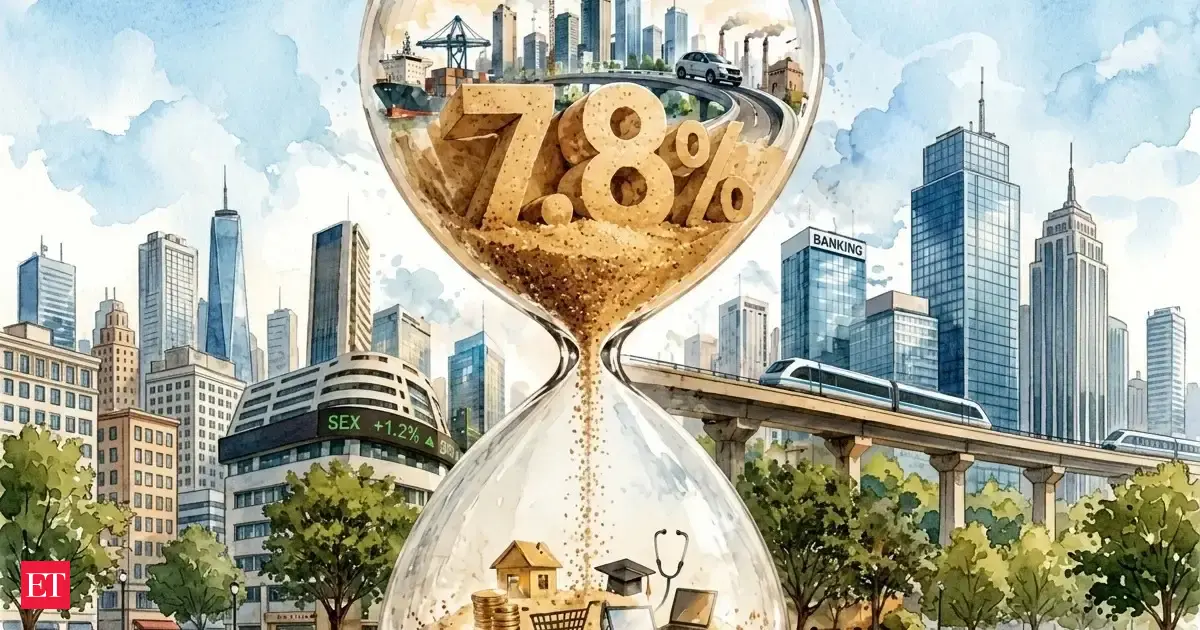
India's economy demonstrated impressive growth in the first quarter of FY27, with GDP increasing by 7.8%, surpassing expectations. This surge is attributed to strong investments and robust activity within the factory and service sectors, despite concerns stemming from geopolitical tensions in West Asia. This marks the third quarterly GDP release under the revised national accounts system using the 2022-23 base year.
Read More
While many analysts cite positive high-frequency datasets as evidence of growth, critics argue that this economic expansion is not being felt at the grassroots level. To explore this disparity, the Economic Times analyzed a broad spectrum of macroeconomic indicators.
ET considered over 60 economic indicators, narrowing them down to 20 across five thematic segments, including industry, consumption, demand, employment, and trade. The selection process aimed to ensure that the chosen indicators provided unique insights into the economy's performance.
In the context of trade, India is witnessing healthy momentum, with an increase in export orders, though at a slower pace than previously. Challenges persist with volatile foreign investments and an acceleration in import growth, which could strain the trade balance.
Business indicators remain robust, with significant demand for credit and capacity utilization surpassing the critical 75% level. Corporate sales reports for Q1 were also strong, alongside a positive business expectations index that remains above 100.
On the labor front, conditions are gradually improving, particularly in employment quality; there is a notable increase in salaried positions compared to self-employed and casual labor. However, wage growth has not met expectations, especially amidst ongoing inflation, leaving many young Indians still seeking employment.
Consumer spending has seen positive trends, particularly in car and two-wheeler sales, as well as healthy tractor sales indicative of rural demand. Yet, industrial output in consumer non-durables—a measure of rural demand and household purchasing power—has experienced a slowdown.
Finally, the economic growth appears to be diversifying, with strength in non-farm sectors, even as agriculture, which remains the largest employer, is facing challenges due to unfavorable southwest monsoon conditions. This complexity in economic signals underscores the ongoing debate about the tangible benefits of GDP growth for everyday citizens.
Data, charts, text, and reporting were conducted by Tanay Sukumar, Anoushka Sawhney, Kirtika Suneja; design by Samir Kumar.