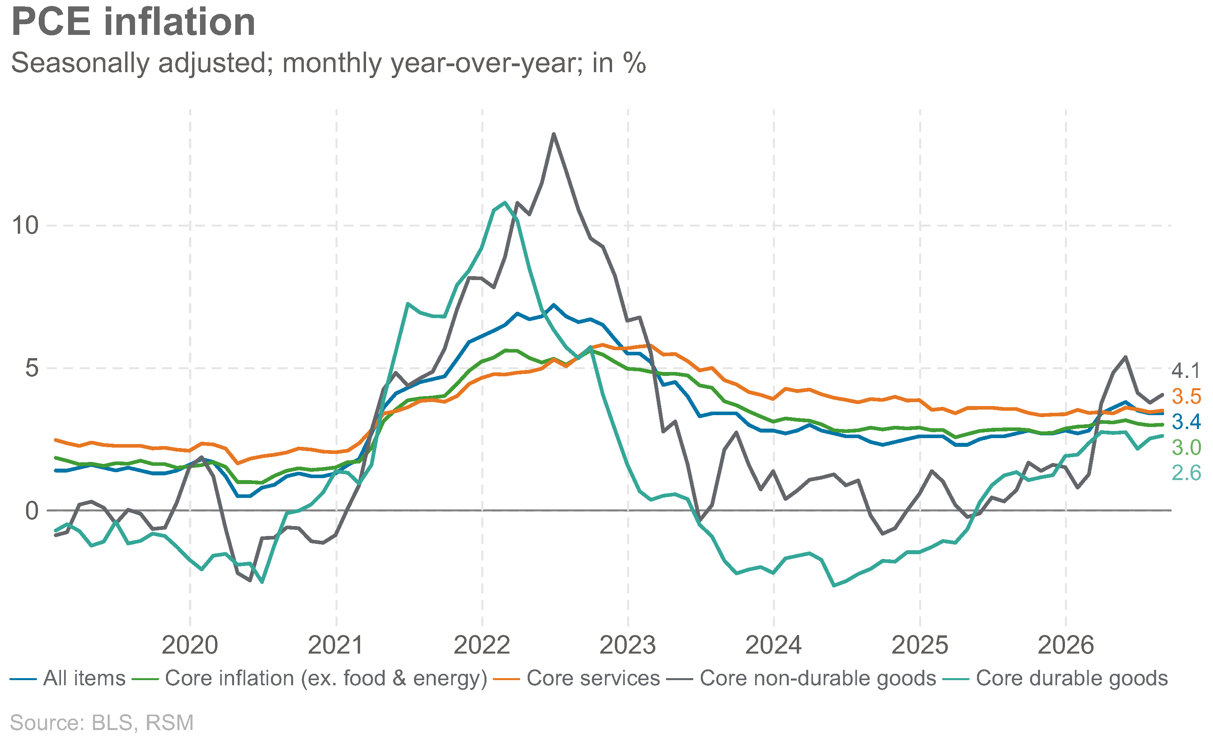
Recent economic data released on Wednesday indicate that the U.S. economy is entering a phase of stronger expansion, even as the Federal Reserve’s preferred measure of underlying inflation remains at or above 3%. This trend supports the likelihood of a 25 basis-point interest rate increase by the end of the year.
Read More
Household spending showed notable strength in September, while revisions to second-quarter gross domestic product (GDP) suggest the economy began the midyear on more solid ground than previously estimated. Demand is robust, driven by household expenditures and significant investments in AI-focused technology, despite challenges faced by middle- and lower-income households due to rising prices.
In August, personal spending rose by 0.9%, translating to a 0.6% increase when adjusted for inflation. However, personal income increased by only 0.2%, contributing to a sense of declining consumer confidence even as spending remains strong. Compensation across wages and salaries, as well as disposable income, each rose by 0.3% in August. Meanwhile, the savings rate decreased from 4.6% in July to 4.1%, reflecting a spending growth that outpaced income growth.
Further, real inflation-adjusted income excluding government transfers fell by 0.1%, intensifying dissatisfaction among lower-income groups facing higher costs for essentials like gasoline and groceries. The headline inflation rate increased by 0.3%, with core inflation rising by 0.2%. Year-over-year rates now stand at 3.4% and 3%, respectively. Changes in methodology have slightly lowered the estimates for the personal consumption expenditure (PCE) deflator; without these adjustments, the rates would have been 3.6% and 3.1%.
Prices for goods rose 3.6% year over year, with durables increasing by 2.6% and nondurables by 4.1%. Services also rose by 3.4%, while food prices increased by 1.9%, and energy prices saw a notable surge of 16.8%.
The GDP for the second quarter was revised up from 1.5% to 2.2%, revealing that trade and inventory fluctuations had previously masked stronger consumption and investment figures. This revision shows momentum heading into the current quarter, with growth expected to exceed 3%. The latest data uplifts household consumption growth from 3.4% to 3.8%, gross private investment from 2.7% to 4.6%, and final sales to private domestic purchasers from 4.2% to 4.6%.
In August, the U.S. trade deficit grew from $115 billion to $132.6 billion, which is anticipated to create a drag on growth in the current quarter. This widening deficit is attributed to increased imports of industrial supplies, capital goods, and consumer goods.
Overall, while underlying inflation remains close to 3%, surpassing the Fed's target of 2%, strong household spending and investments in AI infrastructure indicate a hot economy. Growth appears stronger than generally perceived, though it remains uneven. Rising energy costs and sustained demand suggest ongoing inflationary pressures, leading to expectations that the Federal Reserve will likely raise interest rates at least once, potentially in December.