HONG KONG (AP) — China reported a 4.5% economic growth for the July-September quarter compared to the previous year, driven largely by strong exports. This performance brings the country closer to achieving its official annual growth target of 4.5%-5%, lowered from last year's 5%. The growth rate marks an increase from the 4.3% recorded in the April-June quarter, which had been the slowest in over three years.
Read More
The International Monetary Fund recently adjusted its forecast for China's 2026 economic growth to 4.5%, aligning with the lower end of Beijing's target for this year.
Max Zenglein, a senior economist at The Conference Board, noted that the headline growth figure is becoming less indicative of the broader economic landscape, as it obscures significant disparities across different industries, regions, and households. He emphasized the challenges Beijing faces in managing domestic imbalances, which may be more problematic than external pressures.
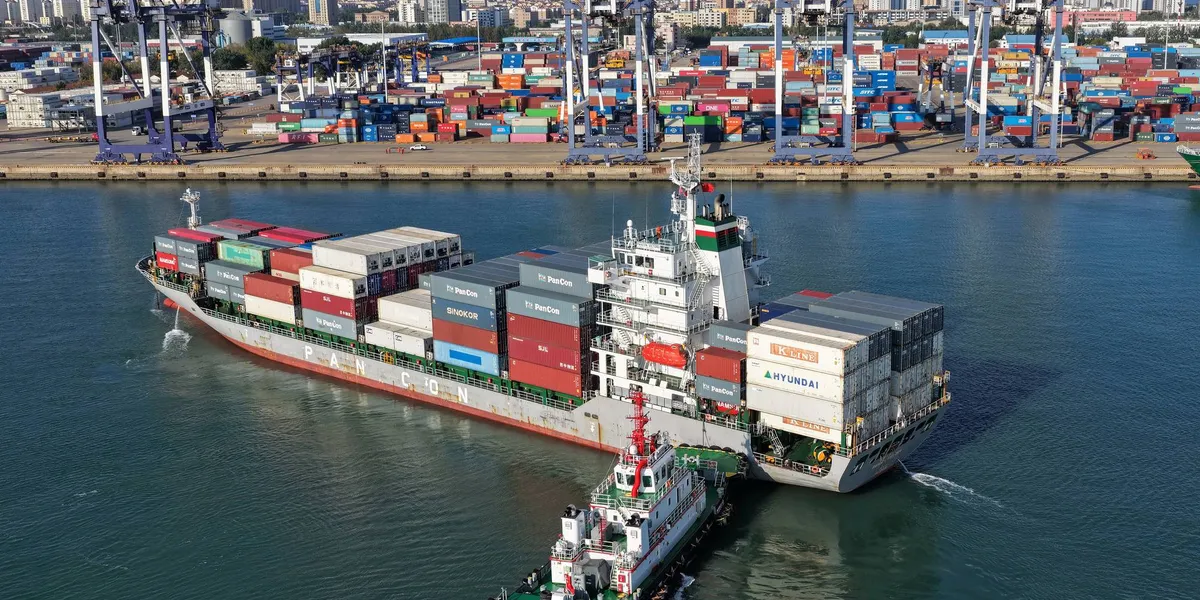
China's domestic demand remains sluggish, primarily due to a prolonged downturn in the property market that has affected household wealth and increased savings rates. Nonetheless, robust exports are one of the few positive aspects, with China poised to exceed last year's record $1.2 trillion trade surplus, particularly following a 36% rise in exports last month and a $938 billion surplus from January to September.
Elevated U.S. tariffs have impacted some aspects of U.S.-China trade, prompting China to seek new markets in Southeast Asia, Latin America, and Europe. Key growth sectors for exports this year include high-tech goods like semiconductors and automobiles, including hybrid and electric vehicles. As China aims for greater self-sufficiency to mitigate Western trade uncertainties, it has significantly enhanced its domestic manufacturing capabilities, particularly in industries such as solar energy and electric vehicles, often with government support.
However, this export-driven growth model, heavily reliant on technology, has not led to substantial job creation or broad income gains, raising concerns over potential job losses due to advances in artificial intelligence, according to Ecaterina Bigos, a senior market strategist at BNP Paribas Asset Management.
The European Union is among those increasingly worried about the impact of Chinese imports on local industries, facing a trade deficit with China exceeding $1.1 billion daily. Chinese exports to the EU rose by 16% in the first nine months of the year. Following a recent agreement to limit imports of Chinese hybrid vehicles, EU nations are considering additional restrictions against China.
China aims to negotiate trade-related disputes while maintaining access to markets. Economists like Gary Ng of Natixis believe agreements with the EU will allow China to continue exporting goods, although resolving trade imbalances will remain a challenge. Lynn Song, chief economist at ING, remarked that despite agreements, a quick resolution to these issues is unlikely.
The undervalued yuan has been cited by some policymakers as a factor contributing to China's trade surplus, although the central bank has dismissed these claims. Bigos warned of ongoing protectionist measures and increasing global pressure to safeguard domestic industries, particularly in high-value sectors. China’s central bank governor, Pan Gongsheng, reiterated that the country does not aim for a significant trade surplus and called for collaboration between nations with trade deficits and surpluses to boost domestic demand.