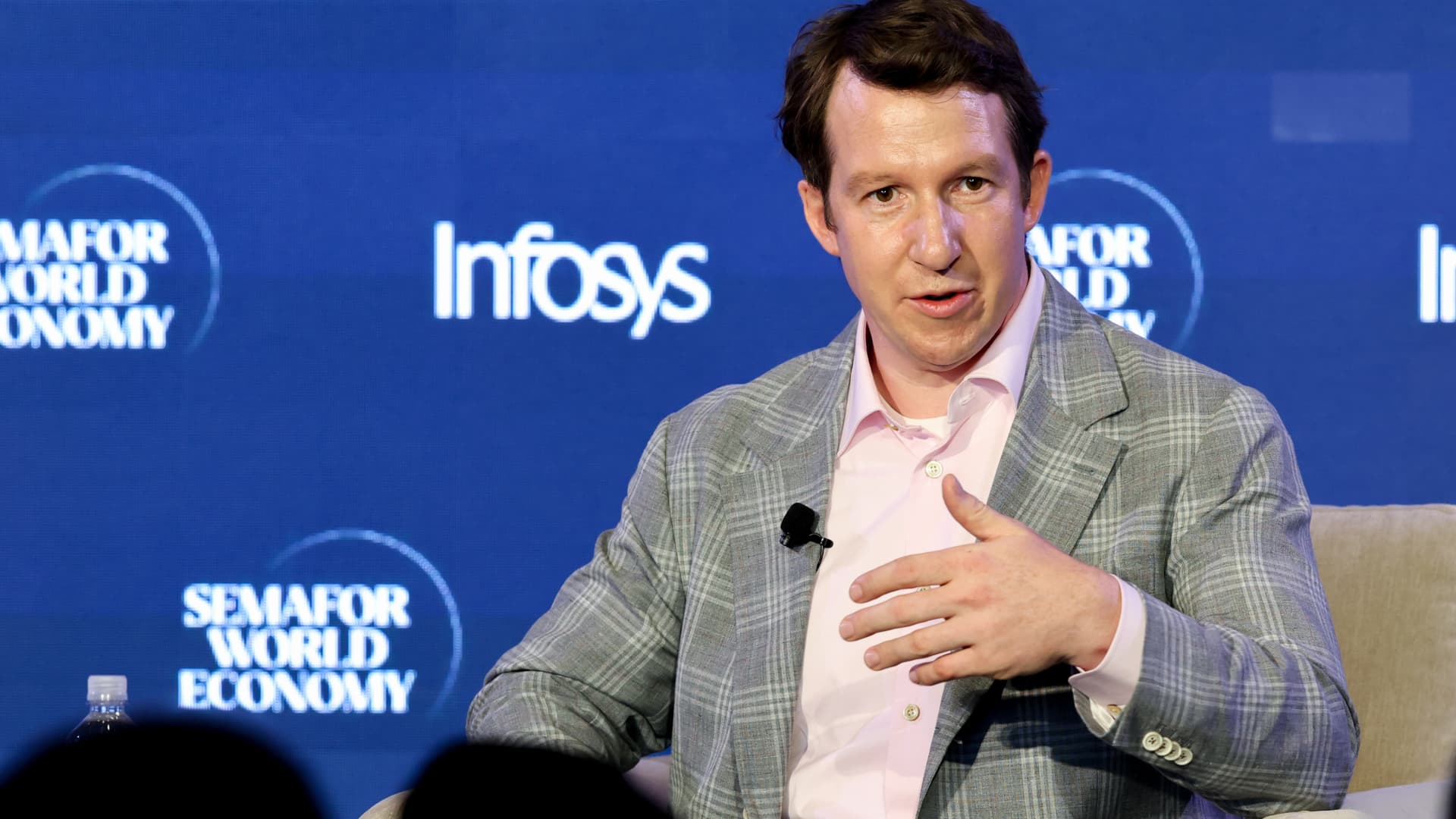
Jack Clark, co-founder of Anthropic, addressed policymakers at the IMF and World Bank annual meetings in Bangkok on Saturday, highlighting the rapid advancements in artificial intelligence (AI) and their potential economic impact. He stated that one of the company's internal models predicts that U.S. economic output could increase by nearly 50% by 2030, projecting a potential GDP of $44 trillion, up from over $30 trillion today, contingent on the continued improvement of AI technology.
Read More
Clark emphasized the need for international cooperation to establish comprehensive regulations for transformative technologies, warning that policymakers have a limited timeframe to act. He acknowledged that such significant economic growth might appear unrealistic but insisted that AI is dramatically enhancing scientific discovery and innovation.
As Anthropic prepares for an initial public offering projected for November, potentially valuing the company at $2 trillion, Clark stressed the urgency for government action. He alerted attendees to the possibility of a "singularity," where AI development could surpass human control. This could lead to rapid advancements in various fields, creating both opportunities for wealth and significant risks, he noted.
AI's role was central in discussions at the IMF and World Bank meetings, where officials debated its potential to spur growth amid high energy prices, as well as its risks, including job displacement and economic instability. Clark described a positive future where AI enhances scientific research, addressing complex issues such as drug discovery by collaborating with human researchers and numerous AI assistants.
He called for strict oversight in biological research, warning of the dangers posed by misuse of AI technology, including the creation of biological weapons. While acknowledging that AI has contributed to job losses in high-exposure sectors like call centers, he pointed out its potential to create new job opportunities in other fields, particularly scientific research. Clark concluded that the path forward requires careful regulation and broad international engagement.