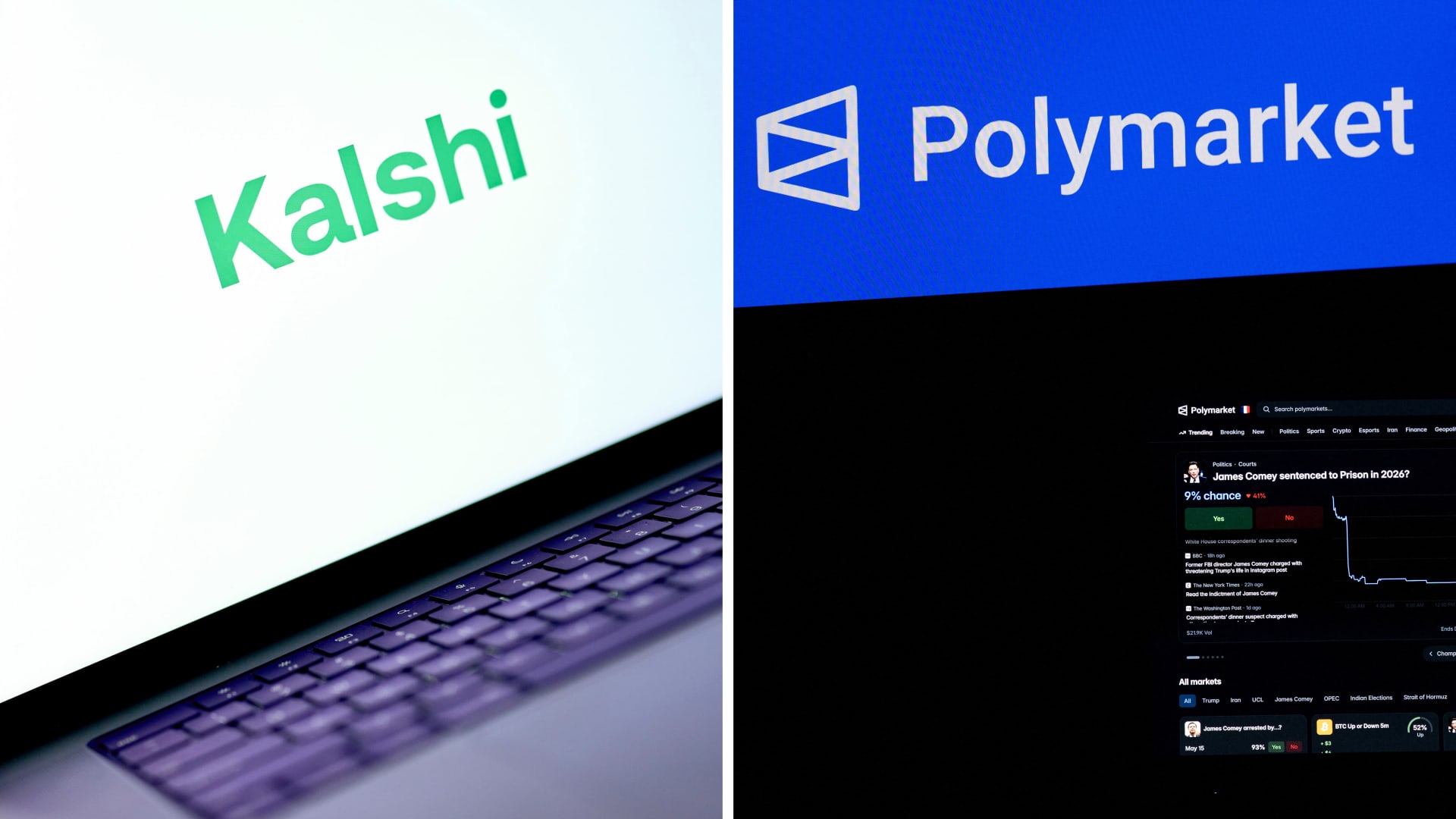
Recent trading patterns on prediction market platforms Kalshi and Polymarket have raised concerns among industry analysts, who question the authenticity of the reported volumes. Observers noted that on Polymarket's international exchange—overseen outside U.S. regulation—markets with multiple contracts tend to show heightened activity for contracts with lower probabilities, particularly in elections and sports betting.
Read More
On September 20, a user on social media highlighted unusual trading patterns in Kalshi's ether cryptocurrency perpetual futures. Specifically, trades averaging around $5,500 were disproportionately high compared to other transaction sizes, prompting concern that the activity was artificially inflated. A CNBC analysis found that nearly half of the trading volume for Kalshi's ether contracts stemmed from trades within that range, suggesting potential wash trading, where traders collude to create misleading trading activity.
Both Kalshi and Polymarket have denied the occurrence of wash trading on their platforms. Tamika Bent, a partner at K&L Gates, noted that designated contract markets should actively monitor for irregularities to maintain market integrity, although the observed patterns do not inherently indicate misconduct. As both companies aim for valuations of $20 billion and $40 billion respectively, the accuracy of their volume figures could impact prospective public offerings next year.
Polymarket's head of revenue and analytics, Kyle Gesuelli, attributes the popularity of low-odds contracts to active traders identifying mispriced markets, which he asserts benefits overall market health. Kalshi, on the other hand, maintains that it has systems in place to prevent manipulative trading and downplays any concerns over liquidity ratios raised by experts.
The Commodity Futures Trading Commission (CFTC) is reportedly investigating the trades on Kalshi's ether contracts, though it does not confirm ongoing investigations, according to a spokesperson. CFTC Chairman Michael Selig emphasized the agency's strict policies against manipulative trading practices.
Concerns surrounding trading volumes extend beyond cryptocurrencies. In April, unusual activity on Polymarket’s international platform was noted, including a contract regarding the 2028 presidential election where volume patterns raised eyebrows. Contracts for lesser-known candidates had more trading than those for more probable candidates, indicating possible manipulation.
A study initially released by Columbia University claimed that wash trading accounted for a significant portion of Polymarket's volume, although recent efforts have reportedly reduced instances of such activity. Further complicating the situation, speculation about potential cryptocurrency token airdrops on Polymarket's international exchange has been discussed but remains unconfirmed.
Kalshi's recent debut of its perpetual futures product coincides with questions about whether its fee structure allows traders to exploit the market. Experts suggest the trading volume to open interest ratios on Kalshi indicate a possible inefficiency in market structure. Though Kalshi insists that these volumes arise from healthy trading activity, external analyses suggest a misalignment with typical market behavior.
In the face of these revelations, both platforms are under scrutiny as they navigate their growth amid evolving market dynamics.