The Reserve Bank of India (RBI) is expected to increase its policy repo rate by 25 basis points to 5.50% during its meeting from October 5-7, 2023, as inflation rates have exceeded targets and price pressures are intensifying, despite robust economic activity.
Read More
Since the RBI’s last meeting in August, the case for a rate hike has strengthened significantly. Headline consumer price index (CPI) inflation rose to 4.82% in August, up from 4.45% in July, marking the third consecutive month above the RBI's 4% target.
Food inflation increased to 5.95%, while core inflation also saw an uptick, rising to 4.2% from 3.86% a month earlier. Notably, inflation pressures are now more widely distributed beyond food and fuel categories, indicating that the rise in prices is less concentrated in specific volatile sectors.
Wholesale inflation also indicates growing price pressures, with the wholesale price index (WPI) inflation climbing to 9.92% from 9.78% in July. The gap between wholesale and consumer inflation narrowed to approximately 5.1 percentage points from 5.3 percentage points, primarily due to rising consumer inflation rather than falling wholesale prices. Producer prices remain high, while consumer prices appear to be catching up.
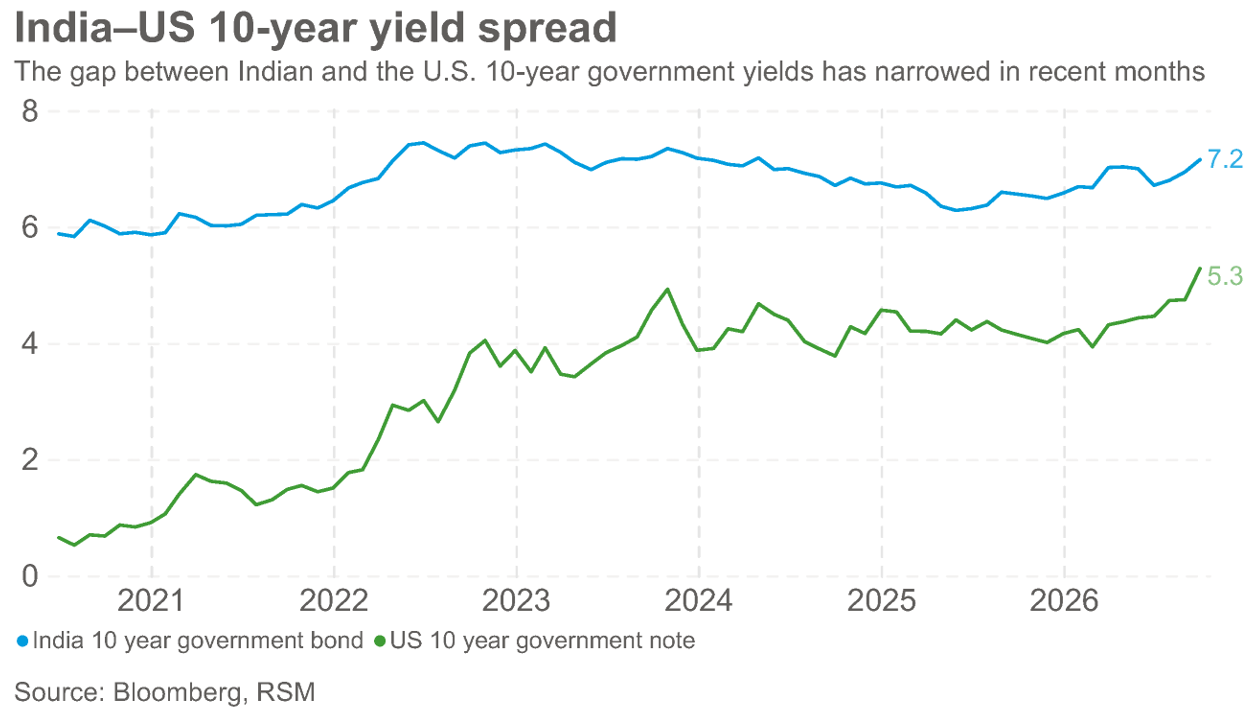
The international policy landscape has shifted as well, with major central banks moving towards tighter monetary policies as an energy shock has heightened inflation. This situation has led to rising global bond yields as investors reassess the sustainability of inflation levels.
For India, the RBI faces the dilemma of not only responding to global interest rate changes but also managing their impacts on local capital flows and the value of the rupee. Rising yields in the U.S. and other developed markets could make Indian assets less appealing, affecting portfolio investment dynamics and potentially driving the rupee lower. This would increase the domestic costs of imported commodities, further contributing to inflation.
In terms of growth, the RBI has room to tighten its monetary policy, as real GDP growth accelerated to 7.8% year-on-year during the April-June quarter of 2023, surpassing the RBI’s 7.0% forecast. Recent indicators also reflect strong economic performance, with industrial production jumping to 8.0% year-on-year in August from 6.7% in July, and the manufacturing PMI rising to 55.1 from 52.8, the highest level in seven months.
Given the combination of strong domestic demand and rising inflation, the RBI is positioned to address the current inflationary pressures before they become more entrenched in the economy. Analysts predict that the RBI will proceed with the 25-basis-point increase in the repo rate at its upcoming meeting, emphasizing that future policy moves will depend on ongoing inflation developments and external price shocks.