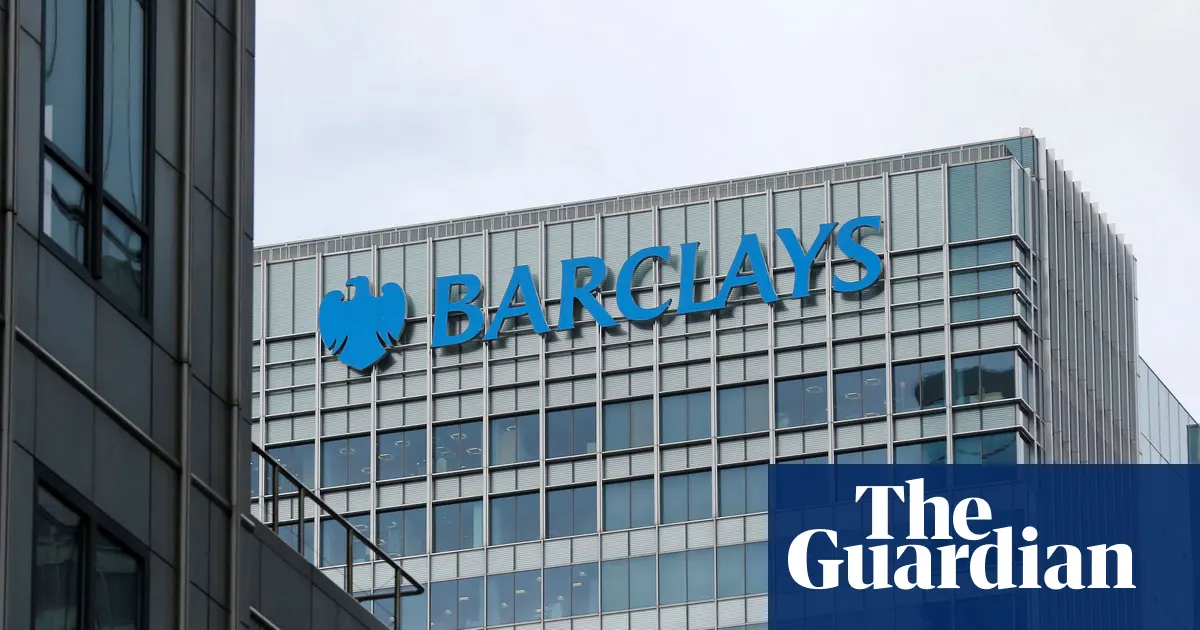
The Bank of England is conducting a review of Barclays' management of loans associated with the troubled private credit sector. This investigation, initiated by the Prudential Regulation Authority (PRA), follows concerns raised by a Barclays insider regarding the bank's handling of financial derivatives linked to these loans, according to the Financial Times.
Read More
Specifically, the concerns involve how Barclays recorded derivatives known as total return swaps, which are used to finance loans issued to private credit firms. These derivatives have reportedly been categorized incorrectly, suggesting they carry less risk than they truly do, potentially leading the bank to hold insufficient capital for potential losses, which may have enhanced its profitability.
Sources indicate that Barclays has accrued billions of dollars in exposure to private credit loans through these derivatives. The bank has stated that its treatment of total return swaps aligns with both accounting and regulatory capital requirements, emphasizing that capital allocation decisions have adhered to established rules and appropriate internal governance supported by external advisors. Barclays estimated its total exposure to the private credit sector to be approximately £15 billion, with relevant derivatives constituting about £300 million of that total.
Shares in Barclays fell by 3.5% on Monday, making it the second-largest drop on the FTSE 100 index amid a broader downturn in the banking sector. The bank is scheduled to release its latest financial results on Thursday.
The review poses a challenge for the new PRA lead, Katharine Braddick, who previously spent six years as Barclays' head of strategic policy and senior advisor to its CEO before taking her current position this spring. The Bank of England has confirmed that Braddick is recused from any matters relating to Barclays until the end of 2026.
Last year, Barclays' CEO, CS Venkatakrishnan, asserted that the bank maintained adequate controls to manage its exposure to the private credit sector, amid concerns from critics regarding declining lending standards. The private credit sector, a significant component of the shadow banking system, raises worries that insufficient regulation may destabilize traditional banks that are now interconnected with it.
This scrutiny comes amid a multibillion-pound surge of withdrawals from some private credit funds earlier this year, which led to caps on client withdrawals. The industry has faced challenges due to recent high-profile company failures, notably two US automotive companies, Tricolor and First Brands, both of which were marred by fraud allegations. Additionally, the mortgage lender Market Financial Solutions (MFS) collapsed in February over similar claims, resulting in Barclays incurring a £228 million loss related to these failures.