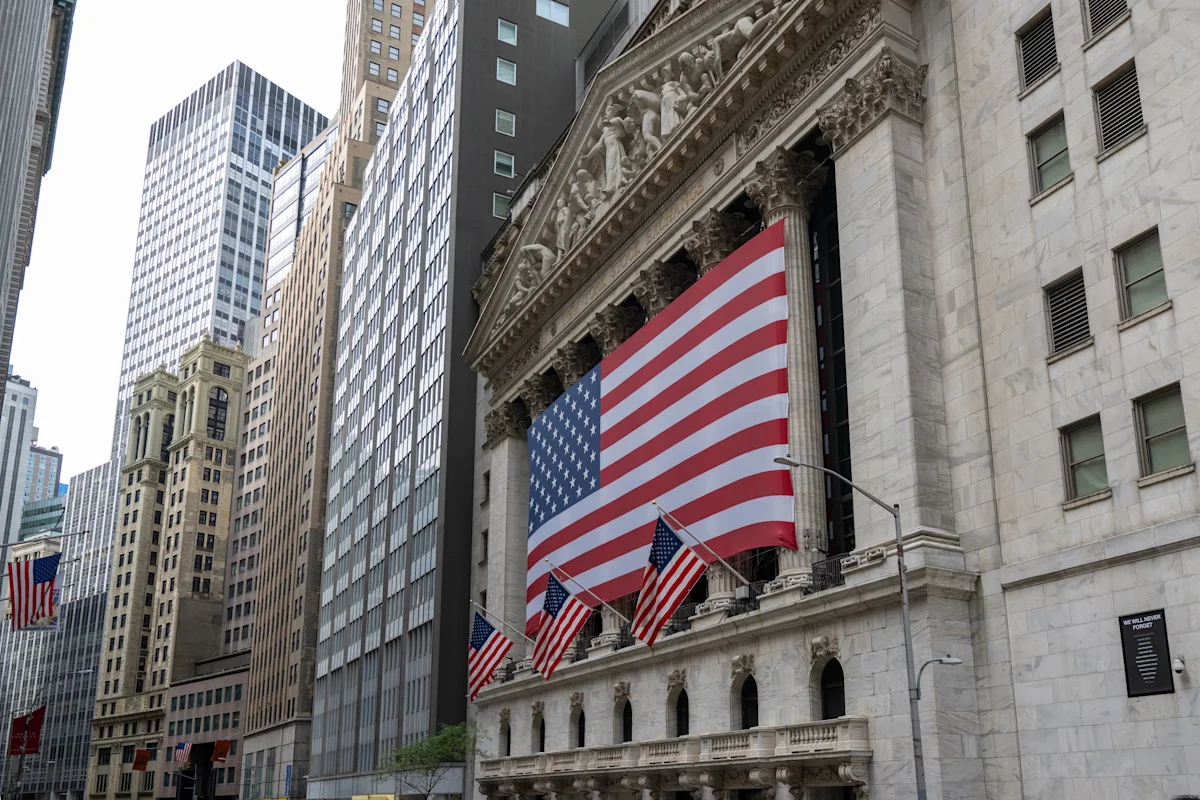
On Friday, U.S. stocks experienced a downturn as investors shifted their focus from concerns regarding AI trade financing to the upcoming earnings reports. The Nasdaq 100 fell by 1.1%, and the S&P 500 dropped 0.3%, while the Dow Jones Industrial Average recorded a modest gain of 0.2%. Despite these losses, all three major indices had positive closes on Thursday. The S&P 500 and Nasdaq are likely to post weekly losses following a sell-off in semiconductor stocks, while the Dow is expected to end the week with approximately a 1% increase.
Read More
Semiconductor stocks faced renewed pressure after a volatile week, impacting the AI trade. CoreWeave (CRWV), backed by Nvidia, saw its shares drop again due to concerns regarding its high levels of debt. This followed a brief recovery on Thursday, after Nvidia CEO Jensen Huang expressed optimism about the company's prospects. Investors have been reallocating their investments from technology to more defensive sectors, such as Health Care, which has reached record highs. Tesla (TSLA) shares rose over 1% following the announcement of a dramatic redesign of its Roadster.
The earnings season is ongoing, with Tesla set to release its results next week, along with Netflix (NFLX) and Meta (META).
While broad indicators showed that about 70% of S&P 500 stocks were advancing earlier in the day, this number slipped to nearly 70% as semiconductor stocks continued to decline. The iShares Semiconductor ETF (SOXX) faces its ninth consecutive loss, the longest streak since 2006. Software stocks initially gathered momentum but later succumbed to selling pressure, with considerable declines in Salesforce (CRM), ServiceNow (NOW), and Twilio (TWLO).
Federal Reserve Chair Kevin Warsh did not indicate a commitment to another rate hike this month, and traders are adjusting their expectations accordingly, reducing the likelihood of an October increase to around 15%, down from 33% earlier this week. Treasury yields also softened, with the 10-year yield hovering near 5.07% and the 30-year yield at about 5.42% after pricing peaked earlier in October.
Visa (V) and Mastercard (MA) reached record highs amid overall market gains in the S&P 500, despite the ongoing struggles of semiconductor stocks. Nearly four out of five S&P 500 stocks were advancing, led by financial and energy sectors. In contrast, chip stocks were facing significant drops, with 57 out of 60 semiconductor stocks underperforming.
Regional bank Truist Financial (TFC) saw its shares fall more than 2% after reporting third-quarter earnings that fell short of analyst forecasts. The bank recorded adjusted earnings of $1.16 per share, missing expectations of $1.19, despite a year-over-year increase.
In geopolitical news, escalating conflicts in the Middle East are adding pressure to the U.S. economy, particularly regarding oil prices.
Tesla's stock rebounded by as much as 5.4% in pre-market trading after showcasing its redesigned Roadster, which incorporates innovative features for limited flight.