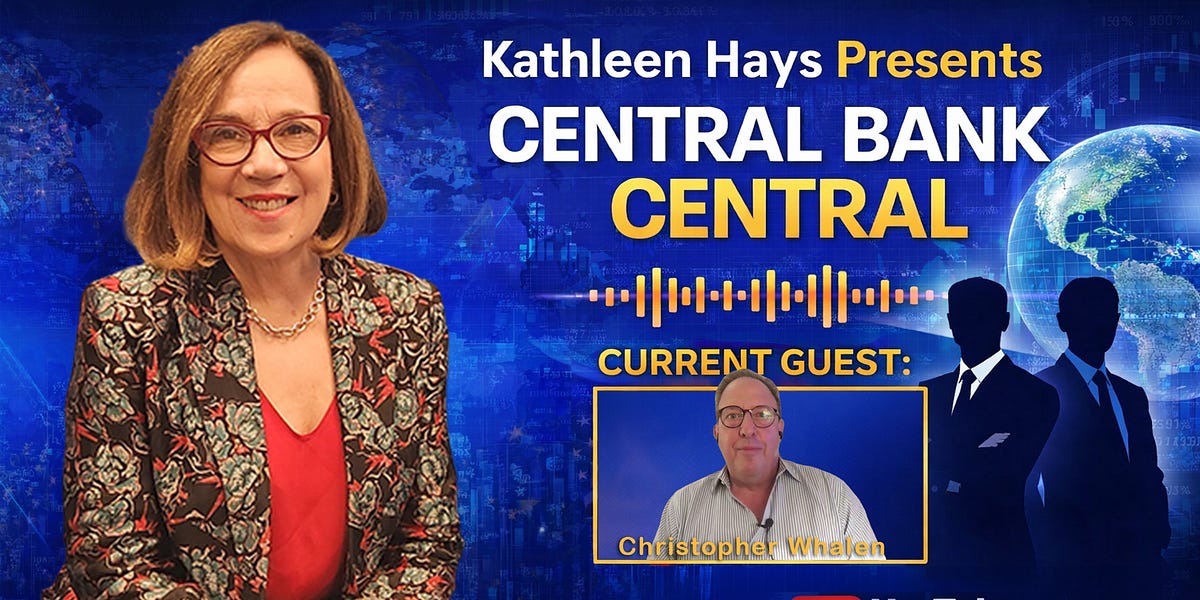
R. Christopher Whalen, an investment banker and author, has revised his book "Inflated: Money, Debt, and the American Dream," which originally addressed inflation shortly after the 2008 financial crisis. He believes his latest edition adequately explains the origins of current inflation trends and their ties to monetary expansion. Whalen points to the significant liquidity injected into the U.S. economy since 2008 as a primary driver of persistent inflation, emphasizing that this environment has been sustained for over 15 years.
Read More
According to Whalen, inflation has evolved into a pressing political issue, affecting both economic policy and the political landscape. He states that rising inflation will have notable implications for upcoming elections, making it a key concern for policymakers. Looking forward, he expresses concern that ongoing conflicts, particularly in Iran and Ukraine, will exacerbate inflation by driving up energy and food prices. He warns, "There is a wave of inflation coming at the U.S. and the world due to the Iran and Ukraine wars."
Whalen argues that supply-side shocks stemming from these conflicts are beyond the control of central banks like the Federal Reserve, suggesting they are ill-equipped to combat these inflationary pressures. He notes that damage to global energy infrastructure, particularly oil refineries, will have lasting effects on prices for energy and agricultural inputs, predicting continued increases in energy costs and their impact on food production.
The rising costs of energy will likely force farmers to make difficult decisions regarding fertilizer use, which could lead to lower crop yields and higher food prices. Whalen comments, "You’re going to see prices for things like fertilizer at levels that farmers cannot afford."
He also connects the current economic challenges to a recent selloff in the U.S. bond market, citing a lack of confidence from investors regarding the government's fiscal policies. This has resulted in a shift where global central banks are moving away from U.S. Treasury securities and increasing their gold purchases, signaling a potential transition from a dollar-based system to one more centered around gold.
Whalen identifies fiscal deficits as a pivotal factor in driving inflation, lamenting the absence of political will to address government spending. He refers to the current deficit, projected at around $2 trillion or 6% of GDP, as something that complicates the Fed's ability to manage inflation. He notes that past Federal Reserve chairs like Alan Greenspan understood the need for responsible fiscal policy in combating inflation.
In light of these circumstances, he views the newly appointed Fed Chair, Kevin Warsh, as potentially credible but constrained by the current political environment. Whalen emphasizes that monetary policy alone is insufficient to address the system's challenges, suggesting that without Congressional support for fiscal responsibility, achieving inflation targets would be difficult.
The ongoing energy crisis, driven by geopolitical conflicts and the complexities of repair work on damaged infrastructure, further complicates the economic outlook. Whalen warns that rising energy prices will diminish consumer spending power, impacting broader economic activity. He concludes that immediate solutions require a truce in the Middle East to facilitate the reconstruction of production capacities in key sectors.