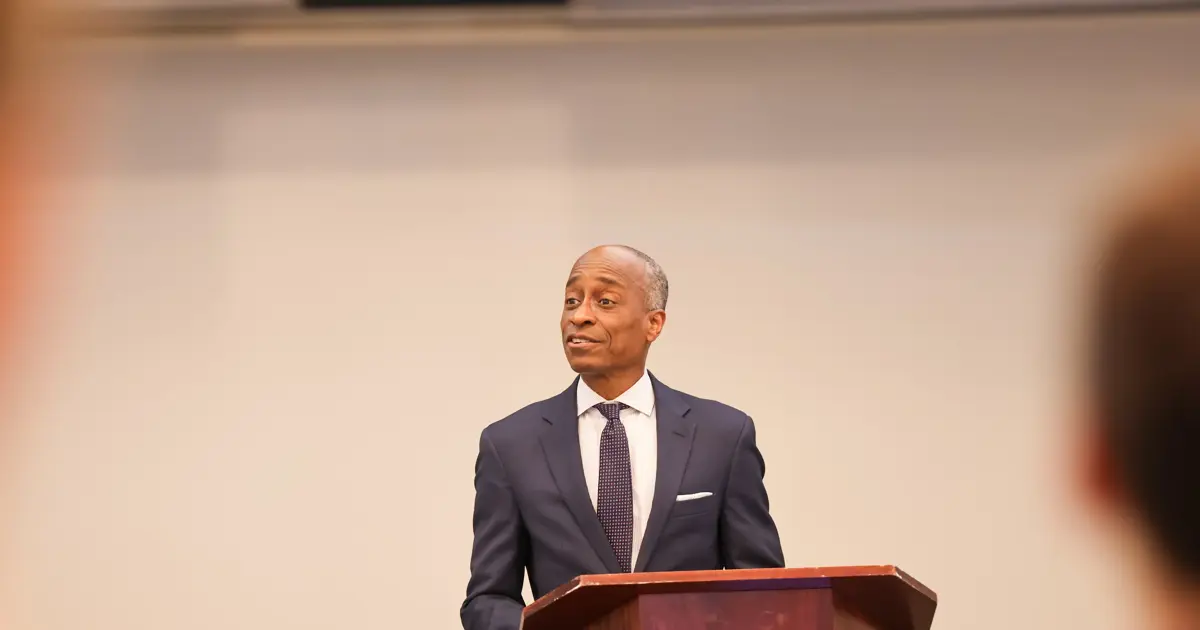
On October 1, Federal Reserve Vice Chair Philip N. Jefferson addressed the economic landscape during a talk at the University of Virginia's Darden School of Business. He noted that inflation remains unacceptably high and emphasized the need for policymakers to navigate a series of ongoing economic shocks, which include energy crises and advancements in artificial intelligence (AI).
Read More
Jefferson, an alumnus of UVA where he earned his master’s and doctorate in economics, described the current economic climate as a crucial moment for the U.S. He highlighted how the rapid integration of AI, along with shifting geopolitical dynamics and demographic changes, is influencing economic growth. He noted that the economy has faced multiple shocks, including a significant buildout of AI infrastructure that affects trade policies and energy costs.
Reflecting on inflation, which has surpassed the Fed's 2% target for over five years, Jefferson stated, "Inflation is too high." His comments came shortly after the Fed raised its benchmark interest rate for the first time in 2023, implementing an increase to a range of 3.75% to 4%. He supported this rate hike as essential for maintaining longer-term inflation expectations.
During a discussion moderated by Professor Bo Sun, a former principal economist at the Fed, Jefferson explored the important relationship between Fed credibility and inflation expectations. He stressed the importance of monitoring long-term inflation expectations, saying they currently align with the Fed’s target. However, he cautioned that this credibility must not be taken for granted and emphasized the commitment to reducing inflation to 2% in an appropriate timeframe.
Jefferson also discussed the potential of AI to drive economic growth, noting that the U.S. GDP grew at a 2.4% pace in the first half of the year, consistent with previous years. He attributed strong business investment to AI-related expenditures and expressed optimism about AI's role in enhancing productivity, which could benefit the economy significantly.
In addressing the labor market, Jefferson indicated that conditions have stabilized, but acknowledged that stability can sometimes mask underlying issues. He pointed out the need for an active job market where employees feel secure enough to change jobs, typically for higher pay. He noted improvements in hiring and payroll gains while recognizing that experiences within the labor market can vary widely among different groups.
Looking ahead, Jefferson expects inflation to remain elevated in the short term but anticipates a return to the 2% target as external price shocks dissipate. He alluded to upward risks in inflation forecasts due to geopolitical factors and stronger than expected demand.
Jefferson concluded by highlighting the complex nature of current economic policymaking, where multiple variables must be assessed simultaneously. He offered advice for students, encouraging them to evaluate opportunities based on their potential contributions, learning outcomes, and personal enjoyment.