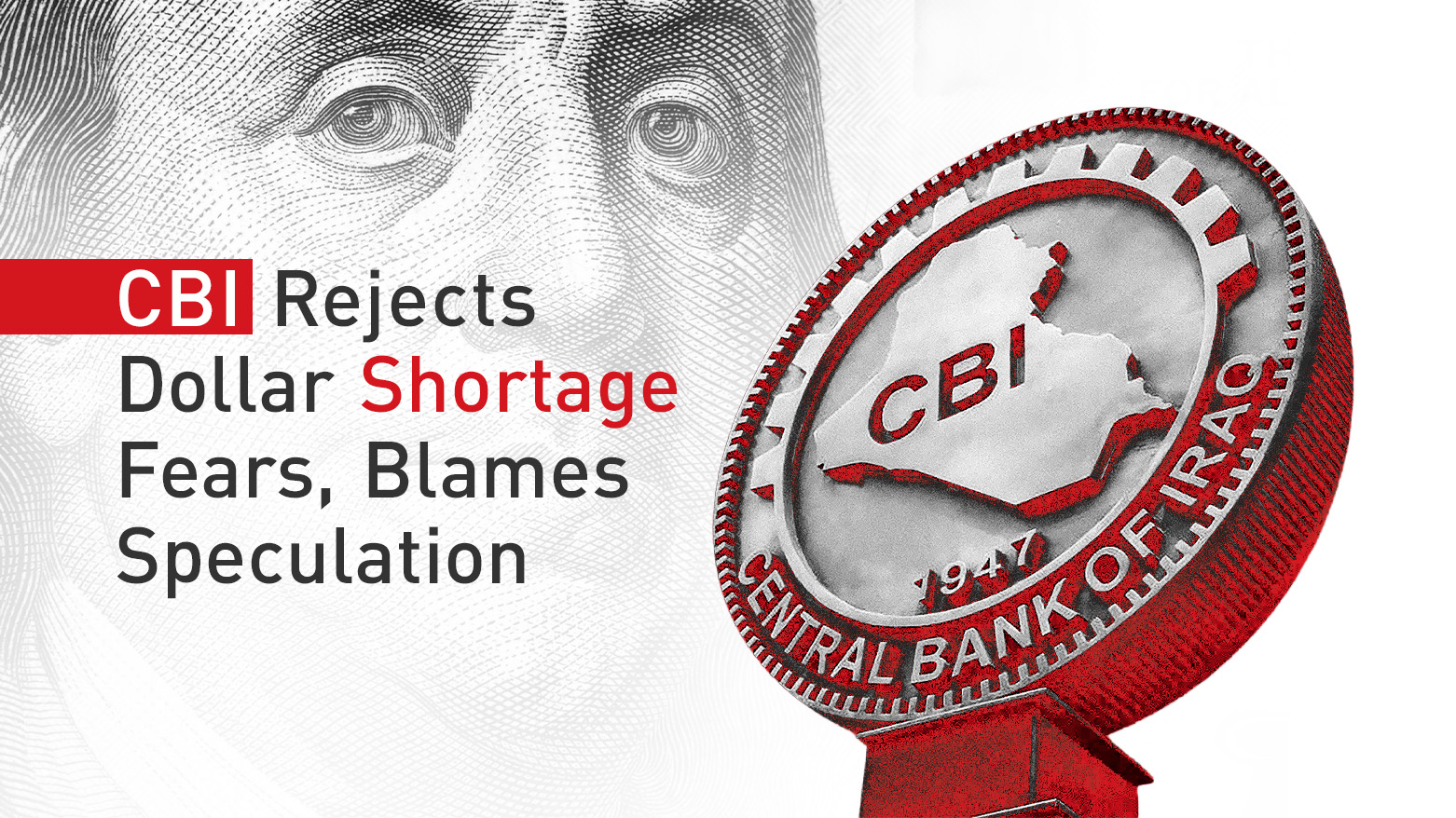
The Central Bank of Iraq has stated it possesses sufficient foreign currency reserves to meet dollar demand, attributing the dinar's recent decline in the parallel market to speculation and uncertainty.
Read More
In a statement released on Saturday, the bank responded to concerns about rising exchange rates and reduced market activity, asserting that these do not indicate a shortage of hard currency. It emphasized that reserves are adequate to finance foreign trade, support bank transactions, and provide cash dollars to travelers at the official exchange rate.
The bank contended that the increase in market exchange rates stems from speculation, manipulation, and geopolitical developments that have led some market players to exploit uncertainty, thereby undermining Iraq's financial stability. It assured that foreign trade would continue to be supported through established mechanisms to facilitate imports and satisfy domestic market needs.
This statement follows a significant rise in the dollar value, reaching 159,350 dinars per $100 in Erbil and exceeding 160,000 dinars in Baghdad, contrasting sharply with the official rate of 1,310 dinars per dollar. Various explanations for this widening gap are circulating.
The Central Bank maintains that Iraq lacks no foreign currency for legitimate needs, countering worries expressed by certain lawmakers and economic analysts who have cited diminished cash flows, political instability, and fears of potential U.S. financial restrictions. Daner Abdulghafar, a member of the Iraqi Parliament's Finance Committee, noted that the latest delivery of $500 million from the U.S. Federal Reserve to the Central Bank occurred on August 6, with much of the funds already allocated for salaries, travel, and remittances, leaving little available.
Abdulghafar also pointed out that reduced dollar sales by the Central Bank are contributing to the dinar's pressure. He differentiated between market supply issues and the Central Bank's overall reserves, emphasizing its ability to meet demand through approved channels.
Political uncertainties related to the disarmament of armed groups have added further tension to the currency situation. Abdulghafar warned that the U.S. Federal Reserve might limit dollar shipments if these groups do not surrender their weapons by September 30. Sherwan Doberndani, a member of the Security and Defense Committee, cautioned that failure to implement weapons control could expose Iraq to U.S. financial sanctions. He highlighted ongoing dollar smuggling and regional tensions as additional pressures on the currency market.
Mazhar Mohammed Saleh, a financial advisor to the Iraqi prime minister, dismissed claims of imminent U.S. measures as "rumors" and stated that no official communication regarding such actions had been made by Washington.
Eco Iraq, an economic platform, noted that the rise of the dollar reflects multiple factors, including commercial speculation and declining confidence in the banking system. They called for the Central Bank to closely monitor the foreign-exchange market to mitigate speculative behavior and enhance trust in the dinar and banking system.
The fiscal strain on Iraq is also evident, with public debt reaching approximately 109.5 trillion dinars by the end of July, a significant increase from 90.5 trillion dinars at the end of 2025. This rise reflects fiscal challenges but does not directly indicate a shortage of foreign reserves.
As political uncertainty concerning armed groups persists, Baha al-Araji from the Reconstruction and Development bloc noted that achieving consensus on weapons control may take over a year, indicating that these issues will continue to influence the currency market beyond the September deadline.
Currently, although the dinar is facing considerable pressure in the parallel market, the Central Bank asserts that it has adequate foreign currency to address legitimate demand. The market's response will hinge on both the bank's ability to supply dollars through official means and the resolution of speculation and political uncertainties in the near future.