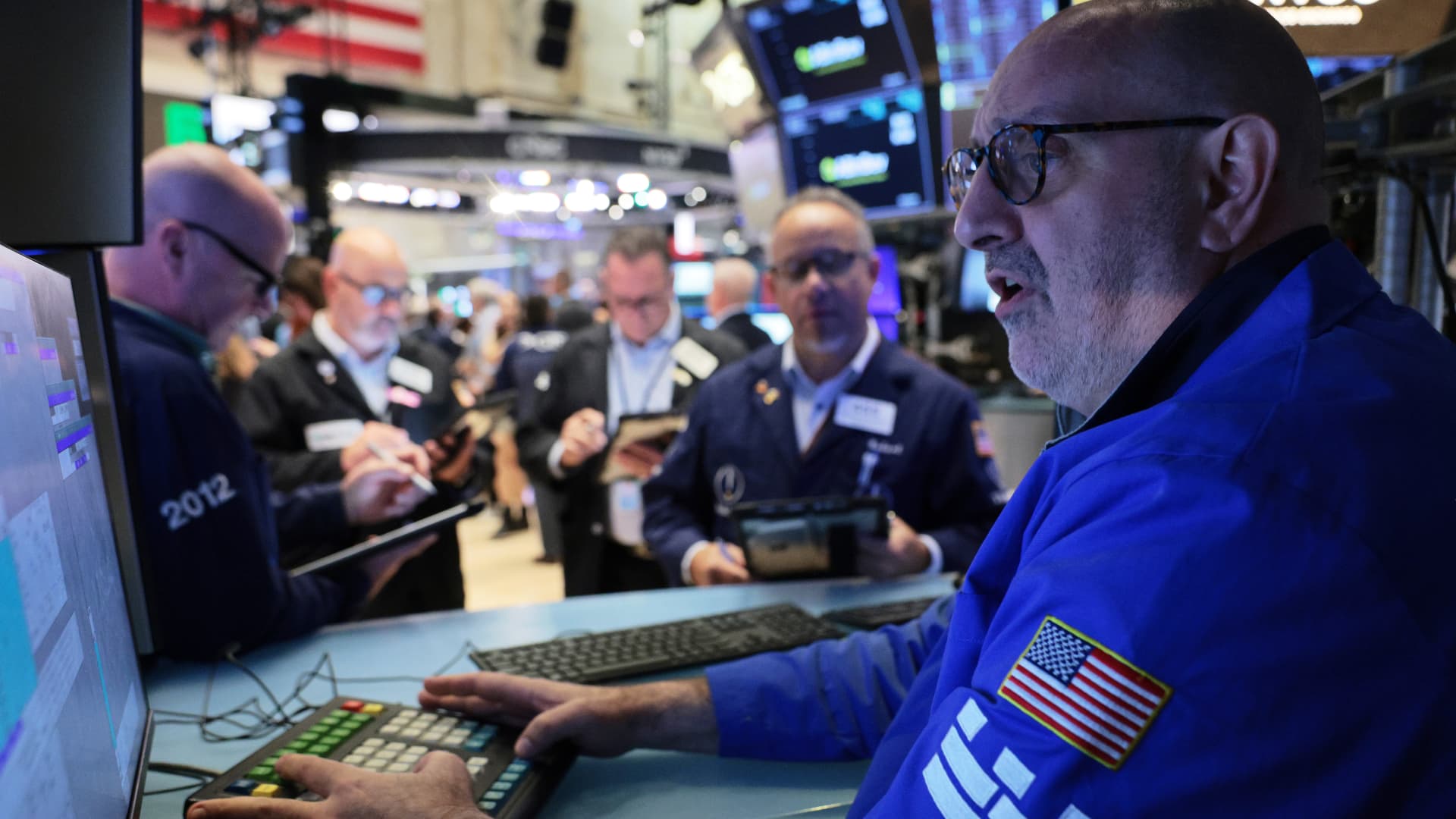
On October 14, 2026, mixed trading characterized the sessions on Wall Street as investors rotated away from technology and artificial intelligence stocks. The Dow Jones Industrial Average rose by 129 points, or 0.3%, while the Nasdaq Composite fell by 1.1%. The S&P 500 declined by 0.4%.
Read More
Chip makers also faced losses, with the VanEck Semiconductor ETF (SMH) dropping 1%, largely affected by downturns in stocks such as Micron Technology, Advanced Micro Devices, and Sandisk. The semiconductor sector has faced increasing pressure this week, partly due to concerns over competition from China, leading the SMH to register an 8% decline for the week.
This trend has contributed to a projected losing week for the S&P 500, which is down approximately 1%, and the Nasdaq, which has decreased by about 3%. In contrast, the Dow has improved by more than 1% over the same period. Investor concerns are also rising over the amount of debt being taken on by tech companies for AI development. For instance, shares of CoreWeave saw a nearly 9% decline, totaling a week-to-date drop of over 22%, attributed to its ballooning debt surpassing $51 billion.
Michael Rosen, Chief Investment Officer at Angeles, remarked, "The question is: Is this a systemic issue?" He noted the importance of monitoring debt levels, although he believes the situation is not yet excessively concerning.
Among other sectors, financial stocks posted gains, with JPMorgan and Goldman Sachs increasing by approximately 2% and 1%, respectively. Shares of Nike and Merck also rose about 1%, contributing to the Dow's overall ascent.
Investors remain cautious amid unexpected inflation data and rising energy prices due to ongoing conflict in the Middle East. This week, wholesale inflation recorded its largest increase since 2022, while consumer inflation continues to exceed the Federal Reserve’s 2% target.
Federal Reserve Chairman Kevin Warsh, speaking at an IMF event in Bangkok, did not provide any guidance on potential rate hikes but suggested an expectation for the Fed to maintain its current policy. Market expectations indicate an 85% probability that there will be no change to the overnight rate during the Fed's upcoming meeting on October 27-28.
Bank of America’s strategist Michael Hartnett expressed a 'risk-off' stance for the next month, citing reasons including rising yields, high oil prices linked to geopolitical events, and worries related to upcoming elections and AI stock performance.
Further developments included a sell-off in CoreWeave, impacting valuations of AI firms like OpenAI and Anthropic, with OpenAI's valuation falling over 4% and Anthropic gaining 2.4% amid market fluctuations.
Amid this, gains were noted in global markets, particularly in Asia, bolstered by rebounds in technology stocks after a recent downturn.