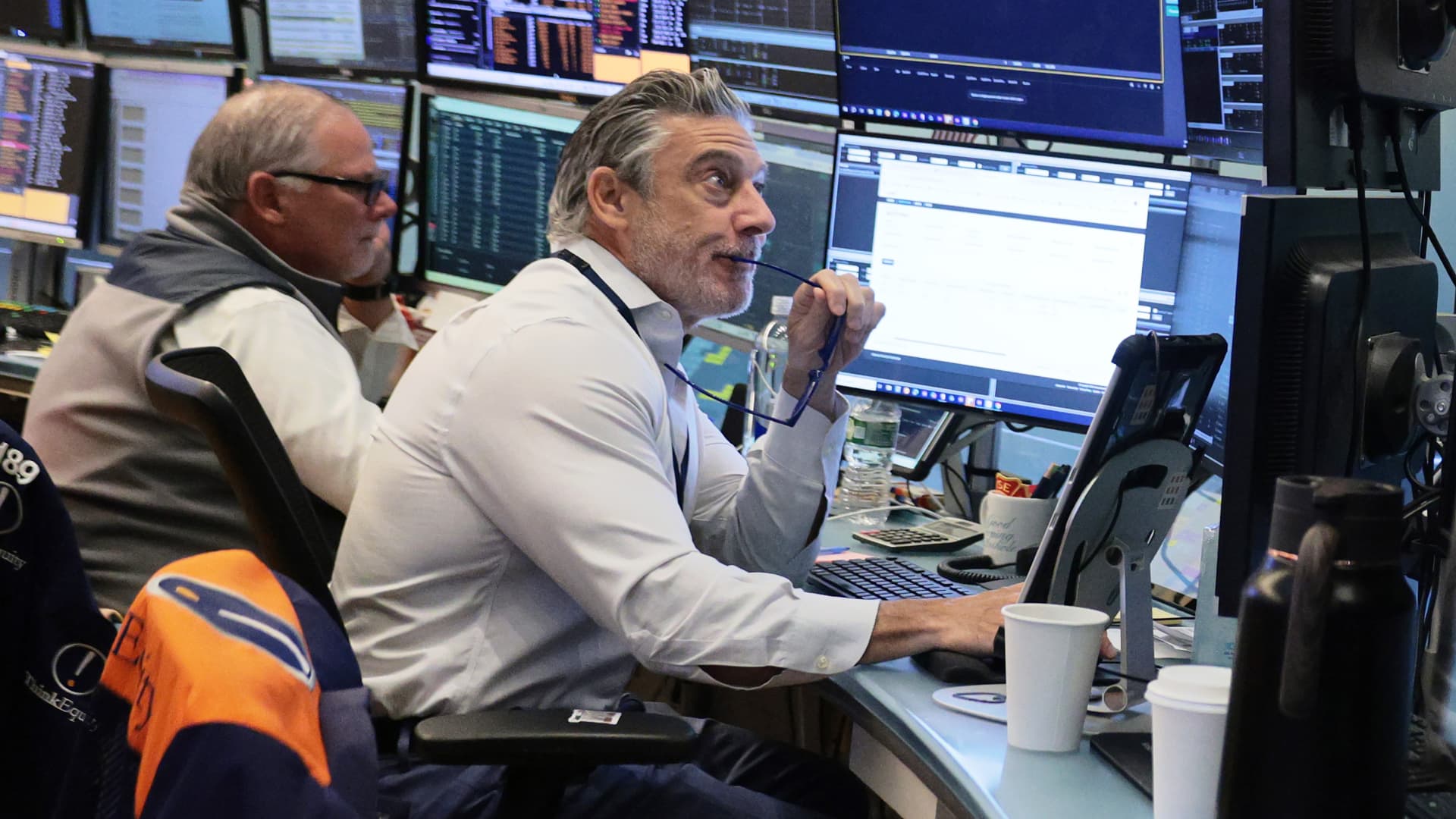
The Dow Jones Industrial Average declined on Friday, closing down 95.40 points or 0.18% at 51,682.64. This marked the index's third consecutive week of losses, concluding its worst week since March with a decrease of 1.7%. Meanwhile, the S&P 500 rose 0.17% to finish at 7,650.50, and the Nasdaq Composite saw a gain of 0.39%, closing at 26,522.55.
Read More
The slump in the Dow coincided with increasing Treasury yields, particularly as the 10-year yield briefly surpassed the 5% mark for the first time since July 2007, ultimately settling at 5.006% after a peak earlier in the week. Oil prices also remained elevated, with West Texas Intermediate crude falling 1.58% to $100.30 per barrel, while Brent crude dropped 0.91% to $103.87.
Traders reacted to the Federal Reserve's recent interest rate hike, the first in three years, and indications that additional increments could follow later this year. Despite the initial market downturn on Wednesday, a recovery in technology stocks on Thursday hinted that investors might be optimistic about future corporate earnings.
Scott Welch, chief investment officer at Certuity, noted that the removal of some uncertainty with the rate hike has not fully alleviated concerns about continued rises in Treasury yields, which he predicts will persist. He also expects oil prices to stay high in the near term, suggesting a cautious outlook for the stock market as it navigates these economic conditions.
Financial sector stocks underperformed this week, with the SPDR Financials Sector Fund dropping over 2%, facing its largest weekly loss since March. Notably, Goldman Sachs and Bank of America each fell around 8%. However, companies like Coinbase and FactSet provided some relief with gains exceeding 11% and 9%, respectively.
In other news, the U.S. Department of Justice is reportedly considering joining a lawsuit by Texas and 12 other states against BlackRock and State Street for allegedly pressuring coal producers to limit output for climate goals. Following the report, BlackRock shares fluctuated before ending up slightly, while State Street saw a brief dip.
As individual investor sentiment shifts, about 53% now express a bearish outlook for the stock market, the highest level of pessimism since May of the previous year, as reported by the American Association of Individual Investors. This shift underscores the prevailing concerns surrounding inflation and potential further rate hikes.