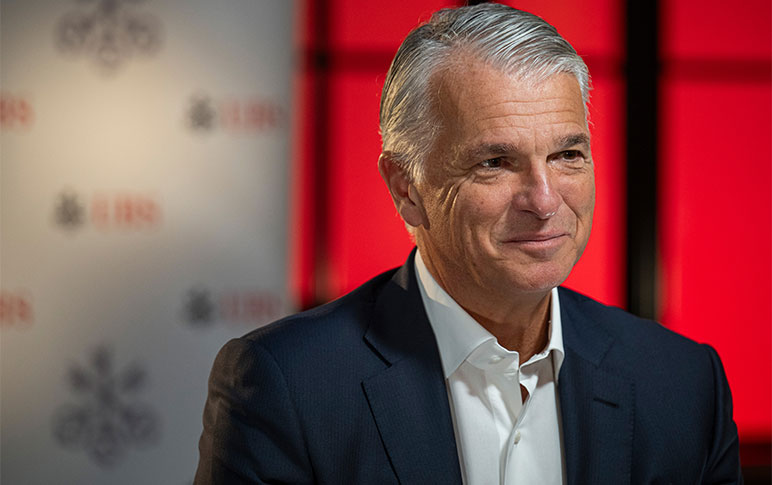
Sergio Ermotti, CEO of UBS Group AG, stated that a proposal from Swiss lawmakers regarding the bank’s capital requirements is "bearable," though it poses challenges for the institution. In an interview with Neue Zuercher Zeitung, he expressed dissatisfaction, saying, "Are we happy about it? No, we are not," and highlighted UBS's role in averting a potential reputational crisis during the Credit Suisse rescue.
Read More
The proposal allows UBS to utilize 50% of debt instruments for its foreign businesses, but Ermotti warned that the worst-case scenario would involve an expectation of full capital backing using 90% or 100% of core capital.
A significant parliamentary vote is set for Wednesday, which could lead to an extended political debate. Lawmakers will choose between options for UBS, including 100% capital backing for foreign units, a slightly lower requirement, or an AT1 compromise allowing for a mix of 50% equity and 50% AT1 bonds.
After UBS's acquisition of Credit Suisse in 2023, the bank has been negotiating with the Swiss government and regulatory bodies over capital requirements for its foreign operations. The government maintains that insufficient capital was a contributing factor to Credit Suisse’s downfall, while UBS argues that stricter rules would not effectively prevent future crises, citing differences in business models and risk management between the two banks.
Ermotti noted that holding more capital for these units would increase costs for UBS. He pointed out that more than half of Credit Suisse’s former parent entity was made up of temporary regulatory concessions at its height.
The AT1 compromise would still require UBS to secure an additional $13 billion in Tier 1 capital, imposing an annual burden of $2 billion over a planned phase-in period.
On the topic of his future at UBS, Ermotti stated that the end of his tenure "is not a topic" currently, while reiterating that the Swiss National Bank and the financial regulator FINMA bear some responsibility for Credit Suisse’s collapse.
Having previously led UBS from 2011 to 2020, Ermotti returned to the position following the merger with Credit Suisse, which was facilitated by the government. He did not specify ideal capital rules for UBS, but emphasized that investors have already contributed $15 billion towards the recapitalization of Credit Suisse. He predicted that UBS would only achieve its pre-acquisition return on equity by the end of this year, countering claims that the acquisition was a bargain. He remarked, "If I did so and the political solution ended up matching that figure, it would be said that the political establishment had caved in and done exactly what UBS dictated." He concluded that the current environment casts UBS in opposition to broader political forces, complicating decision-making.