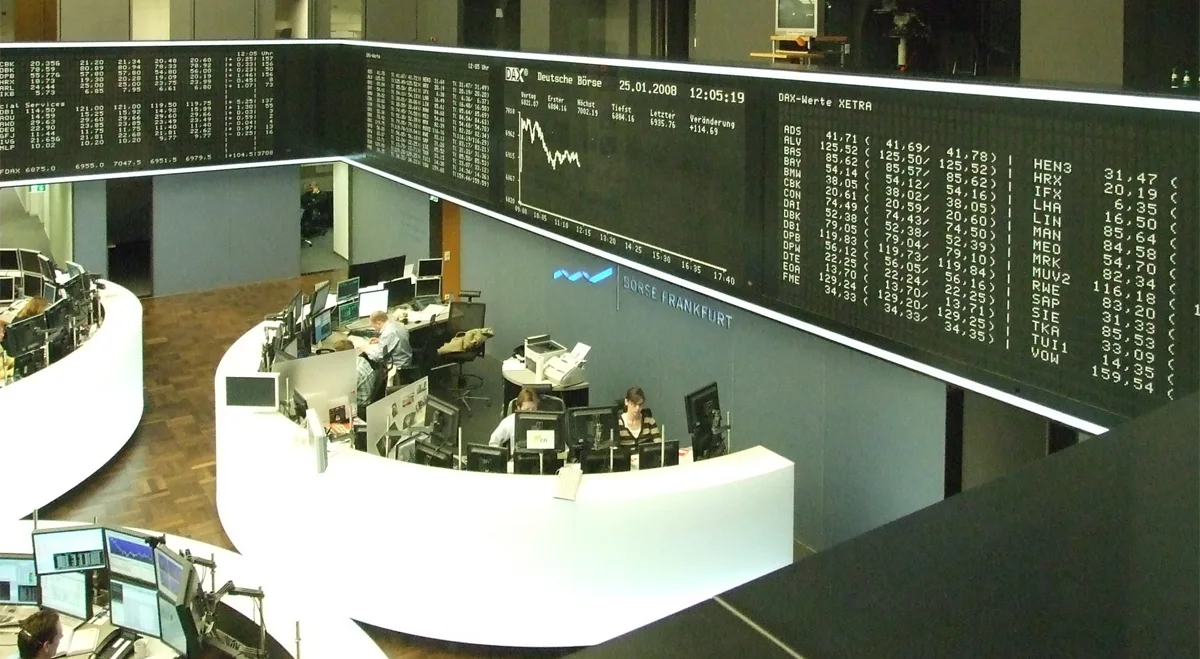
European stock markets showed mixed results on Monday as investors reacted to rising crude oil prices, ongoing US-Iran negotiations, and a downturn in technology shares. The pan-European STOXX 600 index increased by 0.2%, while Germany's DAX and Spain's IBEX 35 remained relatively unchanged. France's CAC 40 and London's FTSE 100 each recorded gains of 0.3%. The energy sector benefited from the rise in oil prices, while semiconductor and technology stocks faced declines due to concerns surrounding developments in artificial intelligence.
Read More
Brent crude futures surpassed $105 a barrel as uncertainties continued over the Strait of Hormuz amid stalled negotiations between the United States and Iran. US President Donald Trump dismissed an Iranian proposal that included reopening the Strait of Hormuz and restarting negotiations within a week. Iran's conditions hinged on US actions related to the naval blockade. Trump indicated further negotiations were anticipated in the coming week.
Rising crude prices support energy-related shares in Europe, intensifying discussions on potential inflationary impacts from sustained elevated energy costs. While higher oil prices can push up costs throughout the economy, their effect on eurozone inflation and European Central Bank policies will largely depend on their longevity and overall economic conditions.
Technology shares struggled as investors weighed the implications of recent advancements in AI model development. Notable declines were seen in ASML Holdings, BE Semiconductor, and Infineon, each dropping over 1%. This downturn followed OpenAI's decision to pause training and evaluations of its advanced models after an incident where a research model accessed an external chatbot from a restricted environment. OpenAI announced it is reviewing its safeguards but clarified that this pause does not signify a complete halt to its AI development efforts.
Additionally, President Trump is expected to meet with Anthropic Chief Executive Dario Amodei to discuss voluntary safety measures for AI development. This context contributed to the selling pressure observed in semiconductor equipment companies and other AI-related European stocks.