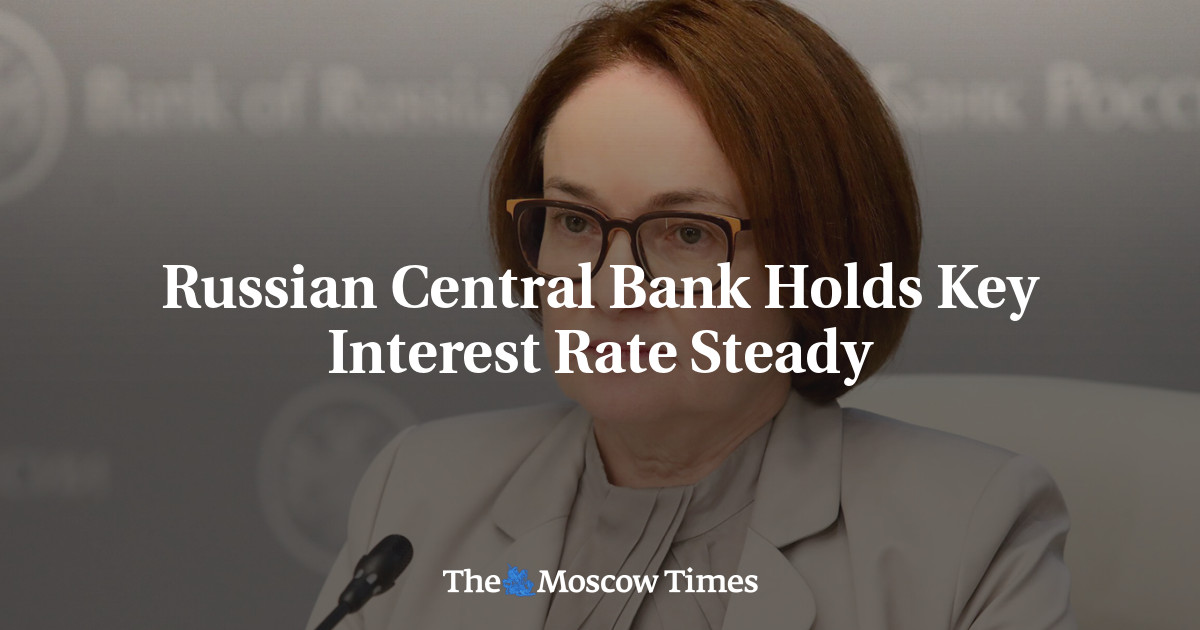
During its recent meeting on Friday, Russia’s Central Bank decided to keep its key interest rate at 14%. The decision reflects a balance between concerns over inflation and the need to reduce high borrowing costs for businesses and consumers, as the government continues to prioritize funding for the conflict in Ukraine.
Read More
Earlier this week, the Central Bank announced that annual inflation reached 6.8%. Policymakers have adjusted their full-year inflation forecast upward to between 7.1% and 7.6%, although they still anticipate that inflation will trend toward the 4% target in the next year.
Despite high inflation expectations, the Central Bank noted that some recent price hikes are influenced by one-time factors, including damages to oil refineries in Ukraine that have driven up fuel prices. In its press release, the Central Bank stated, "Underlying price growth has not yet decreased… primarily due to the impact of a temporary reduction in production capacities in certain sectors," and mentioned inflation risks linked to geopolitical tensions in Iran affecting global energy prices.
Additionally, the Central Bank has raised its projected key rate range for next year by two percentage points, now set at 12.5% to 13.5%. The decision to maintain the current rate aligns with expectations, particularly as military expenditures strain government finances and as Ukrainian attacks on energy infrastructure increase the cost of goods and services.
Despite the cautious outlook on inflation, the Central Bank has increased its economic growth forecast for this year, predicting a GDP growth of 0.5% to 1% by the end of 2026. Sofia Donets, chief economist at T-Investments, noted that this opens the door for a potential rate cut later this year, given the neutral tone of the press release without clear guidance on future movements.
The global rise in oil prices, driven in part by the conflict in Iran, presents additional challenges, with prices crossing $116 per barrel for the first time since May. Ukrainian assaults on oil refineries have further complicated recovery efforts, which Central Bank Governor Elvira Nabiullina acknowledged at a press conference, emphasizing the uncertainty surrounding the restoration of production capacities and its effects on prices.
A protracted period of high borrowing costs has hindered economic growth in Russia, prompting calls from business leaders for a lower interest rate to encourage investment. Nabiullina stated that while there were discussions about raising the rate, the only option thoroughly considered was to maintain the current rate.
The next meeting of the Central Bank regarding interest rates is scheduled for December 18.