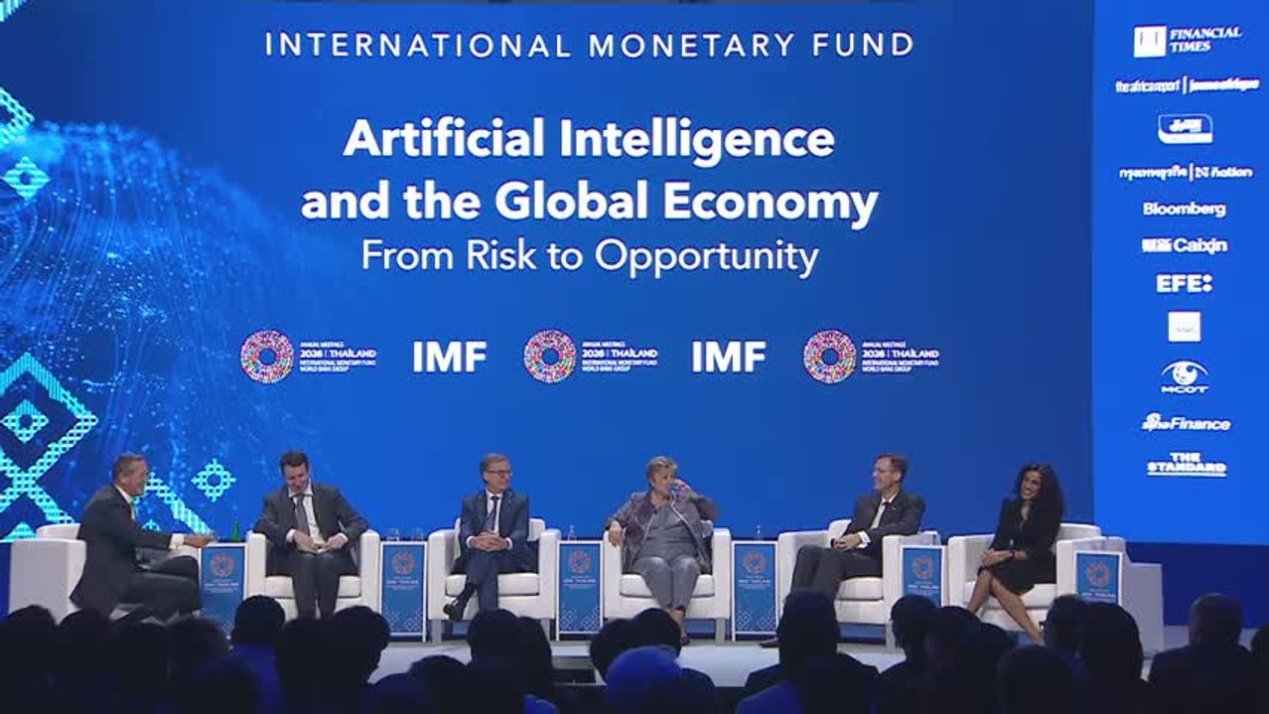
The International Monetary Fund (IMF) and the Organization for Economic Co-operation and Development (OECD) have cautioned that while artificial intelligence (AI) could boost annual global economic growth by up to 0.5% in the medium term, disparities in access to technology, electricity, and skills may exacerbate inequalities between advanced and developing economies. Era Dabla-Norris, Deputy Director of the IMF’s Fiscal Affairs Department, stated that for many developing nations, the pressing concern is their ability to adopt and utilize AI effectively.
Read More
Despite significant investment in AI infrastructure contributing to economic growth and driving stock markets to new highs, the potential benefits of AI may be concentrated in countries that are already positioned to deploy the technology. The IMF notes that effective AI utilization might add up to 0.5% to annual global economic growth, though current evidence of productivity improvements is limited, highlighting a gap between the potential and actual economic impact.
The OECD estimates that AI could enhance productivity growth in its member countries by between 0.4% and 1.2%. However, IMF Chief Economist Stefano Scarpetta remarked that businesses are slower to integrate AI than consumers are in adopting it, indicating a significant gap between exposure to AI and its practical application in the workplace. Access to AI alone does not guarantee increased productivity; companies must adapt their processes to leverage the technology optimally.
This challenge is exacerbated in developing regions, where access to reliable electricity, digital infrastructure, and skilled labor influences the successful integration of AI technologies. The disparities in AI adoption may reinforce the economic divide between advanced and developing nations, as wealthier companies are generally better equipped to invest in the necessary resources.
Since September 2020, the IMF has raised concerns regarding automation's capacity to widen income inequalities. Their studies indicate that advanced economies, which more intensively employ automation, could enjoy disproportionate benefits, with investment potentially flowing more towards them and away from nations relying on a large labor force.
The implications of AI extend into the labor market, with the IMF estimating that approximately 40% of jobs globally could be at risk due to AI adoption as businesses seek to cut costs. Recent job cuts at companies like Barclays, eBay, and Qualcomm indicate a trend toward automation, though these reductions are not solely attributable to AI; they reflect broader corporate strategies to streamline operations.
Dabla-Norris warned that younger and entry-level workers could be particularly vulnerable as AI automates tasks traditionally used for gaining experience. This situation poses a risk for employers aiming for productivity improvements without jeopardizing the development of a skilled workforce, an issue that is particularly pertinent for developing economies striving to leverage their growing labor force effectively. The findings from the IMF and OECD underline the necessity for developing nations to enhance productivity and invest in human capital to avoid falling further behind as AI investment increases.