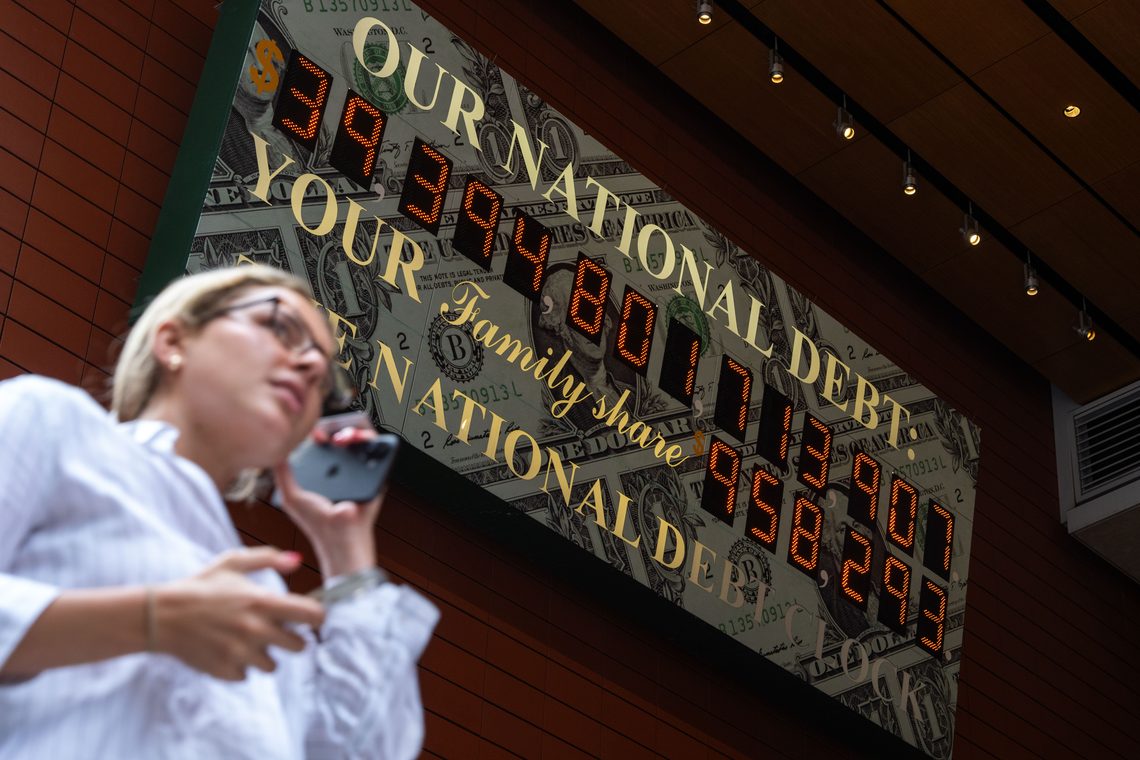
Political incentives favor increased spending and deferred financing, suggesting a trend of continued fiscal drift in the U.S., UK, and France. Since 1995, U.S. government liabilities have surged from 69% to 126% of GDP.
Read More
From a classical liberal viewpoint, the size of government affects private choice, enterprise, and investment. The expansion of government responsibilities incurs costs, as taxation limits individual resource allocation and can reduce motivation to work, save, and invest. Therefore, public expenditure must be measured against the resources it displaces. In countries like France and Germany, where public spending exceeds half of GDP, political decisions play a significant role in how a considerable portion of national income is allocated.
Borrowing merely postpones financial burdens rather than eliminates them. High debt levels divert future revenues to interest payments, leading to higher taxes and greater vulnerability to rising financing costs. The ongoing challenge is whether political institutions can maintain public commitments sustainably.
Between 1995 and 2025, government spending trends in the U.S., UK, France, and Germany varied, with the UK experiencing the most substantial growth. The UK’s spending increased from 38.4% of GDP to 46.1%, while revenue rose from 33.4% to 40.6%. France's spending reached 57.4% of GDP by 2025, against a revenue ratio of 52.3%. Germany's spending fell ahead of the 2008 financial crisis but rose again afterwards, while U.S. spending increased from 38% to 39.8% of GDP, with revenue declining slightly from 33.1% to 32.5%.
Spending generally exceeded revenue, leading to accumulated liabilities. From 1995 to 2025, the U.S. saw its gross financial liabilities increase from 69.1% to 125.9% of GDP, while the UK rose from 44.9% to 102.3% and France from 69.0% to 116.8%. Conversely, Germany’s liabilities increased only modestly from 54.2% to 62.7%.
Public choice economics explains why reducing government size is challenging. Political incentives often emphasize more spending and delayed financing. Benefits tend to be concentrated among specific groups, who lobby for spending that taxpayers may be less inclined to oppose. This dynamic results in spending commitments that exceed what taxpayers would accept voluntarily.
Crises can reinforce this trend, as emergency support creates new beneficiaries, making it politically challenging to withdraw support. The political costs associated with fiscal reforms are often immediate and identifiable, while benefits emerge gradually.
Looking ahead, the most probable scenario involves continued fiscal drift, where governments maintain major spending commitments while implementing selective tax increases. This situation may not lead to consistently rising spending ratios, but high debt levels could persist, particularly in the U.S., UK, and France. Germany may fare better due to measures like its 500-billion-euro infrastructure fund and exempting certain spending from debt limits.
An alternative scenario involves sustained fiscal reform, but this is less likely unless voters associate inflation with excessive government spending. This would require a coalition to tackle entitlement reforms and restrain expenditure growth. Success would reflect a permanent narrowing of financing gaps.
Finally, a potential crisis scenario could accelerate debt accumulation if international tensions or economic downturns arise. This could lead to increased military spending or emergency assistance that widens deficits, placing additional pressure on already elevated liabilities.
Karl-Friedrich Israel is a Professor of Economics at the Université Catholique de l’Ouest (UCO) in Angers, France.