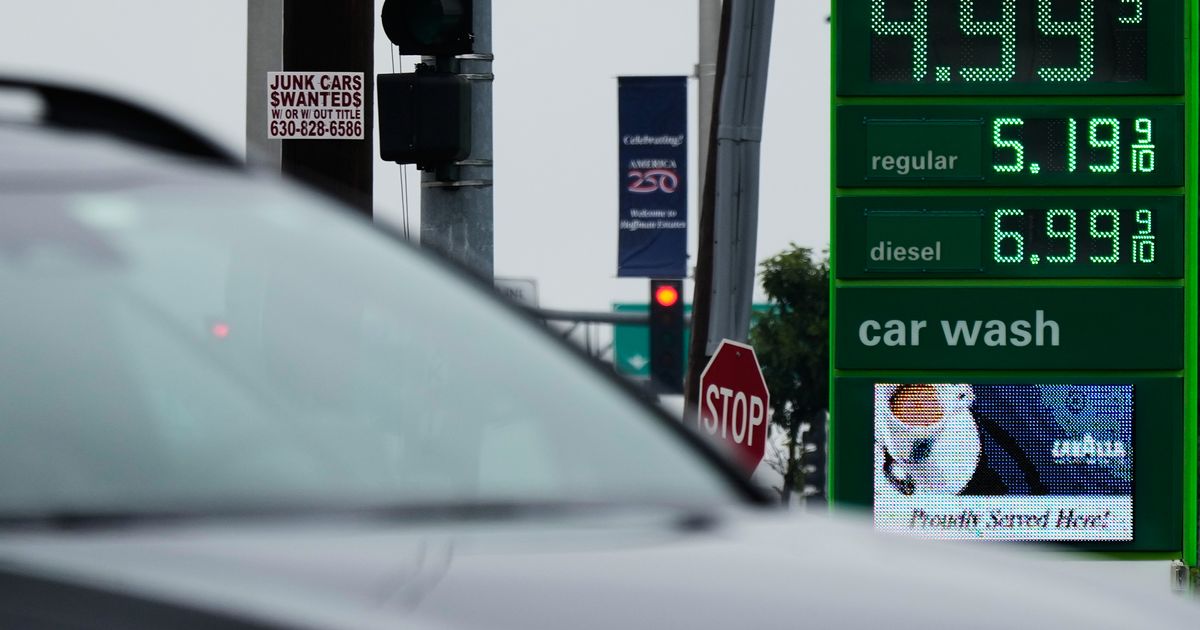
High gas prices are driving inflation and consuming a larger share of Americans' income, yet consumer spending remains robust, supporting the economy for now. Recent economic data indicates that inflation accelerated in September, largely due to rising oil and gas prices affecting costs in shipping and warehousing.
Read More
Meanwhile, wholesale food prices have also increased, suggesting potential grocery price hikes in the coming months. Despite these pressures, consumer spending rose, reflecting both a willingness to spend and higher prices, underscoring the resilience of the U.S. economy amidst challenging conditions.
Jim Baird, chief investment officer at Plante Moran Financial Advisors, noted that while consumers are displeased with the rising gas prices, they continue to spend. This resilience is partly fueled by job security, although surveys show that many Americans remain pessimistic about the economic outlook.
Economic indicators reveal a mixed picture: the producer price index, which measures costs before they reach consumers, increased 6.3% in September from the previous year, the largest increase in nearly four years. Monthly, prices rose 1.3% from August, driven primarily by a 20% rise in gas prices. Additionally, rising diesel costs have elevated transportation expenses, contributing to a 1.2% increase in food prices.
Despite these challenges, retail sales rose by 0.8% from August, surpassing economists' forecasts. Spending at gas stations surged by 6.4%, but there was also a notable increase of 1.1% in restaurant and bar sales. However, excluding gas, retail sales only grew 0.2%, indicating that many of the spending increases were due to rising prices.
Economists suggest that as long as unemployment remains low, consumer spending may stay strong. Recent figures show jobless claims below 200,000, historically a low number, signaling a relatively stable job market. Kathy Bostjancic, chief economist at Nationwide, remarked that consistent unemployment allows consumers to maintain spending, albeit more cautiously.
However, economists express concern that persistent inflation may gradually erode consumers' spending power. Adjusted for inflation, workers' paychecks fell in September compared to a year earlier for the first time since May. A disappointing hiring report for September showed only 29,000 jobs added, with the unemployment rate rising slightly to 4.2%.
Elevated inflation is also likely to prompt the Federal Reserve to increase interest rates to curb spending. The Fed raised rates by a quarter-point to about 3.9% in September, marking its first rate increase in three years. Most Fed officials anticipate further increases may be necessary to combat inflation, despite recent critiques from President Donald Trump concerning rate hikes.