European stocks rose on Friday, recovering from a recent technology-driven selloff, while the dollar was positioned for a weekly decline. Concerns over rising interest rates and the debt financing associated with the AI boom led to a sharp drop in tech and chip stocks earlier in the week. Following stronger-than-expected inflation data on Wednesday, traders increased expectations for further US rate hikes, prompting a shift toward Treasuries and other government bonds.
Read More
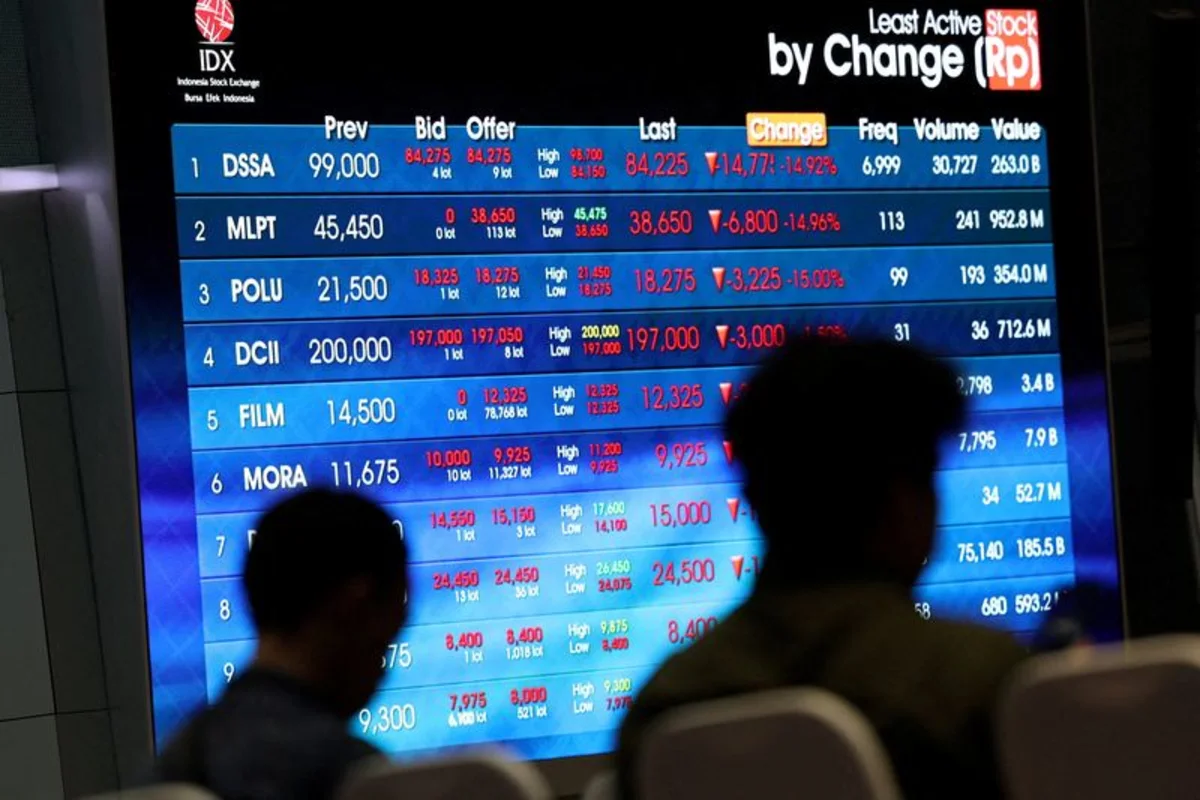
Asian stocks generally advanced, and bond markets stabilized with some reversal of previous losses. Notably, Indonesian equities experienced their largest fall since 1998 after MSCI announced it would remove the country from key emerging market indexes. Turkey's main stock index also dropped over 3% after MSCI paused changes to its equity indexes.
By 1055 GMT, the MSCI World Equity Index had gained 0.4%, although it remained on track for a weekly loss. European stock indices fared better than Thursday, with the STOXX 600 rising 0.6%, Germany's DAX increasing approximately 1%, and France's CAC 40 up 0.5%. Conversely, London's FTSE 100 saw minimal gains of less than 0.1%. US stock futures pointed toward a potential recovery on Wall Street, with S&P 500 futures up 0.2%, while Nasdaq futures remained negative amid ongoing credit risk concerns tied to the AI sector, particularly affecting heavily indebted data centers like CoreWeave.
Amelie Derambure, a senior multi-asset portfolio manager at Amundi in Paris, noted that questions about monetization in the AI sector persist, raising doubts about the sustainability of profits and margins for some players. Nevertheless, she expressed optimism about US equities and anticipated robust earnings that could mitigate any market correction.
The dollar fell 0.4%, reducing the dollar index to 101.65 and indicating its first weekly drop after three consecutive weeks of gains, as diminished Treasury yields lessened the dollar's attractiveness. Analysts suggested that lingering concerns about AI could further depress the dollar. In response to a weaker dollar, the euro rebounded from a 17-month low, rising 0.4% to $1.1257.
European government bond yields edged up on Friday, with Germany's 10-year yield at 3.4355%. Despite this increase, yields remained lower for the week as investors sought the safety of government debt amid financial uncertainties surrounding AI-related companies. G7 government bond markets were set to achieve their strongest weekly performance since late May.