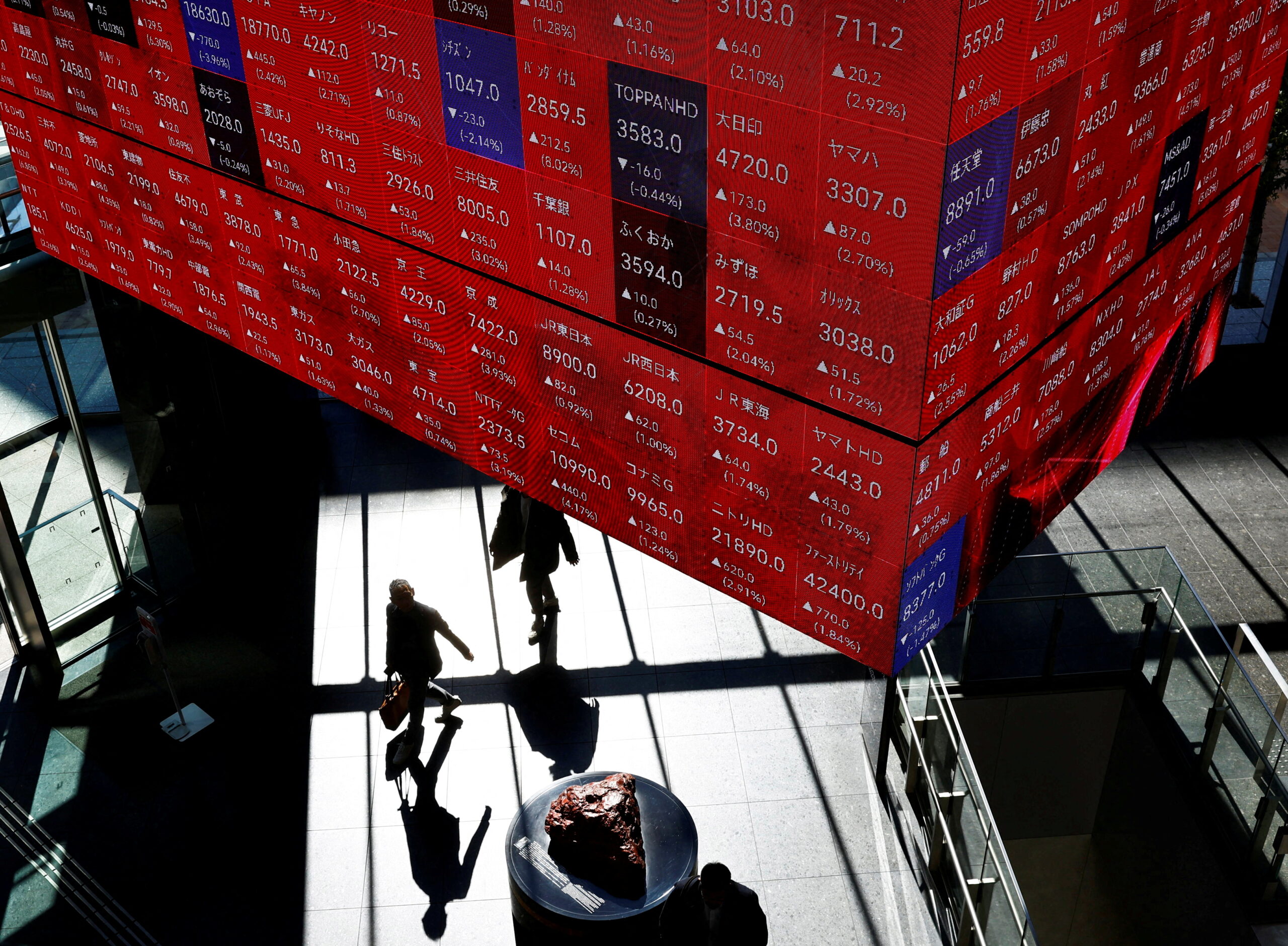
Stock market concentration is increasing, with fewer companies and sectors significantly influencing major indices, such as the S&P 500, Nikkei 225, and STOXX Europe 600. In recent years, a select group of stocks has had a growing impact on index performance, and certain industries, notably information technology and finance, are becoming more dominant.
Read More
Korea and Japan have seen heightened concentration this past year, but this trend is not restricted to Asia. Germany’s DAX index is currently the most concentrated among major indices, despite its lower volatility and the prominence of industrial firms.
In contrast, the US market showcases surprising diversity. Indices like the S&P 500 present a more balanced and steady approach compared to their Asian counterparts, often portrayed as heavily influenced by the so-called Magnificent Seven tech companies.
This concentration trend is driven by corporate performance; firms that show strong financial results attract more investment. The Magnificent Seven, for example, achieved an average annual return of approximately 30 percent, outpacing the S&P 500's 15 percent. Their success allows them to capture a growing share of indices, illustrated by the Nasdaq-100, where the top ten firms represent about 50 percent of the index.
However, such concentration amplifies risks, as downturns can have disproportionate impacts. Historical examples show that once-dominant firms can vanish or become minor players, as seen with US Steel and Kodak.
A recent incident in South Korea highlighted these vulnerabilities. The KOSPI 200 index, which includes hundreds of companies, is heavily reliant on Samsung Electronics and SK Hynix, which together comprise over 50 percent of its market cap. After SK Hynix reported disappointing earnings despite a significant profit increase, the KOSPI fell sharply, marking one of its largest corrections in history, worse than during the 2008 financial crisis, leading to immediate government intervention.
South Korea's KOSPI has exhibited volatility three times greater than its peers, yet it has still managed to outperform other major indices despite recent declines.
Japan's market has not escaped this trend; from July 2025 to July 2026, the top ten companies’ share of the Nikkei rose from 40.9 percent to 48.7 percent. While this concentration has yet to lead to a crisis like in South Korea, the market is increasingly dependent on a few companies. Japan's conglomerates, however, offer some mitigation of these risks due to their diversified structures.
In the US, while indices like the S&P 500 are becoming more concentrated, they remain more diversified than others. The ten largest companies there account for around 37.6 percent of the index, with sectoral concentration at 38 percent. The significant diversity across industries, coupled with the robustness of US markets, provides some protection against concentration risks.
Nonetheless, dependence on emerging technologies, such as AI, raises concerns about vulnerabilities even in diversified markets. Observing the experiences of South Korea and Japan underscores how swiftly concentration risks can develop and affect investors globally.
Bart Piasecki is an associate director at the Atlantic Council’s GeoEconomics Center.