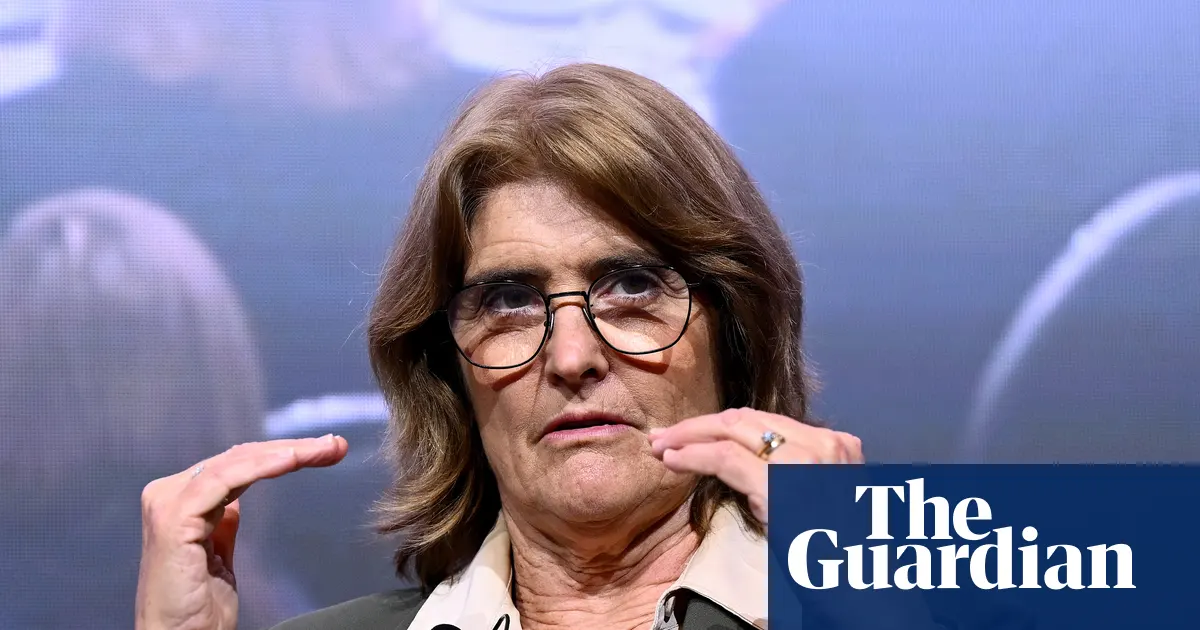
Reserve Bank Governor Michele Bullock expressed concerns that artificial intelligence (AI) could potentially be in a bubble, noting there is currently no evidence it is enhancing Australia's economic efficiency, contrary to claims by the Albanese government. Ahead of a likely interest rate increase next week, she remarked that the decline in house prices is deeper than in previous downturns in Australia's history.
Read More
As oil prices surge and inflation impacts markets, US tech stocks rebounded on Monday following the launch of Facebook owner Meta's new Muse AI agent, which boosted its stocks by 11%. Speaking at a CEDA event in Sydney, Bullock highlighted the potential risks associated with declining tech valuations, saying, "All central banks are a little bit worried about that." She acknowledged differing opinions on whether AI represents a bubble but emphasized that the RBA is cautiously observing the situation.
Although Bullock stated that central banks view AI as "the great white hope" for productivity, she pointed out that there is yet to be any significant impact observed. She referred to research from the RBA's South Korean counterpart, indicating that employees using AI tend to work 1.5 hours less a week without producing greater output. "While people fiddle around and try and figure out what to do with this new technology, productivity actually can decline," she said, suggesting that productivity improvements may materialize once businesses adapt their processes to utilize AI effectively.
The Australian government’s intergenerational report, released on Tuesday, relies on the optimistic potential of AI, projecting that inflation-adjusted per capita economic activity could increase from $99,200 today to $157,300 by 2066. Treasurer Jim Chalmers described AI as the most transformative technology of our lifetime. However, economists have expressed skepticism, arguing that returning productivity to a historical growth rate of 1.2% per annum appears unlikely. Should productivity rise only by 0.8%, projections indicate a per-capita figure of only $136,600 by 2066. Bullock acknowledged concerns about unrealistic assumptions, stating, "Many have put it, 'well, it’s an unrealistic assumption,' we’re not going to get that. I guess the way I’m trying to think about it is, 'OK, that’s what we’ve got to aim at.'"
Regarding immigration, Bullock asserted it has been nearly the sole driver of Australia's economic growth over the past year. She noted that while new arrivals contribute positively to spending, they do not immediately alleviate housing supply issues. "Where it bites is the housing market because the housing market can’t respond," she commented.
One Nation has proposed reducing migration to more departures than arrivals over three years, advocating for the elimination of over 750,000 temporary migrants. The Labor government intends to tighten immigration intake instead, with Home Affairs Minister Tony Burke warning that drastic cuts could harm the economy. House prices have declined by 3.1% in the last quarter, influenced by three interest rate hikes and changes to property investor tax breaks. Bullock acknowledged a sharp decrease in home loan approvals, affecting investors significantly. "They’ve dropped for everyone but they’ve really dropped a long way for investors," she said, noting the growing challenges of investing in housing.
Before the recent decline, Bullock described housing as "pretty unaffordable" and the current downturn as a modest dip following a prolonged increase. She assessed the current situation as not unusual compared to historical downturns. While she did not disclose her position on the likelihood of an interest rate increase next Tuesday, market expectations indicate a greater than 90% chance that rates will rise from 4.35% to 4.6%, marking a 14-year high.