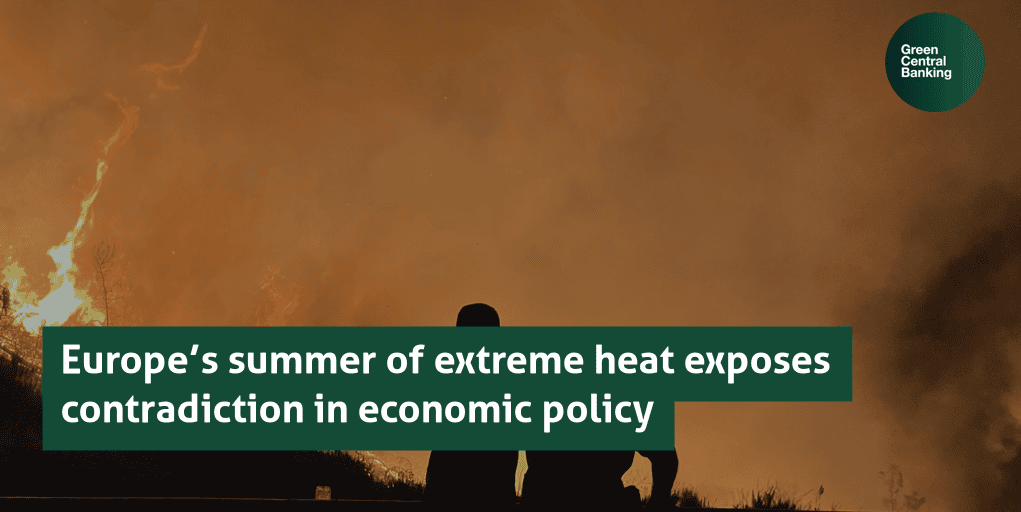
Europe's record summer heat has led to an estimated 35,000 excess deaths, the burning of over 668,000 hectares of land, and drought conditions affecting 38% of the EU. The extreme weather is projected to reduce eurozone output by about 1%, impacting agriculture, energy production, and transport.
Read More
The European Central Bank (ECB) has highlighted that climate shocks, including a potential El Niño, could exacerbate food prices and inflation, while Fitch Ratings warns that extreme weather may lead to higher sovereign borrowing costs. Policymakers are urged to invest in climate resilience, as failing to adapt could result in greater financial burdens on governments, banks, and households.
The economic toll of the heatwaves, droughts, and wildfires is estimated at around €180 billion or 1% of GDP, caused by lower agricultural yields and reduced efficiency in energy and transport sectors. A report from Triodos Bank indicates that European growth may stall this year and worsen next summer due to the cascading effects of climate change.
Jean Boissinot, from Banque de France’s prudential supervision authority, emphasized that the summer's effects were widespread, affecting not only agriculture but also energy production and various sectors. Currently, the costs and impacts are still being evaluated, particularly regarding infrastructure damaged by heat-related soil expansion.
Fitch projection suggests that increasing climate risks will complicate fiscal policies, especially for countries already facing deficits. There's concern that climate risks are not just future challenges but immediate concerns impacting economies today. Experts like Ernst Hobma from Triodos Bank stress the need for central banks to adopt proactive measures against the expansion of fossil fuels, which significantly contribute to climate risk.
Given the summer's extreme conditions, experts argue it's critical for Europe to invest in adaptation and resilience strategies. Hobma and his co-authors criticized the EU's insufficient responses to climate challenges, warning that current policies could create a repeating cycle of damage and inaction.
With the threat of worsening economic impacts, experts call for collaboration among finance ministers and central bankers to effectively address climate issues. Policymakers are encouraged to view the green transition as a means of safeguarding citizens and ultimately reducing long-term costs associated with climate change.
As these economic shocks continue, the need for comprehensive planning and response strategies is paramount to mitigate the growing frequency and severity of extreme weather events.