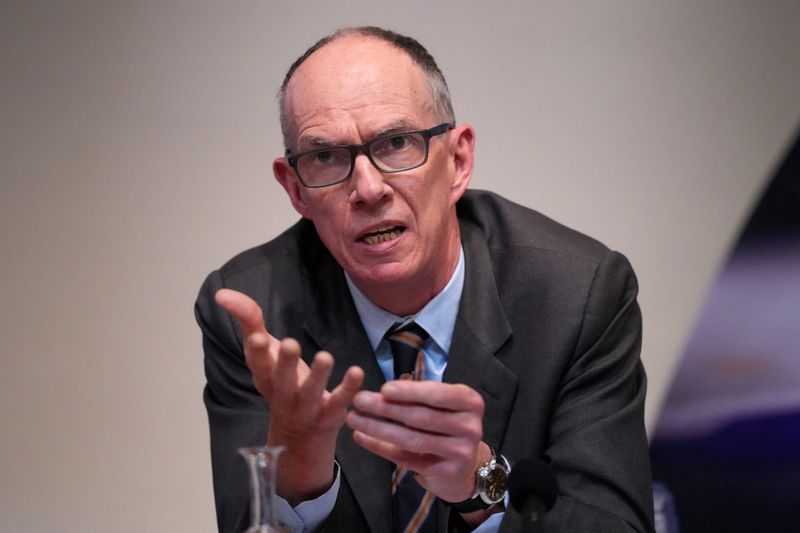
LONDON, Sept 28 (Reuters) – Bank of England Deputy Governor Dave Ramsden expressed approval regarding market reactions to the BoE’s recently announced plan to gradually sell its bond portfolio, which has slightly reduced borrowing costs. Earlier in September, the BoE detailed a strategy to offload a large portion of its £488 billion ($647 billion) gilt holdings by 2034 at a rate of £20 billion per year, while allowing shorter-term bonds to mature and retaining £120 billion in long-dated gilts to support banknote issuance.
Read More
In a speech at London’s Money Macro and Finance Society, Ramsden noted that the extensive information provided in the announcements seemed to be well understood and positively received by markets. Following the BoE's announcement, gilt prices increased, particularly for longer-dated bonds, leading to lower yields.
“This suggests the market was anticipating more quantitative tightening, either in total or at a faster pace,” Ramsden remarked. He added that clarifying the future trajectory of quantitative tightening may have lessened risk premiums in the market.
Additionally, Ramsden reiterated previously expressed views from September’s policy decision, indicating that the BoE might need to raise interest rates if inflation continues to rise. He was among the 6-3 majority that voted to maintain interest rates this month.
Unlike the European Central Bank or the US Federal Reserve, the BoE has not raised interest rates since the onset of the Iran war, as its policy was already seen as restrictive. Ramsden noted that while the current policy remains tight, considerations for increasing the Bank Rate could arise if inflationary pressures persist. Factors influencing this assessment would include energy prices, extreme weather events, and supply chain pressures linked to artificial intelligence, along with domestic food prices and wage negotiations.
($1 = 0.7548 pounds)
(Reporting by David Milliken; editing by Suban Abdulla)