Bangladesh's per capita gross domestic product (GDP) is projected to surpass that of India in 2026, according to the International Monetary Fund (IMF). While India's total GDP is nearly eight times larger than Bangladesh's, the per capita figure—calculated by dividing total GDP by the population—is expected to be $2,886 in Bangladesh and $2,749 in India. This marks a significant development for Bangladesh, a country of approximately 175 million people, which has risen as an economic success story in South Asia since its independence from Pakistan in 1971.
Read More
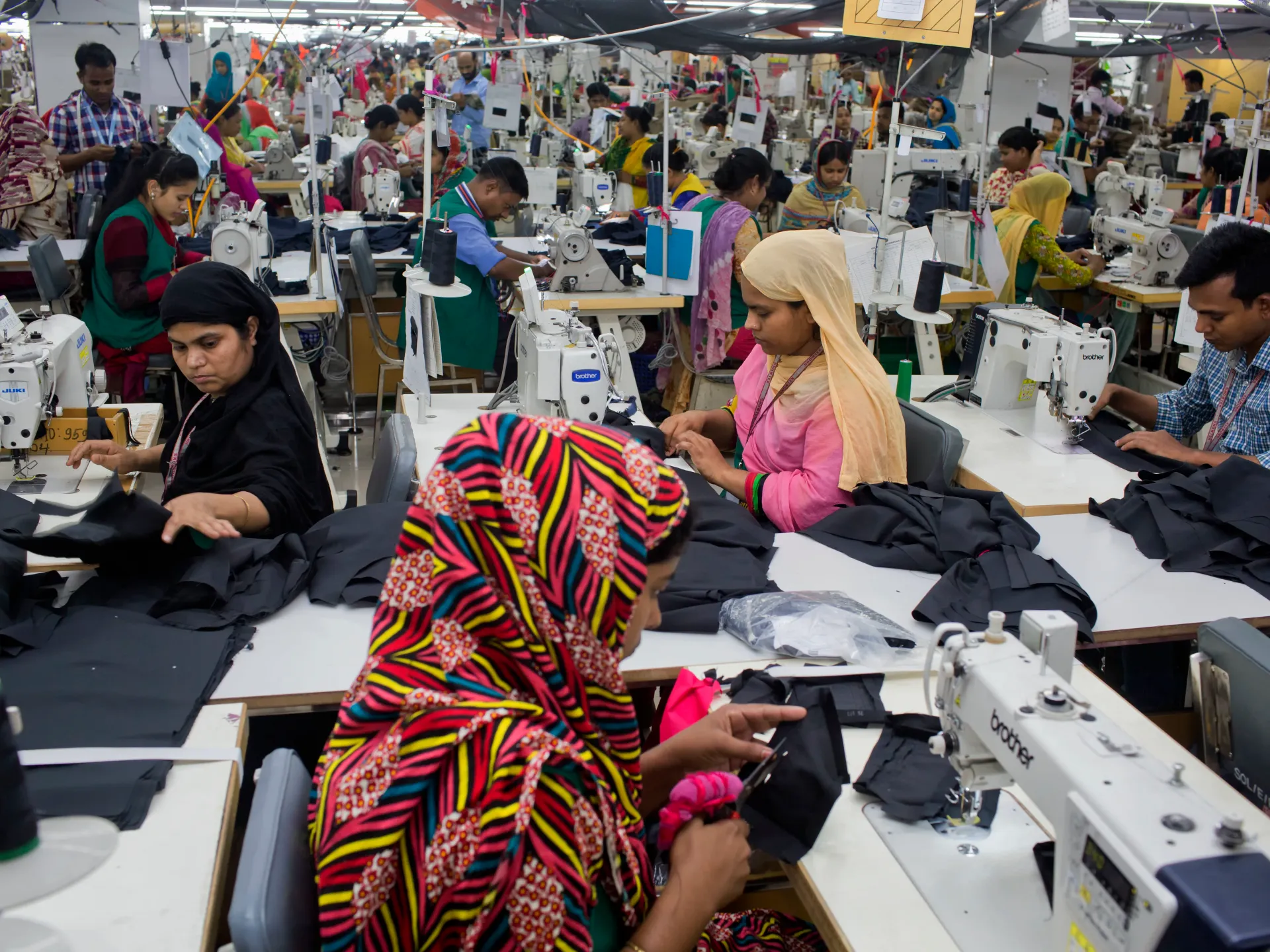
Key factors contributing to Bangladesh's economic growth include its $38 billion garment industry, remittances from overseas workers, and increasing female workforce participation. However, rising inflation and slowing growth present challenges. The IMF forecasts that Bangladesh’s economy will grow by just 3.6 percent in 2026, while India is expected to see a growth rate of 7 percent.
The IMF’s October 2026 World Economic Outlook highlights how both countries are coping with economic pressures stemming from inflation and ongoing global conflicts. For 2026, Bangladesh's GDP is projected at $506.4 billion, compared to India's $4.15 trillion. When adjusted for purchasing power parity (PPP), which reflects local cost differences, India's per capita GDP is projected to be $12,998, vs. $10,884 for Bangladesh, indicating that Indians have greater purchasing power.
Inflation rates also differ significantly, with the IMF estimating India's average consumer-price inflation at 5 percent, while Bangladesh faces an inflation rate of 8.7 percent.
In the coming years, the gap in per capita GDP is expected to shift. The IMF predicts that by 2027, Bangladesh’s per capita GDP will reach $3,219, still exceeding India’s forecast of $3,036. However, by 2029, India's per capita GDP is projected to rebound to $3,661, surpassing Bangladesh’s anticipated $3,334.
Experts caution that while Bangladesh's growth in GDP per capita represents progress, it does not fully capture economic disparities within the country. The increase in this figure can be influenced by exchange rate fluctuations, which may impact its relevance.
Over the past two decades, Bangladesh's economy has relied on export-oriented manufacturing, primarily in the garment sector, which accounts for over 80 percent of the country's export earnings. Conversely, India boasts a more diversified economy, with strong sectors in services, technology, and agriculture, leading to a broad base of economic activity. Despite this, both countries have seen unequal growth patterns, with wealth concentration among affluent households.
Analysts recognize Bangladesh as a success story but caution against complacency due to uneven growth. Santosh Mehrotra, an Indian economist, notes that while Bangladesh has maintained a consistent annual growth rate of 6 percent alongside declining population growth, it also faces challenges from global disruptions, particularly in energy imports, which are critical for its economy.