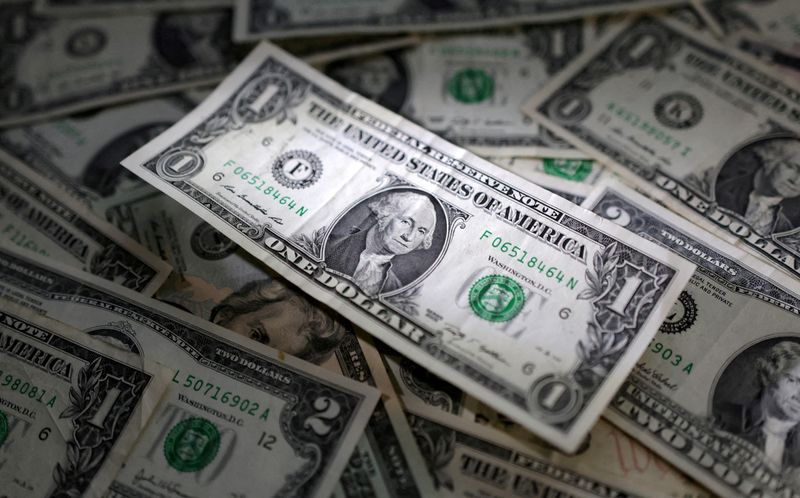
By Amanda Cooper LONDON, Oct 12 (Reuters) – The dollar remained close to its highest level in 18 months on Monday, as escalating conflicts in the Middle East kept investors cautious ahead of significant U.S. inflation data due later this week. Oil prices exhibited volatility following increased attacks by Yemen’s Iran-backed Houthis on Saudi Arabia, including strikes on two tankers over the weekend.
Read More
Brent crude futures decreased by 0.5% to $104 a barrel, facing pressure following U.S. President Donald Trump’s announcement of an energy ceasefire between Ukraine and Russia. This price is still nearly 45% higher than it was prior to the conflict, with some physical market prices at double those figures.
The dollar index, which tracks the U.S. currency against six other currencies, slightly declined to 102.16 but stayed near last week's 18-month highs. Data from the U.S. markets regulator indicated that bullish positions on the dollar rose to approximately $36 billion in the week ending October 7, significantly up from $8.4 billion just three weeks prior, largely at the euro's expense.
MUFG currency strategist Lee Hardman noted that the U.S. dollar has gained strength recently due to adverse global developments that have increased its appeal, even as market expectations for Federal Reserve rate hikes have lessened.
The focus is now on the U.S. consumer inflation report set to be released Wednesday, which could influence the dollar's short-term trajectory. Recent data indicated a further decline in U.S. consumer sentiment in early October, attributed to rising living costs exacerbated by the Middle East conflict.
Last month, the Fed raised rates for the first time since 2023 in an effort to tackle inflation, with market observers closely monitoring economic data for indications of future policy changes. Traders are currently pricing in an 81% likelihood that the Fed will maintain its rate in the upcoming meeting, a notable increase from 51% a month ago, according to the CME FedWatch tool.
Chris Weston, head of research at Pepperstone, mentioned that it would be a significant challenge for the Fed to raise rates in October. However, if upcoming inflation numbers are unexpectedly high, discussions may arise regarding further hikes in January, in contrast to the current market expectations for March.
Recent selloffs in bond markets have heightened concerns among investors as global borrowing costs rise to multi-decade highs due to inflation worries, energy prices, and increasing government debt. The euro remained stable at $1.12 after experiencing a fifth consecutive week of losses, largely affected by investor concerns surrounding France’s fiscal stability ahead of the 2027 presidential election. The gap between French 10-year yields and safer German yields widened to 138 basis points, approaching levels not seen since 2012.
OCBC FX strategists noted that it's still too early to determine whether higher borrowing costs will lead to increased fiscal discipline in the French government. The U.S. dollar held steady against the yen at 158.41 in Japan’s holiday-thinned trading, while the pound rose by 0.1% to $1.3244. Additionally, the Indian rupee gained 1.1% to 95.7 against the dollar following a central bank decision to ease currency pressure by reallocating oil companies' dollar purchases away from the spot market.
(Additional reporting by Li Gu in Shanghai and Ankur Banerjee in Singapore. Editing by Muralikumar Anantharaman and Peter Graff)