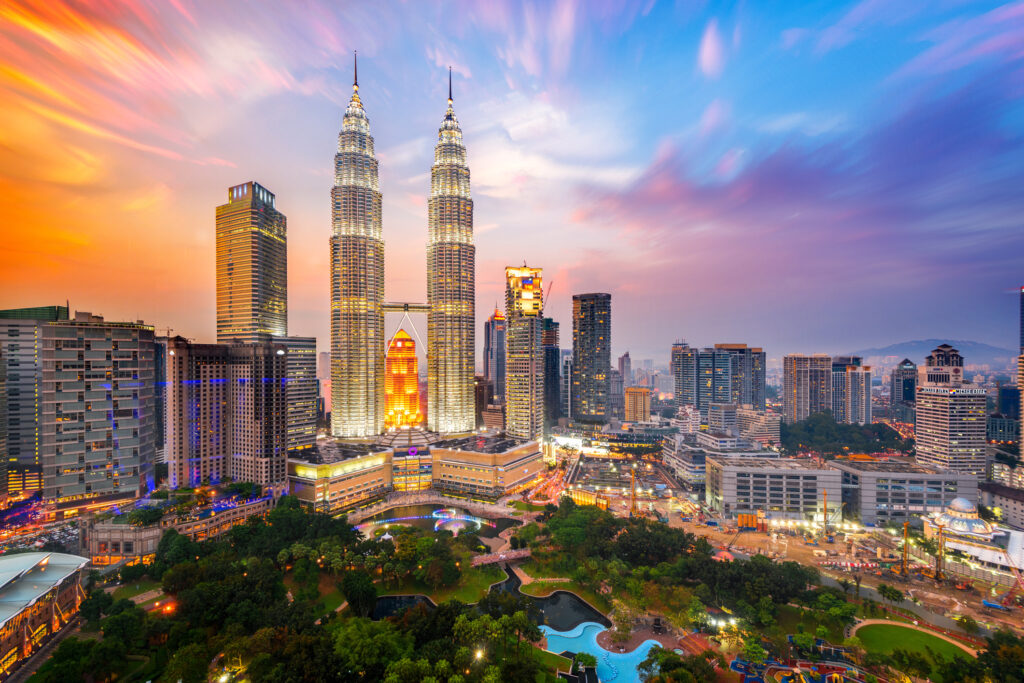
As the 2026 IMF-World Bank Annual Meetings approach, Malaysia is preparing for its next phase of growth, building on five decades of industrial progress. The country has established itself as a key player in sectors such as semiconductors, energy, and palm oil, and has recently attracted significant investments in data centers, artificial intelligence (AI), and advanced manufacturing. With projected goods exports of approximately $380 billion in 2025 and an annual growth rate of 4.7 percent over the last twenty-five years, Malaysia is positioned robustly for future development.
Read More
However, this transition brings new challenges. As Malaysia becomes increasingly industrialized and integrated into the global economy, opportunities for easy productivity improvements are dwindling. A substantial portion of the technological infrastructure and intellectual property supporting its industries is foreign-owned. Additionally, U.S.-China tensions and rising competition within Southeast Asia are altering the landscape in which Malaysia competes for investment and market access.
Consequently, Malaysia's objective is now to not just attract capital or increase production, but to capture more value from investments, enhance domestic technological capabilities, and identify industries that can spur continued growth amid a fragmented global economy.
Openness has been both beneficial and risky for Malaysia. The nation has thrived in an environment where economic integration was seen as advantageous, leading to a trade volume equivalent to about 140 percent of its GDP. China has been Malaysia's largest trading partner for seventeen years, and trade between the two reached nearly $200 billion in 2025, reflecting a 53 percent increase since 2020, with about 8 percent of Malaysian value added tied to Chinese demand. Nonetheless, Malaysia’s economy is not solely dependent on China, as it also maintains vital trade relations with the U.S. and other advanced economies. Trade with the U.S. amounted to roughly $95 billion in 2025, making it Malaysia's second-largest export market after Singapore.
U.S.-China trade tensions since 2018 have prompted many companies to adopt “China plus one” strategies, thereby creating investment opportunities for Malaysia as businesses diversify their supply chains. This dynamic allows Malaysia to maintain robust relationships with both major economic powers. Agreements like the Regional Comprehensive Economic Partnership and the Comprehensive and Progressive Agreement for Trans-Pacific Partnership enhance Malaysia's integration into regional production networks and provide market access that mitigates risks of over-reliance on a single economy.
The semiconductor sector epitomizes Malaysia’s development narrative. Unlike other Southeast Asian nations newly entering the field, Malaysia established its semiconductor ecosystem decades ago. Companies like Intel began operations in Penang in the early 1970s, leading to a well-developed network of manufacturers, suppliers, engineers, and infrastructure. While this history is an advantage, it also highlights the need for Malaysia to elevate its position within the semiconductor value chain, as it currently operates mainly in lower-value areas like assembly and testing.
The National Semiconductor Strategy aims to mobilize about $120 billion in investments by 2030, train 60,000 skilled engineers, and establish at least ten local semiconductor firms capable of competing in higher-value segments. Success should be measured not just by export volume but also by how much of that value remains within Malaysia's economy.
Meanwhile, the surging demand for data centers has positioned Malaysia as a leading target for investment in Southeast Asia, particularly in Johor and Greater Kuala Lumpur. Data center investments are estimated to constitute 18 percent of GDP, the highest ratio globally, and the country is responsible for about 60 percent of Southeast Asia’s proposed data center projects. However, while impressive, data centers require substantial resources and may not create many jobs, raising the question of how to convert investment into lasting domestic value.
Building a deeper technological ecosystem is crucial, necessitating advancements in areas such as cloud services, AI, cybersecurity, digital finance, software, and the development of competitive local technology firms. This requires a reliable and abundant electricity supply, which ties industrial strategy to energy policy. Ensuring access to domestic renewable energy could stabilize Malaysia’s energy costs and attract future investments.
Ultimately, Malaysia’s continued growth hinges on enhancing productivity rather than simply increasing capital investment. As countries approach high-income status, the returns from merely scaling up factories and workforce diminish. Fostering higher living standards will increasingly depend on how effectively resources are utilized based on skills, innovation, and efficient institutions.
Although Malaysia has made progress in workforce education—raising the percentage of workers with higher education from 23 percent in 2010 to nearly 36 percent in 2023—this has not necessarily translated into increased productivity. Skills mismatches, stagnant wage growth, and insufficient job quality remain significant hurdles. The World Bank has recognized Malaysia’s employment challenge as largely a productivity issue, emphasizing the need for higher-value, well-paying jobs as demographic shifts reduce workforce expansion.
Fiscal reform will also be essential in this transition. Malaysia is already implementing targeted assistance to replace costly blanket subsidies and is broadening its sales and service tax. The government aims to shrink its fiscal deficit to 3 percent of GDP by 2028, with a focus not just on consolidation but on enabling productive investments that elevate productivity.
The upcoming IMF-World Bank meetings in Bangkok present an opportunity for Malaysia to pivot the focus from merely attracting investment to building domestic capabilities. This includes developing infrastructure for advanced manufacturing and the digital economy, fostering partnerships in semiconductor engineering, AI, and technical education, and empowering local suppliers to ascend the value chain. Continued fiscal reforms will support this transition by creating space for investment in essential human and physical capital.
Ultimately, Malaysia's goal should be to maximize the value of incoming investment, leading to enhanced productivity, stronger local companies, technological advancement, and a greater share of value creation within global industries.