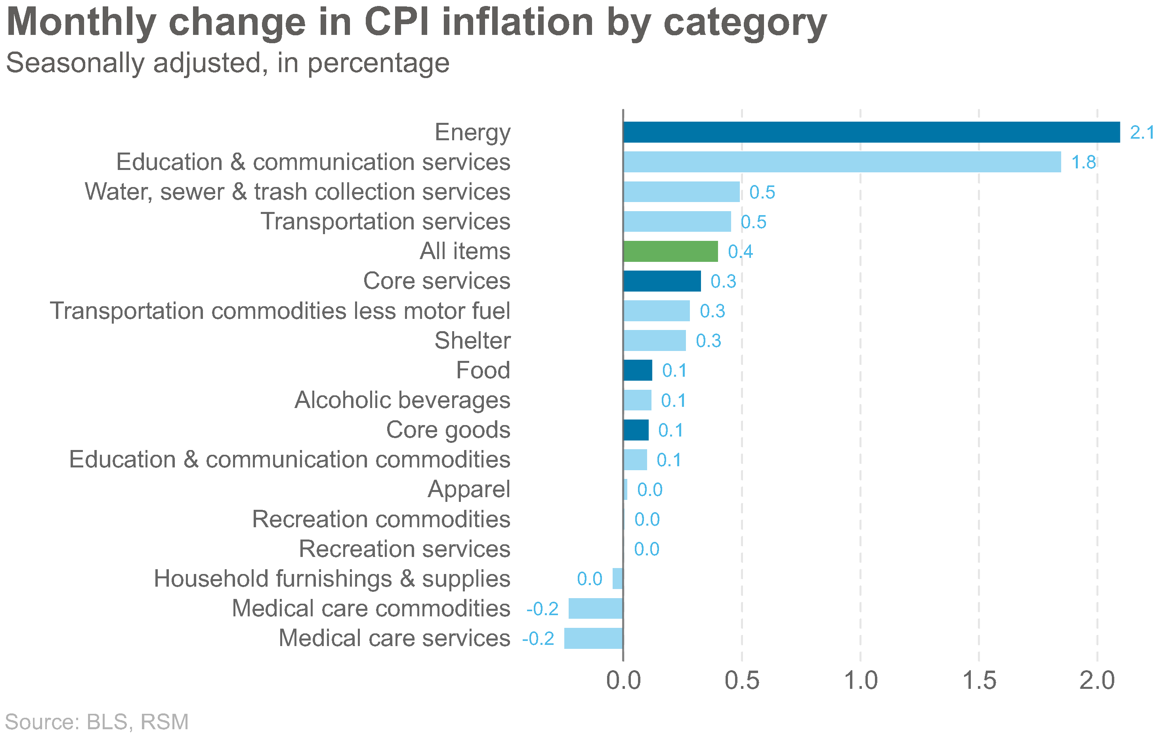
The recent inflation data for August indicates a shift from the previous trend of declining prices, driven primarily by rising energy and gasoline costs. The Consumer Price Index increased by 0.4% for the month and 3.4% year-over-year. Core inflation, excluding volatile items, rose by 0.3% monthly and 2.4% annually. These trends suggest that the Federal Reserve may need to consider a rate hike during its upcoming policy meeting on September 16.
Read More
The surge in overall prices was significantly influenced by increases in energy costs, airfares, and transportation, all of which are likely to continue rising in September due to a recent spike in oil, gas, and diesel prices. With the cost of energy products expected to transfer to consumers, the Federal Reserve faces pressure to raise its policy interest rate to combat inflation.
Current economic conditions suggest that the usual Fed practice of patiently waiting out temporary supply shocks may no longer be viable. Factors such as ongoing geopolitical tensions, tariffs, and increases related to advancements in technology have contributed to a sustained rise in expenses. Price hikes in essential goods, particularly in groceries and transportation, underscore the impact on consumers.
The Federal Reserve has lowered rates in the past year, but faced with persistent inflation pressures, a reconsideration is warranted. Data showing a robust economy, with nominal GDP growth exceeding 6% in the second quarter and a low unemployment rate, supports the case for a rate increase. By doing so, the Fed can help mitigate the inflating costs impacting household budgets by shifting those burdens back onto corporate profit margins.
Inflation rates in the service sector have also proven to be persistent, with service prices climbing 0.3% in August and 3.1% since last year. Energy prices saw notable increases, with commodities rising by 4.2%, gasoline prices up by 3.9%, and fuel oil increasing by 10.1%. Transportation costs increased by several percentages across various sectors, further contributing to the overall inflationary landscape.
In the context of these dynamics, a 25 basis-point rate hike at the upcoming September meeting seems probable, along with potential further hikes throughout the year. This approach is seen as essential for bringing inflation closer to the Federal Reserve's 2% target and maintaining the bank’s credibility in addressing inflation concerns.