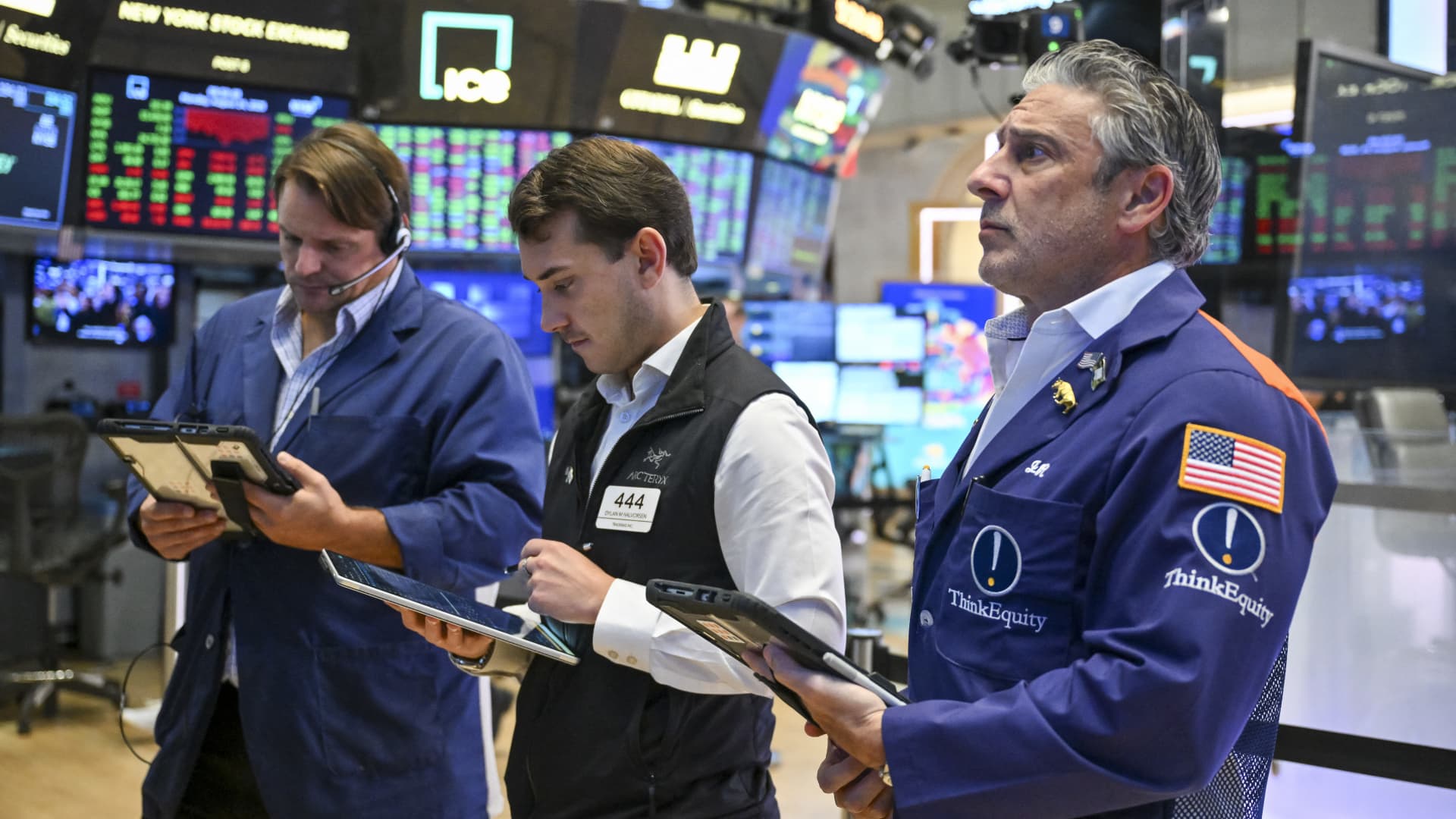
The third quarter saw increased volatility in the stock and bond markets, influenced by ongoing developments in the Middle East and the war between the U.S. and Israel against Iran. Traders paid close attention to headlines regarding the conflict, particularly as U.S. President Donald Trump rejected Iranian ceasefire proposals and hinted at severe economic actions against Tehran.
Read More
While stocks overall yielded gains during the quarter, significant fluctuations were evident. The S&P 500 index increased by 2.03%, whereas the Dow Jones Industrial Average declined by 1.9%, and the Nasdaq Composite rose by 2.2%. This resulted in an average change across these indices of only 0.6%, marking a slowdown from the substantial gains seen in the previous quarter.
Much of the volatility was tied to the technology sector, particularly artificial intelligence (AI). The sector faced challenges throughout July and August amid profit-taking after impressive earnings from companies like Samsung, as well as concerns about competition from China. In September, notable figures in AI, including Anthropic's chief Dario Amodei and OpenAI's CEO Sam Altman, called for a more cautious approach to the rapid development of AI technology due to safety issues.
South Korea's Kospi index fell nearly 20% in the quarter, while the Philadelphia Semiconductor Index dropped over 11%. Despite this, some tech stocks performed well, with Nvidia surging more than 14% and Microsoft climbing 37.5% following strong financial results. Meanwhile, Oracle and Broadcom saw losses exceeding 6%. Meta's stock rose almost 30%, spurred by the successful launch of its Muse AI personal agent.
Globally, market performances varied. European indices recorded slight gains, while in Asia, South Korea's Kospi fell 19.3%, the CSI 300 in China dropped 12.5%, and Australia's S&P/ASX 200 remained flat. Emerging markets revealed a mix of outcomes, with the MSCI Emerging Markets index declining by 1%, although specific countries such as Nigeria and Greece showed double-digit growth.
Notably, despite the mixed signals, optimism regarding AI and corporate earnings remained robust. Mark Haefele, chief investment officer at UBS Global Wealth Management, expressed a positive outlook for equities, advising investors to diversify their portfolios by balancing core equity allocations with investments in transformative innovation and cyclical opportunities.
On the bond market front, a significant sell-off occurred in Q3, exacerbated by the lack of diplomatic resolutions in the Iran conflict. Yields on U.S. 10-year and 30-year Treasury notes reached their highest points since 2007 and 2002, respectively, reflecting increased expectations for inflation and interest rate hikes. The benchmark 10-year Treasury yield remained above 5%, and the 30-year yield surpassed 5.5%. Other government bonds from countries like Japan and Germany also faced high yields not seen in decades.
Analysts from BlackRock cautioned that market expectations for additional Federal Reserve tightening might be overstated, suggesting that markets may be reacting too robustly to anticipated rate hikes.
In commodity markets, Brent crude oil prices surged, with front-month futures rising 42% to $103.53 per barrel—indicating the third-highest quarterly gain in the past ten years. U.S. West Texas Intermediate crude also increased by 30.1%, closing at $90.42 per barrel. TD Cowen analysts noted uncertainty surrounding crude oil prices and suggested that post-conflict dynamics and demand would be crucial in determining future trends.
The U.S. dollar index experienced slight gains, trading around 101.451 at the quarter's end, reflecting a 3% rise year-to-date. This followed a significant de-dollarization trend in 2025, influenced by Trump's tariffs regime. Matthew Ryan, head of market strategy at Ebury, noted that rising global bond yields are pushing investors toward safer assets like the dollar, though he anticipated a potential mild correction in the currency as market conditions stabilize.