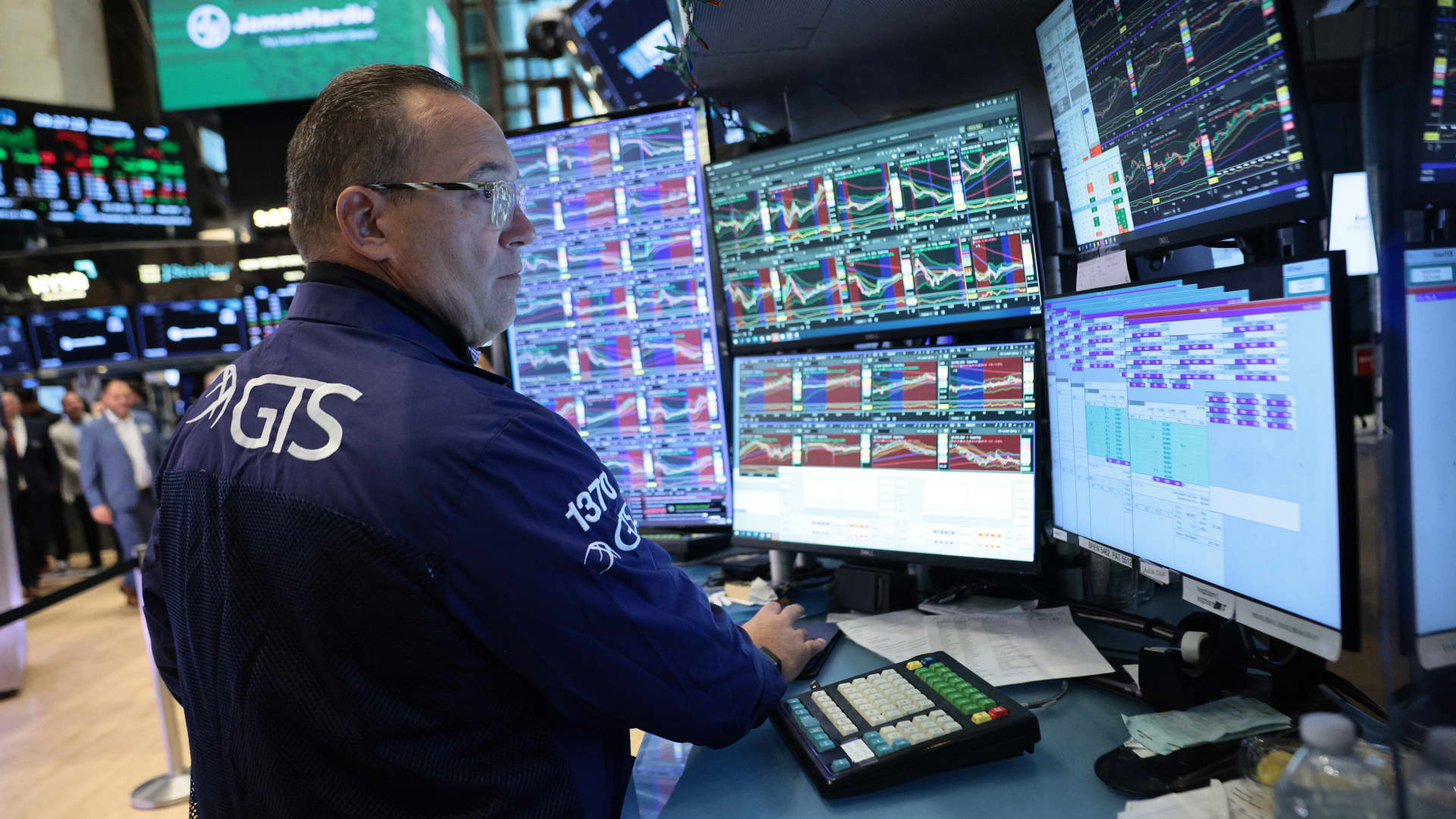
On September 16, 2026, traders on the New York Stock Exchange experienced a dip in the 10-year Treasury note yield, which fell by over 2 basis points to 5.19%. This decline followed a rise earlier in the day spurred by a stronger-than-expected consumer price index report for September. The yield on the 30-year U.S. Treasury also decreased, dropping more than 4 basis points to 5.517%. In contrast, the 2-year Treasury yield, which is closely aligned with the Federal Reserve's interest rate decisions, increased by more than 1 basis point to 4.808%, having previously reached its highest level since September 29.
Read More
The midday shift in yields was accompanied by a sell-off in equities, with the S&P 500 falling over 1%, prompting some investors to seek the relative safety of the bond market. Looking ahead, investors will be eyeing several reports set to be released on Thursday, including the producer price index (PPI) for September, retail sales data, and initial jobless claims figures. Economists surveyed by Dow Jones predict a 0.6% increase for PPI on a monthly basis, and a 5.5% rise year-over-year.
Notably, the prior day's consumer price index report showed a 3.7% year-over-year increase, exceeding the Dow Jones estimate of 3.6%. Core inflation, excluding food and energy prices, came in at 2.6% annually, slightly higher than the expected 2.5%. This inflation data arrives just two weeks ahead of the Fed’s next interest rate decision. Christopher Rupkey, chief economist at Fwdbonds, suggested that persistent inflation may compel the central bank to raise rates more aggressively in 2027.
Rupkey stated, "The bond bulls have turned around and are running the other way as 10-year yields have shot higher after today's shocking inflation report. Inflation is alive and the only way the Warsh Fed knows how to kill it is with another dose of higher rates."
Expectations for an interest rate hike during the Fed’s meeting on October 28, currently targeted between 3.75% and 4.00%, rose from 22.1% to roughly 35% based on CME's FedWatch tool. The likelihood of at least one more rate hike this year now exceeds 90%, with a 40% probability for a half-percentage point increase, compared to previous estimates.