Oil prices experienced a decline on Friday after an initial rebound driven by cautious optimism regarding negotiations between the U.S. and Iran. Following sharp drops in oil prices amidst hopes for peace in the Middle East during the UN General Assembly in New York, prices surged again when no significant progress materialized. However, the situation shifted when Iranian Foreign Minister Abbas Araghchi announced that Iran had made an offer to the U.S. which could potentially restore tanker traffic through the Strait of Hormuz within seven days if certain conditions are met. Araghchi shared this information with the media at the UN gathering.
Read More
Analyst Patrick O'Hare from Briefing.com remarked that this offer seemed dubious, suggesting that Iran's demands had not fundamentally changed. He questioned how long the positive sentiment surrounding Iran's offer would persist.
Meanwhile, inflation concerns linked to possible blockades at the Strait of Hormuz and the risk of additional supply interruptions from Houthi attacks on Saudi infrastructure have pushed government bond yields higher, with investors seeking increased returns. The benchmark U.S. 10-year Treasury yield reached its highest level since 2007 on Thursday, while Japanese bond yields also hit multi-year highs.
Bank of England Governor Andrew Bailey indicated that the Bank may follow the European Central Bank and U.S. Federal Reserve in raising interest rates in the near future, a move that could help control inflation but slow economic growth.
On the stock market front, investor sentiment was buoyed by what was described as a "seemingly amicable meeting" between U.S. President Donald Trump and Chinese President Xi Jinping in Washington. While the two nations extended their trade truce for an additional two months until January, this was significantly shorter than the two years that China had anticipated.
Market expert Lloyd Chan from MUFG noted that unresolved issues, including tariffs, agricultural purchases, and technology restrictions, continue to pose risks with regard to U.S.-China trade relations.
Key market figures around 1345 GMT included:
- Brent North Sea Crude: down 1.1% at $105.41 per barrel
- West Texas Intermediate: down 1.2% at $93.39 per barrel
U.S. stock indices showed positive movements:
- Dow: up 0.4% at 51,547.88 points
- S&P 500: up 0.3% at 7,726.11 points
- Nasdaq: up 0.4% at 27,043.85 points
European markets saw mixed results with:
- London FTSE 100: up 0.1% at 10,685.61
- Paris CAC 40: flat at 8,083.20
- Frankfurt DAX: up 0.6% at 25,425.15
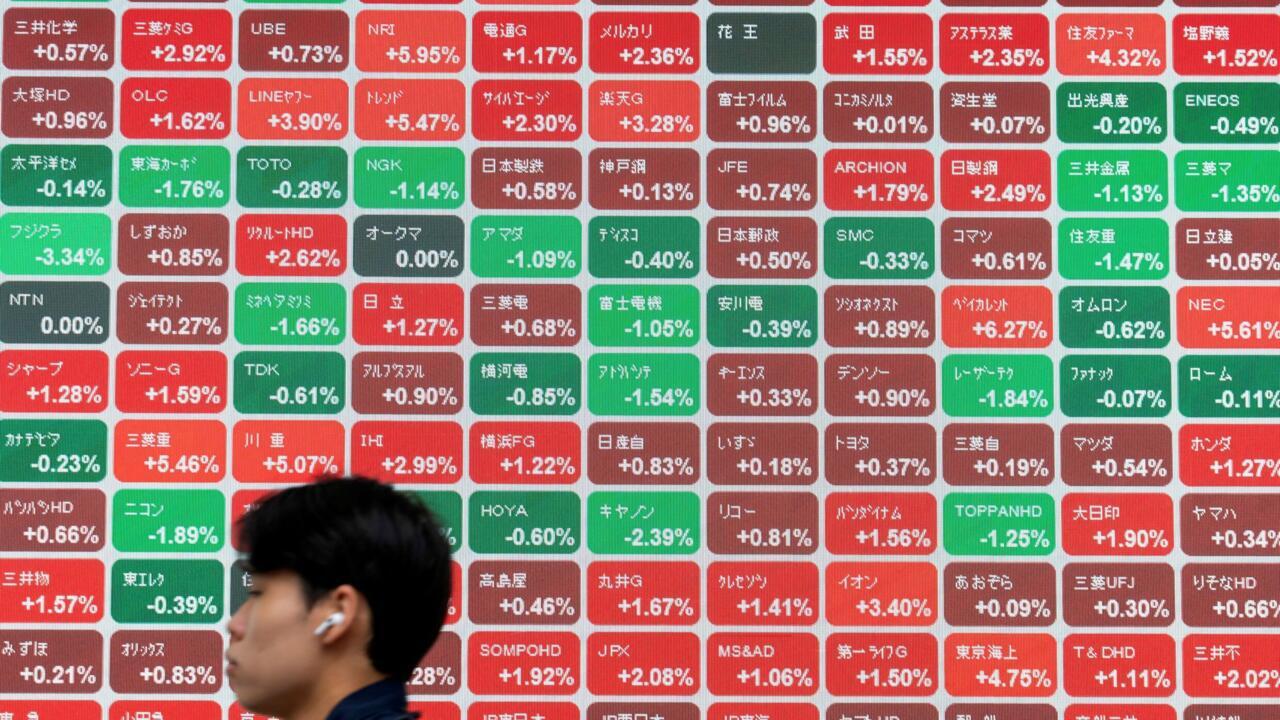
In Asia, Tokyo’s Nikkei 225 closed up 1.3% at 66,364.20, while Hong Kong's Hang Seng Index declined 1.0% to 24,510.09. The Shanghai Composite was closed for a holiday.
In currency exchange, the euro rose to $1.1403 from $1.1376, and the pound increased to $1.3256 from $1.3220. The euro declined slightly to 86.02 pence from 86.07, and the dollar fell to 157.08 yen from 158.85.