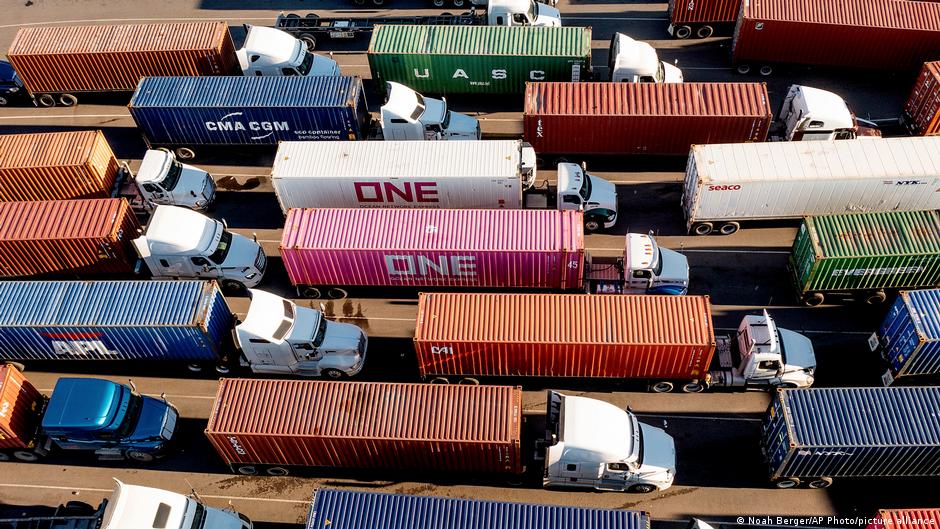
Global trade is showing unexpected resilience despite facing significant challenges from the COVID-19 pandemic, the ongoing wars in Ukraine and Iran, and the tariffs imposed during Donald Trump's presidency.
Read More
The pandemic led to widespread factory shutdowns and accelerated a departure from reliance on China, known as the world's largest manufacturer. Concurrently, the conflicts in Ukraine and the Middle East have disrupted global supplies of essential commodities such as oil, gas, food, and fertilizers.
Trump's tariffs have resulted in the highest levels of U.S. duties in decades, compelling businesses to seek new suppliers and markets. Robert Staiger, the chief economist at the World Trade Organization (WTO), described the current disruptions as "the most serious and sustained disruptions since the [world trading] system was created 80 years ago."
Despite these challenges, the WTO's annual report indicated that global goods trade volumes increased by 4.6% last year, buoyed by strong demand for technology used in artificial intelligence (AI) infrastructure. Meanwhile, services trade volumes rose by 5.3%. China retained its position as the top goods exporter, and the U.S. continued to be the largest importer, with the EU following in both categories.
Staiger mentioned that high AI exports might be concealing a more significant decline in world trade that would otherwise be evident. The WTO noted that Asian nations lead the trade in AI products, while regions such as Africa, Latin America, the Middle East, and much of Europe are significantly less involved.
In terms of adherence to WTO regulations, Trump has shifted the U.S. trade approach since resuming office last year. He has implemented country-specific tariffs contrary to the WTO’s equal-treatment principle and negotiated individual exemptions. Globally, approximately 72% of goods still trade under the agency's fundamental terms, a decrease from about 80% in 2022.
Looking forward, there's growing uncertainty about the future of globalization. Although data shows that since 2015, trade growth has only matched that of the global economy, experts like Thomas Sampson from the London School of Economics have expressed doubt about whether the current shifts represent a move toward de-globalization or simply a realignment of trading partners.
The EU's response to Russia’s invasion of Ukraine included a significant reduction in its dependence on Russian gas, dropping from 37% in late 2021 to around 10% now, according to Eurostat. This shift has stimulated new energy partnerships with the U.S., Norway, Australia, and Kazakhstan, with liquefied natural gas (LNG) becoming more prevalent.
Conversely, Russia has secured new buyers, mainly in China and India, which have purchased Russian oil at substantial discounts. The initiation of the Iran war in February further complicated global energy trade when Tehran effectively shut the Strait of Hormuz. In response, nations like Saudi Arabia and the UAE diverted oil through alternative routes.
The International Energy Agency reports that the shortfall in oil supply prompted other countries to ramp up production or draw from strategic reserves, with Brent crude prices remaining elevated, often exceeding $100 per barrel amid ongoing conflicts.
U.S. imports from China dropped by approximately 28% last year, while imports from other regions rose nearly 10%, particularly from Vietnam, Taiwan, and Mexico, as companies adjusted sourcing strategies in light of tariffs.
Critics of Trump's tariff strategies raise concerns about potential long-term consequences for global trade. If the WTO were to be abandoned, alternative systems being discussed include maintaining Trump's country-by-country tariffs or forming a network of free trade deals among various economic groups, such as the EU and the BRICS nations.
Experts suggest that the EU would likely favor a reformed WTO to ensure a framework for global trade remains intact. They point out that a continued reliance on Trump's trade policies could undermine smaller nations, which currently benefit from the existing WTO system. With trust in the U.S. as a trading partner eroded, analysts anticipate a lengthy recovery period for international relationships, regardless of future U.S. administration changes.
WTO economists have projected that trade fragmentation based on geopolitical delineations could potentially reduce global GDP by about 5% by 2050, with a complete disappearance of the WTO leading to a decline of up to 7%, especially impacting the smallest economies. Conversely, reinforcing multilateral rules could raise global GDP by about 3%.