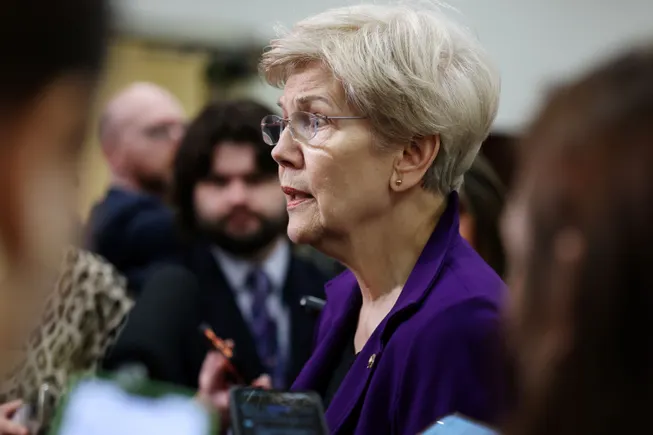
Senators Elizabeth Warren and Chris Van Hollen are urging nonbank lender OppFi to withdraw its plan to acquire Arizona-based BNCCORP and its subsidiary, BNC National Bank. In a letter sent on Wednesday, the lawmakers expressed concerns over OppFi’s business model, which they claim relies on predatory lending practices, citing interest rates on personal installment loans that can reach 195% annually.
Read More
This pressure follows the recent decision by Enova, another nonbank lender, to end its attempt to purchase Grasshopper Bank, stating there were no “clear standards for nonbanks that want to become banks” amid political concerns, according to Enova CEO Steve Cunningham. Warren and Van Hollen are now calling for OppFi to take a similar route.
The senators noted that while OppFi markets itself as a provider of financial services aimed at helping consumers overcome financial challenges, a deeper examination reveals ongoing predatory strategies. Both OppFi and Enova target consumers they describe as “underserved” by traditional banks due to credit issues.
Warren and Van Hollen argued that considering the strong opposition to OppFi’s application and the withdrawal of Enova’s bid, OppFi should retract its request to acquire a national bank.
In response, an OppFi spokesperson challenged the senators' portrayal, stating that politicizing the bank charter application undermines credit access for consumers. The spokesperson claimed that moving into the regulated banking system would put OppFi's compliant business model under federal scrutiny, ensuring fair lending practices.
The senators also pointed out that OppFi’s charge-off rate exceeds 55% and referenced a D.C. attorney general lawsuit from 2021 that stated OppFi's underwriting model predicts that up to one-third of borrowers will default. They accused OppFi of coaxing borrowers into refinancing, thereby extending their debt and increasing overall borrowing costs.
OppFi’s spokesperson countered these assertions, clarifying that the average duration of an OppFi loan is around four months and emphasized that annualizing quarterly charge-offs misrepresents the data by inflating the perceived charge-off rate. According to them, the actual lifetime charge-off rate for these loans over the past three years ranges from 18% to 25%.
In July, 20 state attorneys general expressed concerns over both the Enova-Grasshopper and OppFi-BNC National deals, urging federal authorities not to approve them. They criticized the partnerships for exploiting state usury laws by offering loans with excessive interest rates that exceed the 36% limit typical in most states.