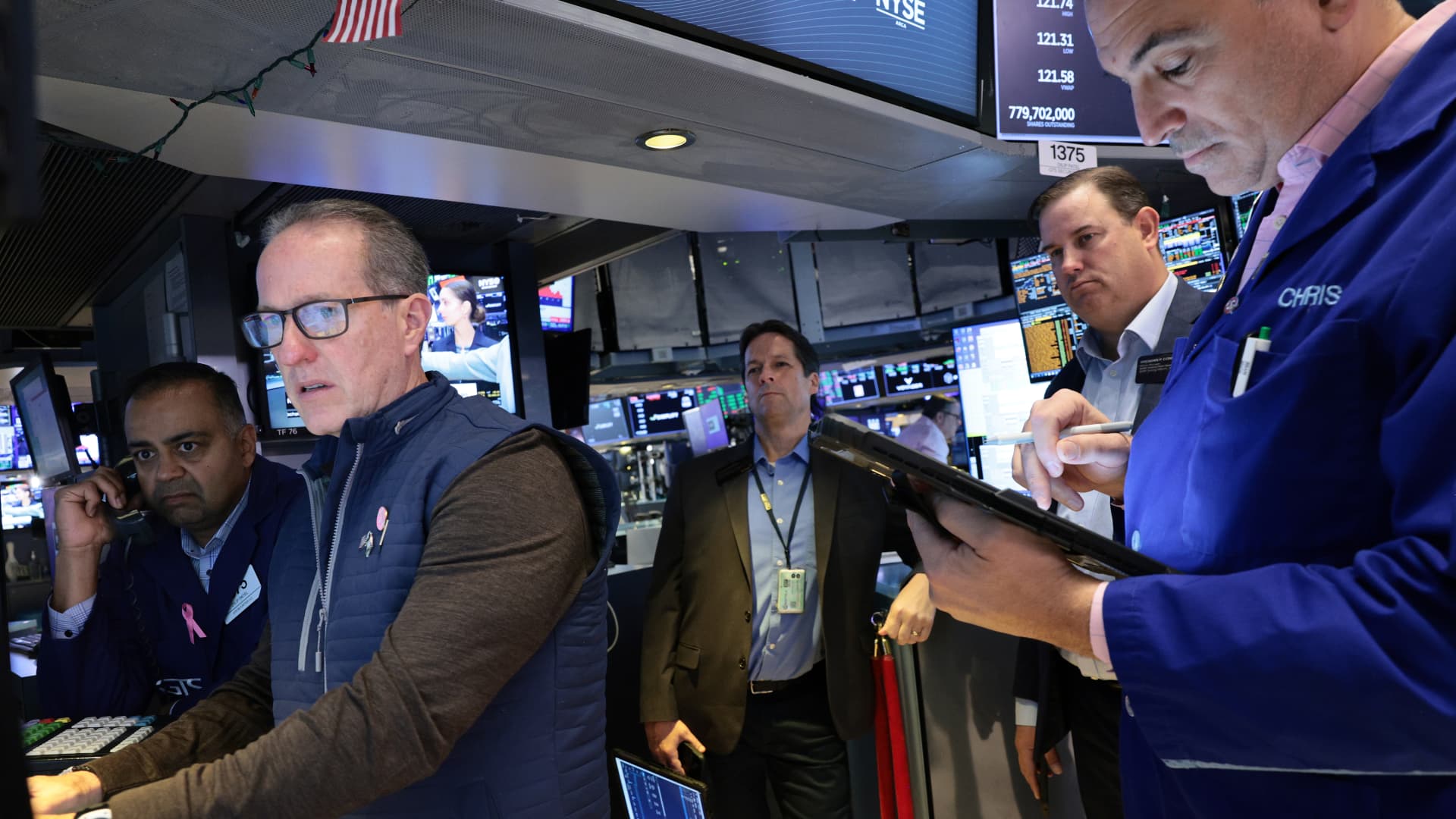
On October 21, 2026, the Nasdaq Composite fell by 2.6%, closing at 26,008.86, marking its worst performance since June. The S&P 500 also dropped 1.21% to end at 7,663.43, reflecting its poorest day since July. In contrast, the Dow Jones Industrial Average managed a slight gain, rising 11.89 points, or 0.02%, to close at 52,867.98.
Read More
Shares of Meta Platforms declined nearly 7% despite exceeding revenue expectations and providing positive guidance. This decline, along with broader concerns about artificial intelligence (AI) spending, heavily impacted the tech sector. Advanced Micro Devices saw a fall of over 8%, with Micron Technology and Nvidia dropping 6% and 4%, respectively. CoreWeave, a leader in neocloud services, also experienced a 10% decline, reflecting worries about capital availability in the AI sector. Nvidia’s CEO Jensen Huang noted that demand for neoclouds remains high, but quoted capital scarcity as a hindrance to growth.
Oil prices surged sharply, with international benchmark Brent crude futures rising 4% to $113.17 per barrel, and West Texas Intermediate crude futures increasing by 2.39% to $99.47 per barrel. This spike was tied to reports suggesting a U.S. and Israel plan for renewed military action against Iran following the U.S. midterm elections. President Donald Trump confirmed that negotiations with Tehran are not ongoing and hinted at forthcoming actions.
Additionally, within the market, the yield on the benchmark 10-year Treasury note dropped more than 17 basis points, settling at 4.972%, the lowest in nearly a month. The 2-year note yield also fell over 16 basis points to 4.659%.
Overall, concerns about AI infrastructure funding and geopolitical tensions surrounding Middle Eastern conflicts were significant factors in the recent market volatility. Investors are increasingly cautious as they weigh these factors against broader economic indicators.