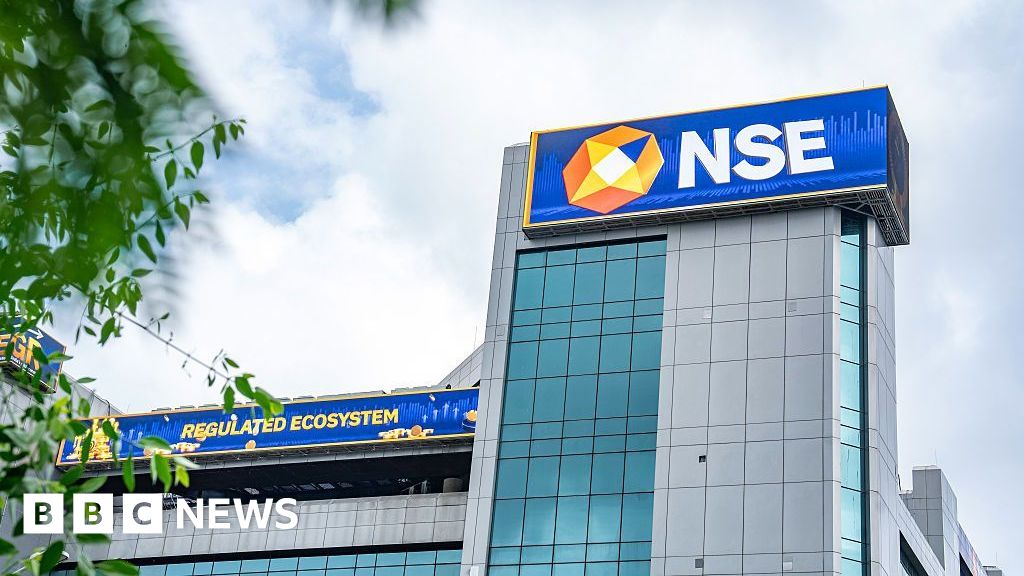
The National Stock Exchange (NSE) of India has initiated its initial public offering (IPO), marking its first public shares sale after a decade-long wait. The NSE aims to raise up to 225.69 billion rupees ($2.35 billion; £1.75 billion), positioning it as India's second-largest share sale, following the upcoming 2024 IPO of Hyundai's Indian unit.
Read More
This IPO offers investors an opportunity to participate in the growth of India's financial markets; however, it faces significant challenges including rising oil prices, a weakening rupee, and a pullback from foreign investors, which have affected stock valuations. The NSE reduced the number of shares on offer by 15% last week as existing stakeholders chose to sell less due to lower-than-expected valuations.
Shares are priced between 1,700 and 1,785 rupees, and the offering involves current investors like the State Bank of India, insurance firms, and investment funds who are scaling back their stakes. Notably, the NSE is not issuing new shares and will not receive proceeds from this offering.
This listing precedes another highly anticipated IPO from Jio Platforms. Gaurav Dua of Standard Chartered Securities noted that these substantial IPOs could exert short-term pressure on the broader market by diverting funds from existing shares, although they may also rejuvenate the IPO landscape after a sluggish start to the year.
The NSE had initially sought approval for its listing in 2016, but its plans were postponed due to a market manipulation controversy involving allegations that certain brokers were granted quicker access to trading systems, offering them an unfair edge.
Currently, the NSE’s benchmark index, the Nifty 50, has declined over 11% this year. Nevertheless, analysts expect considerable interest in the IPO, viewing it as a chance to tap into India’s expanding investment culture as more households shift from traditional assets, like gold and property, towards shares.
Brokerage ICICI Direct emphasized that NSE represents a long-term opportunity within India's capital market, citing its market position, profitability, and technological focus. Additionally, a large market valuation may draw both active investors and passive funds through stock indices.
According to Religare Broking, India's capital markets offer substantial growth potential due to increasing investor engagement, growing market capitalization, and a rise in mutual fund assets and passive investment products. However, the NSE also faces risks, notably arising from its status as the largest derivatives exchange globally, where tighter regulations around derivative trading could impact its trading volumes and revenue.