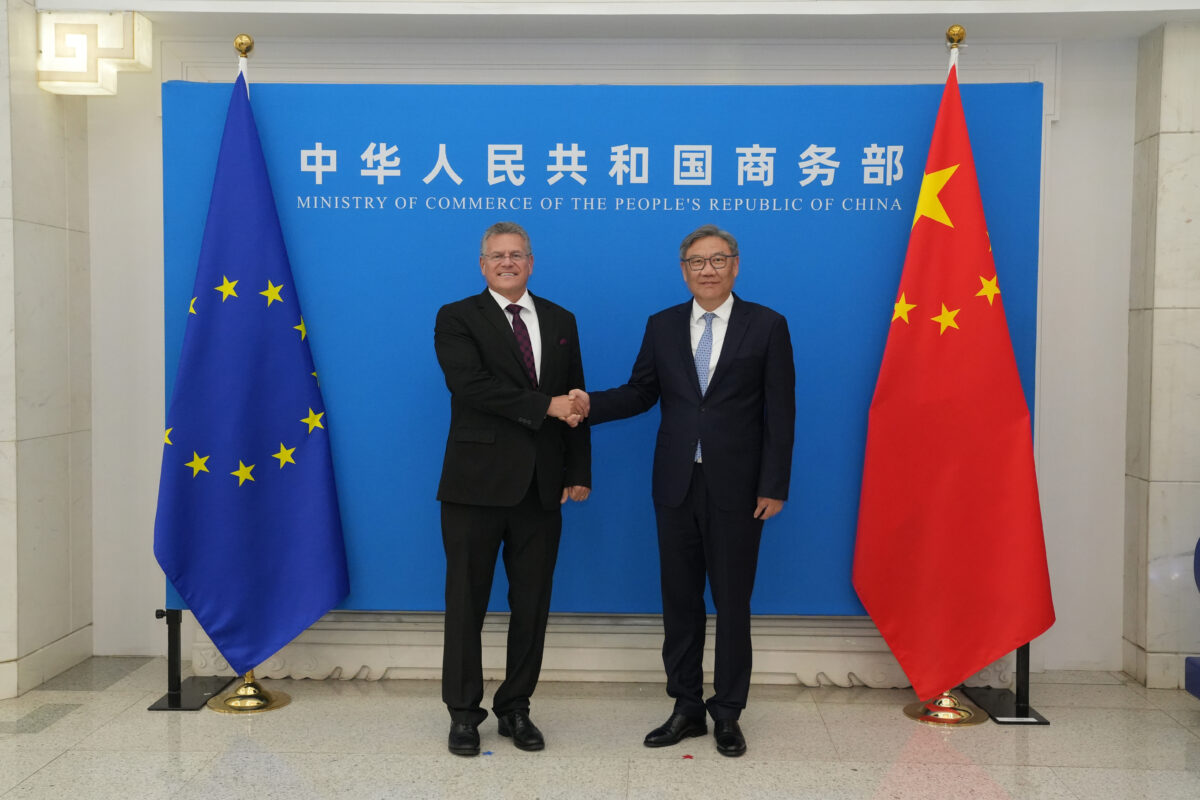
On 9 October 2026, Beijing and Brussels reached a trade agreement primarily focused on limiting certain exports. A key element of this deal is China’s commitment to significantly restrict the export of hybrid cars to the European market, a move that is expected to provide temporary relief to European car manufacturers.
Read More
However, the agreement does not advance Europe’s goals for a low-carbon transition or reduce its dependency on foreign energy, which have significant economic, environmental, and geopolitical ramifications. China’s capacity to produce green technology economically and on a large scale far exceeds Europe’s capabilities. By artificially limiting imports of Chinese automotive products, Europe risks inflating prices in the sector.
Psychological factors, alongside economic issues, complicate Europe’s position in this trade deal. The continent faces a challenging geopolitical landscape and struggles with slower post-pandemic growth compared to rival economies.
Seeking stronger trade measures against foreign competition, particularly aimed at China, could misguide Europe's incumbent manufacturers. Although EU policymakers acknowledge the need for decarbonization, they have postponed a ban on combustion engines until 2035, allowing car manufacturers to continue selling outdated models potentially until the end of the century.
This situation leaves European consumers vulnerable to volatile global oil markets, which are unlikely to stabilize soon. Consequently, consumers in countries like Estonia and Portugal may find themselves paying higher prices to support inefficient auto manufacturers from France and Germany unwilling to modernize.
The EU’s protective stance may inadvertently expose Asia to increased competitive pressures. Among the three major economic blocs— the United States, the European Union, and the Asia Pacific—only the latter demonstrates a consensus on the benefits of global economic openness. However, this consensus could face challenges as more Chinese exports shift towards developing Asia, which could intensify competition among local manufacturers.
Alicia García-Herrero, in a recent article, warns that EU protectionism could alter Asian governments' approaches. Redirected Chinese exports may create competition for Asian exporters, while scrutiny over Chinese investments in Asia could rise as businesses look for ways to avoid tariffs targeting Beijing.
García-Herrero argues that protective measures from Asian countries would likely backfire. Much of Southeast Asia’s imports from China comprise intermediate goods; broad tariffs could raise prices and diminish competitiveness, harming the very global value chains vital for Asia's industrial growth. She suggests a more probable outcome would be targeted defenses on final goods and diplomatic negotiations. China may choose to invest further in Asian manufacturing to secure its market presence.
Upholding an open trading regime in Asia amid transatlantic protectionism and strong Chinese export capabilities will require political fortitude and could involve short-term economic challenges. However, this strategy presents a more favorable option for small and medium-sized Asian economies. As China diverts manufacturing to avoid EU and US tariffs, countries that maintain open, predictable trade and investment environments will likely gain a competitive edge.
Asian governments should also strive to prevent further deterioration of global trade institutions, particularly the World Trade Organization (WTO). Former Chinese UN deputy representative Zhou Xiaoming points out that the EU-China deal includes a provision for resolving future disputes under WTO rules. Although this may not lead to immediate compliance from Europe regarding existing initiatives that could challenge international trade laws, it offers some hope for the stability of the postwar liberal trading system during turbulent geopolitical times.